
TL;DR: Florida's wind mitigation credit program lets homeowners reduce the windstorm portion of their premium by upgrading roofing, opening protection, and roof-to-wall connections. An authorized inspector documents eligible features on the Florida form; your insurer determines applicable credits on the wind portion of the premium. You can request an inspection whenever you are reviewing your coverage.
What You Need
Before you schedule an inspection or call a contractor, gather these items:
- Your current homeowners insurance declarations page (so you can compare before and after)
- Permit records for any roof work, window replacements, or door installs done in the past 20 years
- The name of your roof covering material and its installation date
- Contact info for a Florida-licensed home inspector or wind mitigation specialist
- Your insurer's wind mitigation form (Florida uses a standardized OIR-B1-1802 form)
You do not need to make any upgrades before the inspection. The inspector simply documents what already exists. If the report shows gaps, you can decide which upgrades pencil out financially.
Step 1: Understand What Wind Mitigation Credits Actually Cover
This is the single most misunderstood piece of the puzzle, so let's clear it up before anything else.
Your homeowners insurance policy bundles several coverages. Windstorm is one of them, but in South Florida, carriers are required to give premium credits specifically tied to how well your home resists hurricane-force winds. These credits apply to the windstorm premium, not your total policy premium. The savings are still substantial, but do not expect your entire bill to drop by the percentage you see advertised.
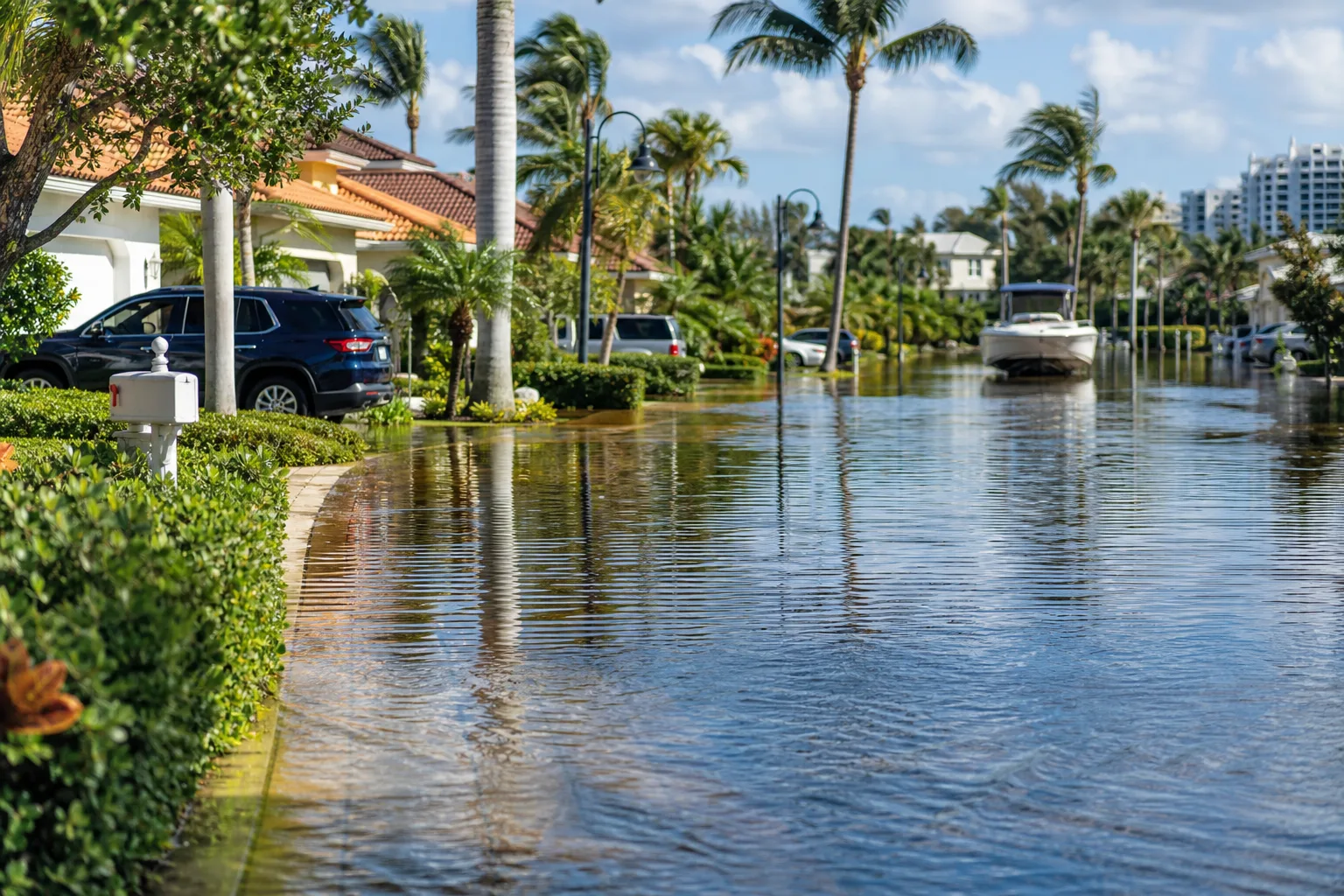
Flood damage is a completely separate story. A hurricane that pushes a storm surge through your door is a flood event, not a windstorm event. Your HO policy will not pay for that water intrusion. You need a separate flood insurance policy through the National Flood Insurance Program or a private carrier. Wind mitigation credits do nothing for flood risk.
Keep these three buckets distinct:
- Windstorm (HO policy wind coverage): covered by mitigation credits
- Water intrusion from rain through a damaged roof or broken window: generally covered by HO if wind caused the opening
- Flood/storm surge: only covered by a separate flood policy

Step 2: Know the Construction Features on the Florida Wind Form
Florida's official mitigation form documents building-code status and several roof, connection, shape, opening-protection, and water-resistance features. Credit eligibility and amounts depend on the insurer and verified combination.
Roof Covering
A roof installed to the 2001 Florida Building Code or later earns a credit. Roofs installed before 2001 generally do not. If your roof is aging, replacement timing matters: ask your agent to estimate any premium change before treating insurance savings as part of a roof replacement decision.
Roof Deck Attachment
Inspectors probe attic sheathing to measure nail size and spacing. Panels attached with 8d nails at 6-inch spacing score better than older 6d nails at wider spacing. A contractor can assess whether roof-deck fastening can be improved without a full reroof; feasibility and permits depend on the roof.
Roof-to-Wall Connection
This is often the highest-value credit category. The connection types, from weakest to strongest, run: toe nail, clip, single wrap, double wrap, and structural anchor. Homes built before 1996 commonly have toe nails. A structural engineer or contractor can add hurricane clips or straps through the attic. Cost varies widely by home size, but compare contractor quotes with a written credit estimate before assuming any payback period.
Roof Shape
Hip roofs (slopes on all four sides) outperform gable roofs in high winds and earn the largest shape credit. You generally cannot change your roof shape without significant construction, but knowing your shape helps you understand your baseline discount.
Opening Protection
Windows, doors, skylights, and garage doors. This category has three levels:
- No protection: no credit
- Basic (labeled, impact-rated): partial credit
- Approved opening protection: credit depends on the product approval and insurer's rating method
Impact-resistant windows and doors rated to Miami-Dade or Florida Product Approval standards earn the top credit. Accordion shutters and panel systems also qualify when properly rated and documented. Keep your product approval numbers, because inspectors need them.
Secondary Water Resistance (SWR)
This is the rubberized self-adhering membrane applied under the shingles. When shingles blow off, SWR keeps water out of the attic. Do not assume SWR is present based on roof age; ask the inspector or roofer to verify it. Your roofer's permit and invoice should confirm it.
Step 3: Schedule the Inspection at the Right Time
The Florida hurricane season calendar runs June 1 through November 30. Peak activity historically clusters from mid-August through mid-October. That means the smart window for getting your inspection and applying credits is January through April, so your renewed or endorsed policy reflects the discount before the season heats up.
Who performs the inspection:
- Florida-licensed home inspector
- Florida-licensed building contractor
- Florida-licensed architect or engineer
- Florida-licensed roofing contractor
Cost for a wind mitigation inspection alone typically runs less than a full four-point inspection. Many inspectors bundle them. The report is valid for five years, so one inspection can benefit multiple renewal cycles.
Bring your permit history to the inspection. Inspectors can only credit what they can verify. A roof installed to 2001+ code standards but with no permit on file may not earn the credit, even if the work was done correctly.
Paying too much for Florida homeowners insurance? Get a free home quote
Step 4: Submit the Report and Review Your New Premium
Once the inspector hands you the completed OIR-B1-1802 form, submit it directly to your insurer or send it to your agent. At B & B Insurance Agency, we take the report, run it through all the carriers we represent, and show you what each one would charge with the credits applied. Sometimes the credits change which carrier is the best fit.
Do not assume your current insurer applies the maximum credit automatically. Ask for a revised quote with the report applied, then compare. Independent agents shop on your behalf, which is the core of what we do. Reach out for a free quote if you have a mitigation report sitting in a drawer that you have never submitted.
Ask your insurer how long it expects to review the report and whether any endorsement is needed. Get the revised declarations page in writing and verify the new premium matches what you were quoted.
Step 5: Plan Upgrades That Pencil Out
Not every upgrade makes financial sense. Here is a rough framework:
- Calculate your current windstorm premium portion. It appears on your declarations page or ask your agent to break it out.
- Estimate the maximum credit for the upgrade. Your agent can model this before you spend a dollar.
- Get two or three contractor quotes for the work.
- Divide the upgrade cost by the annual premium savings. If the payback period is under five to seven years, the upgrade usually makes sense, especially if you plan to stay in the home.
Hurricane clips in the attic and impact windows tend to have the most favorable payback ratios. Full roof replacement is a bigger investment but also resets your roof age, which affects insurability separately from mitigation credits.
Common Mistakes
Waiting until after a storm to think about this. Insurers can restrict binding new coverage when a named storm is in the Gulf or Atlantic. Credits only help on policies already in force.
Confusing wind credits with flood protection. Opening protection keeps wind-driven rain out. It does not stop storm surge. If your home is in a Special Flood Hazard Area, carry flood insurance regardless of how many mitigation upgrades you have made.
Losing paperwork. Product approval numbers, permits, and installation invoices are what inspectors need. Keep a folder, physical or digital, with every home improvement document.
Assuming a new roof automatically earns every credit. The roof covering credit requires the 2001+ code standard. The SWR credit requires the membrane. Roof deck attachment and roof-to-wall connection are separate features. A qualifying, documented new roof may earn a covering credit but may not change the others.
Not re-inspecting after upgrades. If you added impact windows two years ago but your wind form is four years old, you are still getting the old credit. A new inspection captures the improvement.
Skipping the comparison shop. Mitigation credits are applied differently by different carriers. The value of a hip-roof credit can differ by carrier and policy. This is exactly why shopping through an independent agent matters.
Bottom Line
Windstorm mitigation credits are one of the few ways Florida homeowners can directly control what they pay for hurricane coverage. The steps are concrete: get an inspection, submit the form, model the upgrades that make financial sense, and shop the result across multiple carriers.
Remember that mitigation credits apply only to the windstorm portion of your premium. Flood risk in Palm Beach County requires its own policy, and the two work side by side, not interchangeably. If you want help reading your declarations page, modeling upgrade payback, or comparing what carriers would offer with your mitigation report in hand, the team at B & B Insurance Agency has been doing exactly that for South Florida families since 1998. Get a free homeowners quote or contact us directly and we will walk through it with you.
Paying too much for Florida homeowners insurance?
B & B Insurance shops multiple carriers to find you the right coverage at the right price — and we know Florida wind and flood rules cold.
Frequently asked questions
How much can wind mitigation credits actually reduce my premium?
Credits vary by carrier and by which features your home has, so there is no single number that applies to everyone. In general, a hip roof, impact-rated openings, and strong roof-to-wall connections together can produce meaningful reductions on the windstorm portion of your premium. Ask your agent to model the specific credits before and after so you have a real dollar figure for your home.
Does a wind mitigation inspection also cover flood risk?
No. The wind mitigation form evaluates how well your home resists hurricane-force winds and wind-driven rain. Flood damage from storm surge or rising water is covered only by a separate flood insurance policy. B & B Insurance Agency can help you evaluate both your windstorm coverage and your flood exposure at the same time.
How long is a Florida wind mitigation report valid?
Florida wind mitigation reports are valid for five years from the date of inspection. After five years, or after you make qualifying upgrades, you should schedule a new inspection so the report reflects your current construction features and you continue to earn the credits you are entitled to.
Can I get wind mitigation credits if my home was built before 2001?
Yes, though the credits will depend on which features meet current standards. Older homes often miss the roof covering credit because the code standard had not yet changed, but they may still earn credits for roof shape, opening protection, or roof-to-wall connections if those features are strong. An inspection will show exactly where you stand.
Do impact windows help with more than just the insurance discount?
Impact-rated windows and doors are designed to stay intact during high-wind events, which reduces the risk of catastrophic interior damage if your envelope is breached. They also reduce the need to install and remove panels before and after storms. The insurance credit is a financial benefit layered on top of the structural and convenience benefits.
When is the best time of year to get a wind mitigation inspection in South Florida?
The ideal window is January through April, before the June 1 hurricane season start. Getting the inspection done and the updated credits applied to your policy before peak season means you are covered under the improved terms before storms are possible. Inspectors tend to be busier in the spring, so booking early in the year helps.
Have a question about this topic?
Our experienced agents are happy to help — no pressure, just straight answers.