TL;DR
Your personal auto policy is unlikely to cover liability when an employee drives your vehicle for business purposes. A "permissive use" clause may provide some protection, but business-use exclusions and employer-liability gaps can leave you personally and commercially exposed. The right fix is usually a commercial auto policy or a hired-and-non-owned auto endorsement.
What You Need
Before working through the steps, gather these items:
- A current copy of your personal auto policy declarations page
- The "business use" and "permissive use" language from your policy (usually in the exclusions section)
- A list of employees who drive your vehicle and for what tasks
- Your existing general liability policy, if you have one
- Contact info for your insurance agent
Step 1: Understand How Personal Auto Policies Handle Business Use
Most personal auto policies include a "permissive use" provision. It says that if you give someone permission to drive your car, they get some coverage under your policy. But that provision has a common carve-out: business use by an employee.
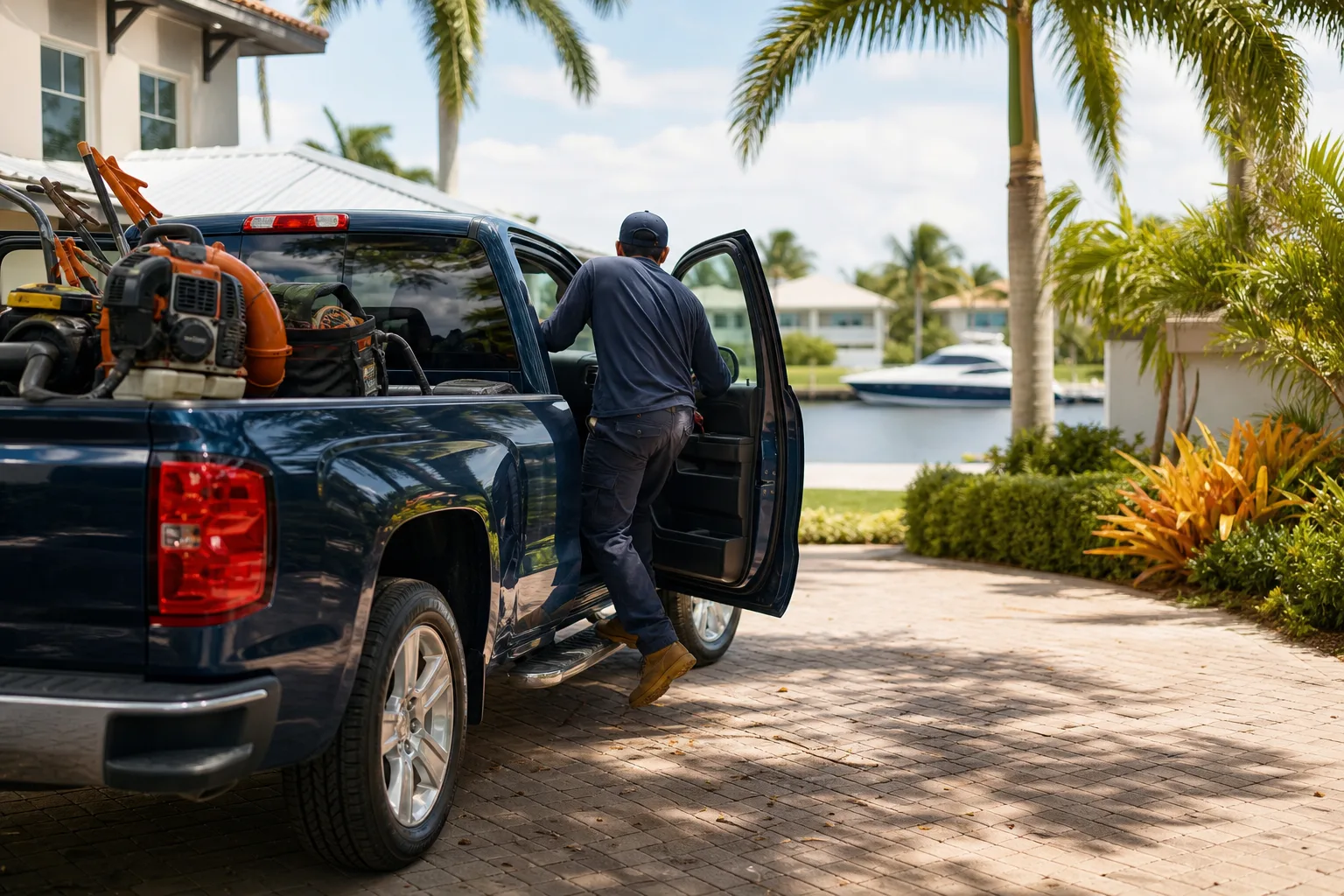
Here is the scenario that creates the problem. You own a landscaping company in Lake Worth. You tell an employee to take your personal truck to a client's property. On the way, the employee rear-ends another driver. The injured driver sues both you and your business.
Your personal auto insurer may deny the claim, or pay only up to a reduced limit, because the vehicle was being used for business purposes at the time of the loss. The Insurance Information Institute notes that personal auto policies are designed for personal, not commercial, use.
Key point: Permission alone does not equal full coverage when a business errand is involved.
Step 2: Check Whether Employer Liability Applies
Under the legal doctrine of respondeat superior (Latin for "let the master answer"), an employer can be held liable for the negligent acts of an employee acting within the scope of employment. This is true even when the vehicle is personal property.
So if your employee causes an accident while making a business delivery in your personal vehicle:
- You may be personally liable as the vehicle owner.
- Your business may be liable as the employer.
- Neither your personal auto policy nor a standard general liability policy is designed to cover this exposure cleanly.
General liability policies typically exclude auto-related bodily injury and property damage, because those risks are meant to be covered by an auto policy. The gap between the two is where lawsuits land.
Protect the business you've built. Talk to our business team
Step 3: Identify the Right Coverage Fix
Use this decision table to find the right solution for your situation.
| Situation | Best Coverage Solution |
|---|---|
| Employees regularly drive your vehicle for business | Commercial auto policy in the business's name |
| Employees occasionally use their own vehicles or a rental | Hired and non-owned auto (HNOA) endorsement on your commercial policy |
| You are a sole proprietor using one vehicle for both personal and business | Business-use endorsement on personal policy, or commercial auto |
| Employees never drive your vehicle | Confirm in writing; no change needed |
A commercial auto policy covers vehicles used in business operations and names the business as the insured. If an employee causes an accident while driving a covered vehicle on a business errand, both the employee and the business have coverage under the same policy.
Hired and non-owned auto coverage is a lower-cost option for businesses where employees occasionally use personal or rented vehicles for work. It does not cover a vehicle you own personally, so it is not a substitute for commercial auto when your own vehicle is involved.
Step 4: Review Your Personal Auto Policy for a Business-Use Endorsement
If you are a sole proprietor who uses one vehicle for personal errands and occasional business tasks, ask your carrier whether a business-use endorsement can be added to your personal policy. This endorsement expands coverage to include some business use without converting the policy to a commercial one.
Limitations to expect:
- It typically does not cover vehicles used for hire (rideshare, delivery services).
- It may not cover regular employee drivers, only the named insured.
- Coverage limits may still be lower than what a commercial auto policy provides.
For most owners who employ others and regularly send them on business errands, a dedicated commercial auto policy is the cleaner, safer option.
Step 5: Check That Workers' Comp Is in Place
If your employee is injured while driving your vehicle on business, workers' compensation covers their medical costs and lost wages, regardless of fault. Florida's workers' compensation requirements vary by industry: construction employers must cover every employee even if they have only one, non-construction employers generally must cover businesses with four or more employees, and agricultural employers face a separate threshold. Because the rule that applies to your business depends on your industry, confirm your specific requirement with a licensed agent or the Florida Division of Workers' Compensation.
Without it, the injured employee can sue you directly. Combine that with an auto liability gap, and a single accident can threaten both your business and personal assets.
Confirm your workers' comp is current before any employee gets behind the wheel.
Common Mistakes
Assuming permissive use covers everything. It may cover a friend borrowing your car for a grocery run. It often does not cover your employee making a business delivery.
Relying on general liability to fill the gap. General liability excludes auto incidents. The gap is real and will not disappear at claim time.
Skipping documentation. If you decide employees should never drive your personal vehicle, put it in writing as a company policy. Verbal rules are hard to prove and easy to ignore.
Waiting until after an accident to ask questions. Coverage questions answered before a loss cost nothing. Answered after, they can cost everything.
Bottom Line
When an employee drives your personal vehicle on business, your personal auto policy likely will not fully protect you or your company. The risk touches three policy types at once: personal auto, commercial auto, and workers' comp. The safest path is a commercial auto policy in the business's name, supported by active workers' comp coverage.
B & B Insurance Agency shops multiple carriers and can compare commercial auto options alongside your general liability to make sure the coverage actually fits the way your business operates. Request a free quote to review your current setup with a local agent who knows Palm Beach County businesses.
Protect the business you've built.
General liability, commercial auto, workers' comp, bonds, and more , bundled and shopped across carriers for South Florida businesses.
Frequently asked questions
Does my employee's own auto insurance cover them if they drive my personal vehicle?
If your employee drives your vehicle, your policy is typically primary and their personal policy is secondary. Their personal auto policy would only respond after your policy's limits are exhausted, and some policies exclude coverage when driving a vehicle owned by an employer. Do not count on your employee's policy as a safety net.
What if an employee uses my personal vehicle without my permission and causes an accident?
Unauthorized use generally falls outside permissive use coverage, meaning your insurer may deny the claim entirely. You could still face a lawsuit as the vehicle owner under negligent entrustment theory if you left the vehicle accessible to someone you knew might use it. Restricting vehicle access and documenting your employee driving policy in writing helps establish that use was not permitted.
Can I add my employee as a listed driver on my personal auto policy?
Some personal auto carriers allow you to list household members or frequent drivers, but adding a non-household employee who uses the vehicle for business often triggers a business-use review or declination. The carrier may require the vehicle to be moved to a commercial auto policy instead. Ask your agent before making any changes.
Is a sole proprietor treated differently than an LLC or corporation when an employee causes an accident?
As a sole proprietor, your personal and business assets are legally the same, so a judgment against your business can reach your personal savings and property. An LLC or corporation creates a legal separation, but courts can sometimes pierce that shield if coverage gaps suggest the business was not properly maintained. Proper commercial auto coverage matters regardless of your business structure.
This article is general information, not legal or financial advice. Coverage depends on the terms, conditions, and exclusions of your specific policy, so talk with a licensed insurance agent about your situation.
Have a question about this topic?
Our experienced agents are happy to help — no pressure, just straight answers.