

Related coverage: Homeowners Insurance, Renters Insurance, Flood Insurance
TL;DR: Your landlord's insurance covers the structure you live in, not your stuff, your liability, or your living costs if disaster strikes. Florida renters who skip their own policy are exposed in at least four important ways. A renters insurance policy typically costs far less than most people expect and closes every one of these gaps.
A lot of renters in Lantana, West Palm Beach, and across Palm Beach County assume they're covered because the landlord "has insurance." I hear this constantly. Here's what I'd tell my own family: that assumption is one of the most expensive mistakes a renter can make.
A landlord policy, formally called a Dwelling Fire policy or Landlord Landlord Property policy, is designed to protect the owner's investment, meaning the building itself. It was never designed to protect you.
1. Your Personal Belongings Are Not Covered
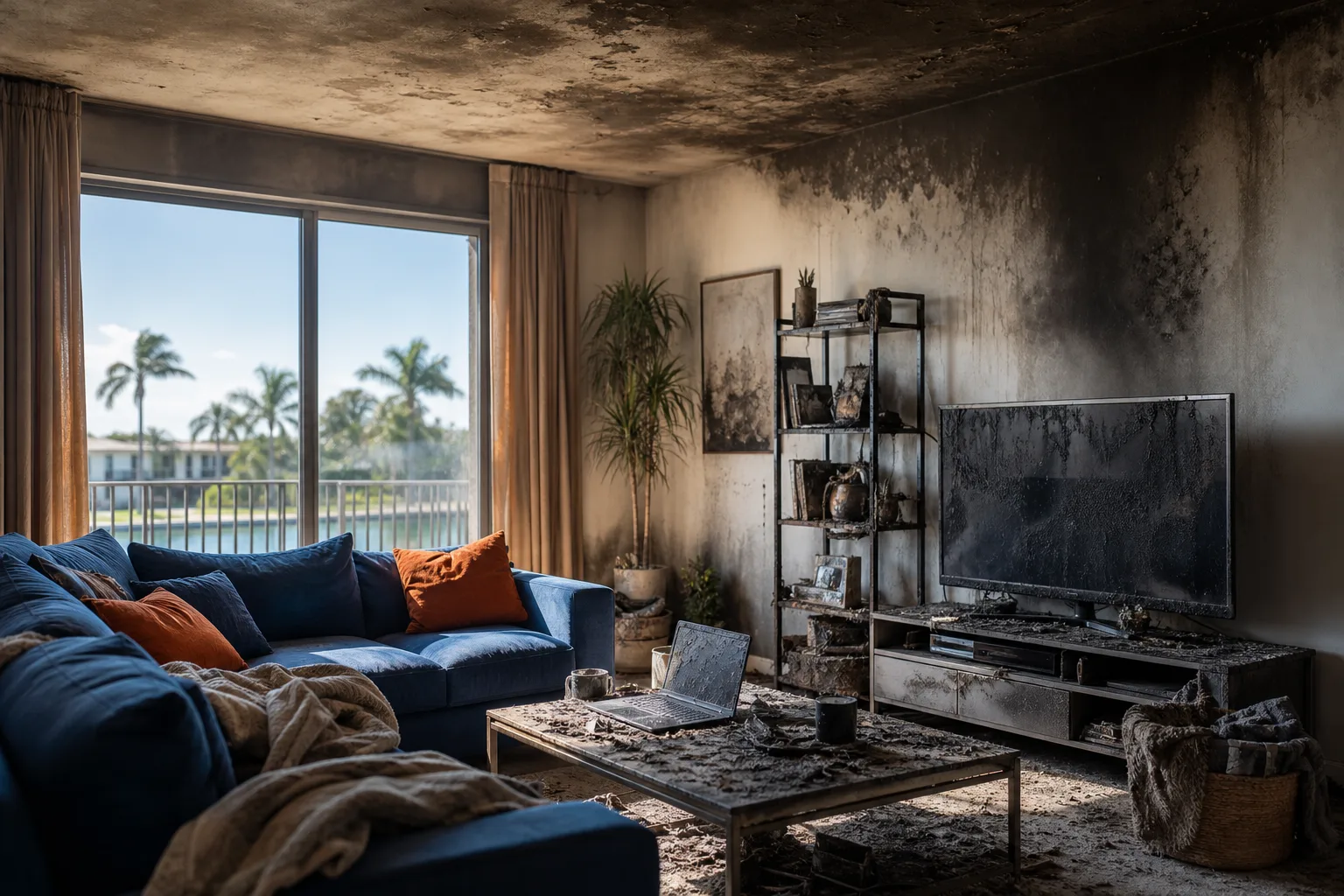
If a fire tears through your apartment, the landlord's insurer will pay to rebuild the walls, the roof, and the fixtures. Your furniture, electronics, clothing, and everything else you own? That claim goes nowhere on the landlord's policy.
The Insurance Information Institute notes that most renters underestimate the total value of their belongings. A quick walk through your place adding up clothing, a laptop, a TV, kitchen gear, and furniture often reaches $15,000 to $30,000 or more. None of that is protected without your own renters policy.
What I'd actually do: open a notes app and walk room by room listing big items and their rough replacement cost. That number is your minimum personal property coverage target.
2. You Have No Liability Protection Under a Landlord Policy
Imagine a guest trips on your area rug and breaks a wrist. Or your dog bites a neighbor in the hallway. Your landlord's policy will not defend you or pay a settlement on your behalf. That exposure lands entirely on you personally.
Liability coverage on a renters policy typically starts at $100,000 and can be increased. It covers legal defense costs and settlements if someone is injured in your rented space or if you accidentally damage someone else's property. Without it, a lawsuit could reach your savings, your car, or future wages.
Florida's courts are active, and liability claims are real. This gap is one I take seriously for every renter I talk to.
Want a second look at your Florida homeowners coverage? Get a free home quote
3. Loss of Use Costs Fall on You After a Covered Disaster
If a hurricane or fire makes your unit uninhabitable, your landlord's policy pays to repair or rebuild the structure. It does not pay for your hotel stays, restaurant meals, or temporary housing while the work is done.
Renters policies include what's called Additional Living Expenses (ALE) or Loss of Use coverage. This reimburses you for the difference between what you normally spend on housing and what you spend on temporary accommodations, up to the policy limit.
In South Florida, where hurricane season runs June through November and hotel rates spike after major storms, this coverage is not a nice-to-have. It can be the difference between managing a crisis and being financially derailed by one. The National Hurricane Center tracks storm activity that affects our region every year, and displacement can last weeks.
4. Flood Damage Creates a Double Gap for Renters
This one surprises people. A landlord's standard Dwelling policy generally excludes flood damage, just like a standard homeowners policy does. Flood coverage requires a separate policy under the National Flood Insurance Program (NFIP) or a private flood carrier.
Here's the double gap: even if your landlord purchases separate flood insurance on the structure, that policy still covers only the building. Your belongings damaged by floodwater are not included.
Renters in Palm Beach County can purchase their own flood insurance policy through the NFIP or a private insurer specifically to cover their personal property. The contents-only flood policy is often affordable and is something many renters in low-lying areas of Lantana or Lake Worth Beach should seriously consider.
Coverage gap decision table:
| Risk | Landlord Policy | Your Renters Policy |
|---|---|---|
| Building structure | Covered | Not needed (not yours) |
| Your personal belongings | Not covered | Covered |
| Your personal liability | Not covered | Covered |
| Temporary housing costs | Not covered | Covered (ALE) |
| Your contents from flood | Not covered | Covered with separate flood policy |
Bottom Line
A landlord policy does exactly one thing for you: it keeps the building standing so you have somewhere to live once repairs are done. That's it. Your belongings, your liability exposure, your temporary housing costs, and your flood losses are all yours to handle without your own coverage.
Renters insurance is one of the more affordable types of coverage available, and an independent agency like B & B Insurance Agency can shop multiple carriers to find you the right fit. If you're renting anywhere in Palm Beach County, from West Palm Beach to Boynton Beach, this is a gap worth closing today.
Reach out to us at B & B Insurance Agency for a free quote, or learn more about what a renters insurance policy covers before your next storm season arrives.
Want a second look at your Florida homeowners coverage?
B & B Insurance compares coverage and pricing from multiple carriers, and we know Florida wind and flood rules cold.
Frequently asked questions
Does Florida law require landlords to tell renters that they are not covered under the building policy?
Florida law does not require landlords to inform tenants that the owner's policy excludes tenant belongings or liability. Some leases mention it, but many do not. Reading your lease carefully and asking your agent about coverage is the safest approach.
Can I add a roommate to my Florida renters insurance policy?
Many carriers allow you to add a domestic partner or family member living in the same unit, but policies vary on whether unrelated roommates can be listed. Ask your agent specifically, because an unlisted roommate's belongings and liability are typically not covered under your policy.
Does renters insurance cover my belongings left in a car or storage unit?
Most renters policies extend some off-premises coverage, meaning belongings stolen from your car or stored elsewhere may be partially covered, though often at a sublimit lower than your main personal property limit. Confirm the exact off-premises limit with your agent before assuming full coverage applies.
If my landlord requires renters insurance in the lease, what happens if I let it lapse?
A lapse could put you in violation of your lease, potentially giving your landlord grounds to issue a notice of non-compliance or begin eviction proceedings depending on the lease terms. Beyond the legal risk, a lapse also leaves you personally exposed during any period without coverage.
This article is general information, not legal or financial advice. Coverage depends on the terms, conditions, and exclusions of your specific policy, so talk with a licensed insurance agent about your situation.
Related Coverage from B & B
Have a question about this topic?
Our experienced agents are happy to help — no pressure, just straight answers.


