

Related coverage: Homeowners Insurance, Flood Insurance
TL;DR: Lantana homeowners can manage rising premiums by comparing coverage and pricing from multiple carriers through an independent agent, hardening the home before renewal season, and understanding which policies cover what. These five steps give you a clear action plan.
If you own a home in Lantana or anywhere in Palm Beach County, you already know the insurance market has gotten tighter. Carriers have pulled back. Premiums have risen. And the standard advice you read from out-of-state websites, like "bundle and save" or "raise your deductible," only gets you so far in a coastal Florida market.
The good news is that homeowners who review coverage and mitigation options before renewal can make more informed decisions about managing their coverage costs. What follows are five concrete ways to track down affordable homeowners insurance in Lantana FL without gutting the coverage you actually need.
1. Work With an Independent Agent Who Shops Multiple Florida Carriers
This is the single highest-leverage move you can make, and most homeowners skip it.
A captive agent represents one company. An independent agency can represent multiple carriers, including admitted Florida insurers and surplus lines markets. An independent agent can compare available quotes for your address and coverage needs. Premiums and policy terms vary by carrier.
At B & B Insurance Agency, we have been shopping the South Florida market for homeowners since 1998. We know which carriers are actively writing in Palm Beach County right now and which ones have quietly stopped issuing new policies. That market intelligence is not something you get from a comparison website.
Before you renew your current policy, talk to someone who can actually compare options for you. You can get a free homeowners quote and see what the broader market looks like for your specific address.
2. Harden Your Home Before Your Next Renewal Date
Florida's insurance market prices for wind risk above almost everything else. The more wind-resistant your home is, the lower your windstorm premium, which is often the biggest slice of your total homeowners bill.
Here is what actually moves the needle in Palm Beach County:
- Hurricane straps and clips. A wind mitigation inspector verifies whether your roof is attached with rated clips or straps. Qualifying roof-to-wall connections can earn wind mitigation credits; the amount depends on the inspection and insurer.
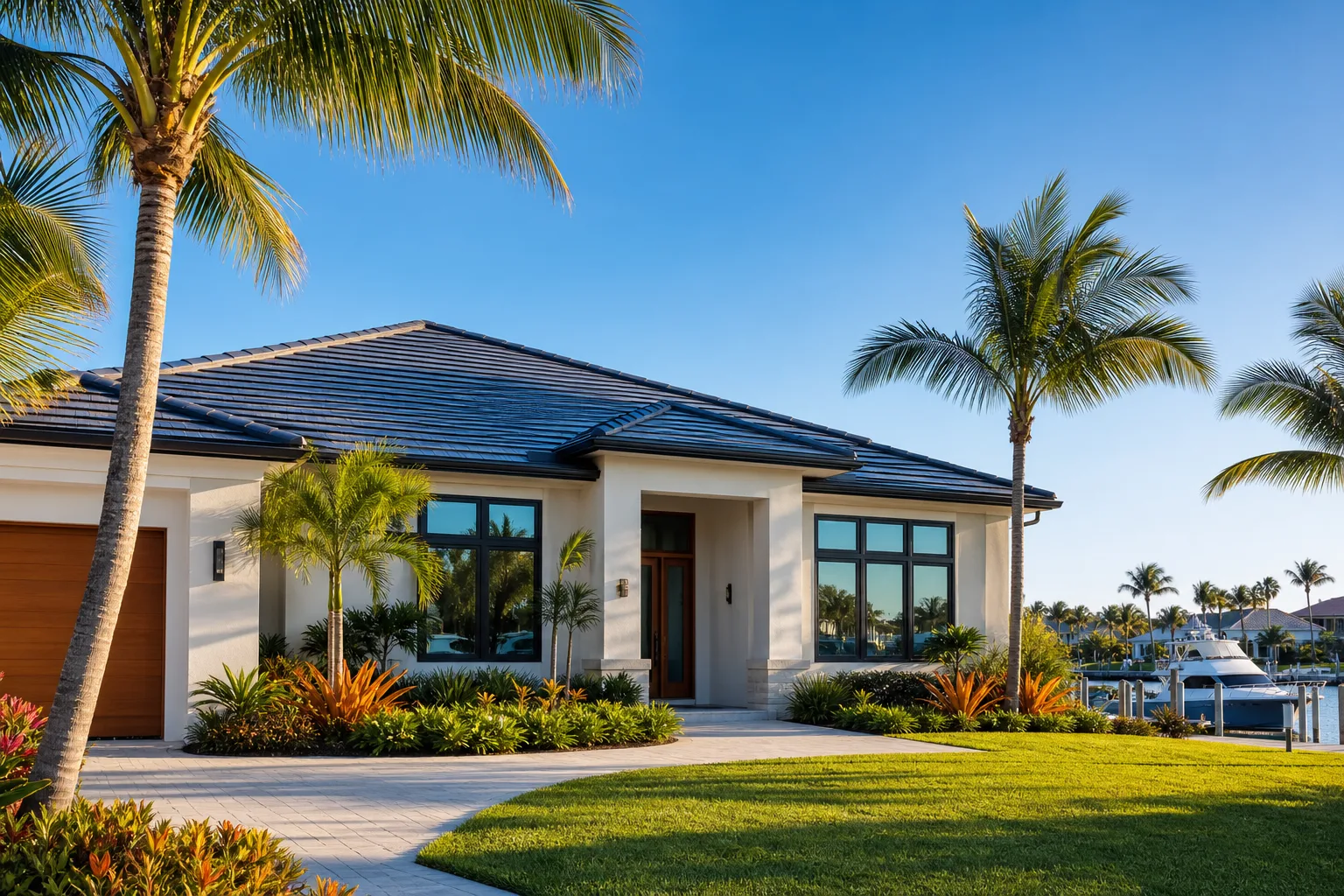
- Roof shape. Hip roofs (four slopes) perform better than gable roofs in high winds and are rated more favorably.
- Opening protection. Impact-rated windows, doors, and garage doors qualify for opening protection credits. A single-car garage door upgrade can shift your rating category.
- Roof age and material. A newer roof, especially one rated to Florida Building Code standards, reduces your carrier's risk and often your premium.
The wind mitigation inspection is the key first step. Hire a Florida-licensed inspector to complete a Citizens wind mitigation form. The report is good for five years and you submit it directly to your insurer. The inspection cost and any resulting credits vary; ask your insurer to estimate the credit for your specific home.
Note: Wind mitigation credits apply to the windstorm portion of your homeowners policy. Flood damage requires dedicated coverage, usually through a separate policy, though some private insurers offer endorsements. More on that below.
3. Understand What Your Homeowners Policy Does NOT Cover, Then Fill the Gaps Separately
One of the quieter reasons homeowners overpay is carrying overlapping coverage in one area while leaving dangerous gaps in another.
A standard homeowners policy may cover hurricane wind damage, fire, theft, liability, and personal property, subject to exclusions and deductibles. Additional living expenses generally require a covered loss or specified civil-authority event; evacuation alone does not guarantee payment.
Your standard homeowners policy does NOT cover:
- Rising water, storm surge, or any water that enters from the ground up
- Flood damage of any kind, including Lantana's routine heavy rain flooding along the Intracoastal corridor
Lantana sits at low elevation with significant flood zone exposure. Standard homeowners policies generally exclude flood. Dedicated coverage is available through NFIP, separate private policies, and sometimes private endorsements; check the actual policy.
Most NFIP policies have a 30-day waiting period, with FEMA-listed exceptions for certain loan and map-change situations. Ask when the specific policy would take effect; do not wait for a storm to approach. Learn about your flood insurance options now, before the season is active.
Understanding this separation also helps you right-size your homeowners policy. Keep your homeowners dwelling limit aligned with rebuild cost while reviewing flood limits separately.
Want a second look at your Florida homeowners coverage? Get a free home quote
4. Review Your Deductible Structure Carefully (Especially the Hurricane Deductible)
Florida homeowners policies almost always carry two deductibles: a standard all-other-perils deductible and a separate hurricane deductible.
The hurricane deductible is not a flat dollar amount in most cases. It is a percentage of your dwelling coverage, commonly 2 percent or 5 percent. On a home insured for $400,000, a 5 percent hurricane deductible means you pay the first $20,000 out of pocket after a storm before coverage kicks in.
Here is the trade-off: choosing a higher hurricane deductible lowers your annual premium, sometimes significantly. But you need to be realistic about your ability to cover that out-of-pocket cost if a storm hits.
A few things to check before adjusting your deductible:
- What does your current mortgage require? Some lenders cap the hurricane deductible they will allow.
- Do you have liquid savings to cover the deductible amount if you needed to tomorrow?
- Is the premium savings worth the risk given where your home sits relative to storm surge zones and typical wind paths?
An independent agent can model several deductible scenarios side by side so you make this decision with real numbers in front of you rather than guessing.
5. Bundle Strategically, But Verify That Each Policy Is Still Competitive
Bundling auto and home insurance with the same carrier is a common way to earn a multi-policy discount. In Florida, this still works with certain carriers, and it is worth asking about. However, bundling in South Florida requires one extra step that out-of-state advice often misses.
Not every carrier that writes strong auto insurance in Florida also writes competitive homeowners. Some carriers excel at one and are mediocre or overpriced on the other. A bundle discount means little if the underlying homeowners premium is already high for your home.
The right question to ask is not "Do you offer a bundle discount?" but rather "Is each policy in this bundle actually competitive on its own?"
At B & B, we compare bundled and split options from multiple carriers so you can see which fits your situation. We also handle other coverage types that Lantana homeowners often need alongside their home policy, including flood insurance, boat insurance for those docking along the Intracoastal, and even golf cart insurance for residents in communities where carts are common, note that B & B covers standard golf carts and refers street-legal carts and LSVs to a specialist. Having one local agency manage multiple policies also means one phone call when something happens.
Bottom Line
Finding affordable homeowners insurance in Lantana FL takes more than clicking through a national comparison site. It requires knowing which Florida carriers are actually writing policies right now, what wind mitigation credits your home qualifies for, how your hurricane deductible affects your real risk exposure, and where your homeowners policy ends and your flood coverage needs to begin.
The Florida hurricane season runs June 1 through November 30. The best time to act is before your renewal or a storm, allowing time for inspections, carrier comparisons, and any applicable flood waiting period.
B & B Insurance Agency has served Lantana and Palm Beach County homeowners since 1998. We are independent, locally owned, and we shop the market so you do not have to. Contact us for a free homeowners quote and we will walk through your current policy, your property specifics, and what the market looks like for your address right now.
Want a second look at your Florida homeowners coverage?
B & B Insurance compares coverage and pricing from multiple carriers, and we know Florida wind and flood rules cold.
Frequently asked questions
Why is homeowners insurance so expensive in Lantana FL compared to other states?
South Florida's exposure to hurricanes, storm surge, and litigation costs makes it one of the most expensive homeowners insurance markets in the country. Carriers price premiums to reflect the realistic probability of major wind and water claims in coastal Palm Beach County. Working with an independent agent lets you compare coverage and pricing from multiple carriers in this market.
Does my homeowners insurance cover flood damage in Lantana?
No. Standard homeowners policies specifically exclude flood damage, including storm surge and water that enters from the ground up. Lantana has significant flood zone exposure, and you need a separate flood policy, either through the National Flood Insurance Program or a private carrier, to be protected. Most NFIP policies have a 30-day waiting period with exceptions; ask when your coverage would begin.
What is a wind mitigation inspection and how much can it save me?
A wind mitigation inspection is performed by a Florida-licensed inspector who documents your home's construction features, including roof attachment method, roof shape, roof covering, and opening protection. Carriers use the resulting report to apply discounts to the windstorm portion of your premium. Qualifying features may lower the wind portion of the premium. Ask your insurer to estimate any credit and compare it with the inspection cost.
How does the hurricane deductible work on a Florida homeowners policy?
Florida homeowners policies typically carry a separate hurricane deductible that is calculated as a percentage of your dwelling coverage, often 2 or 5 percent, rather than a flat dollar amount. On a $400,000 insured home, a 5 percent hurricane deductible means you pay the first $20,000 before coverage applies. Choosing a higher percentage lowers your annual premium but increases your out-of-pocket exposure after a storm.
When is the best time to shop for homeowners insurance in Lantana?
Start well before your next renewal or an approaching storm. Shopping early gives you time to get a wind mitigation inspection, compare multiple carriers without pressure, and secure a flood policy before the 30-day NFIP waiting period becomes a concern. Waiting until a storm is forecast typically leaves you with fewer options and higher prices.
How is an independent insurance agent different from going directly to a carrier?
An independent agency like B & B Insurance can compare available carriers and knows which ones are actively writing in Palm Beach County right now. Direct carriers can only offer their own rates, while an independent agent compares coverage and pricing from multiple carriers on your behalf.
Related Coverage from B & B
Have a question about this topic?
Our experienced agents are happy to help — no pressure, just straight answers.


