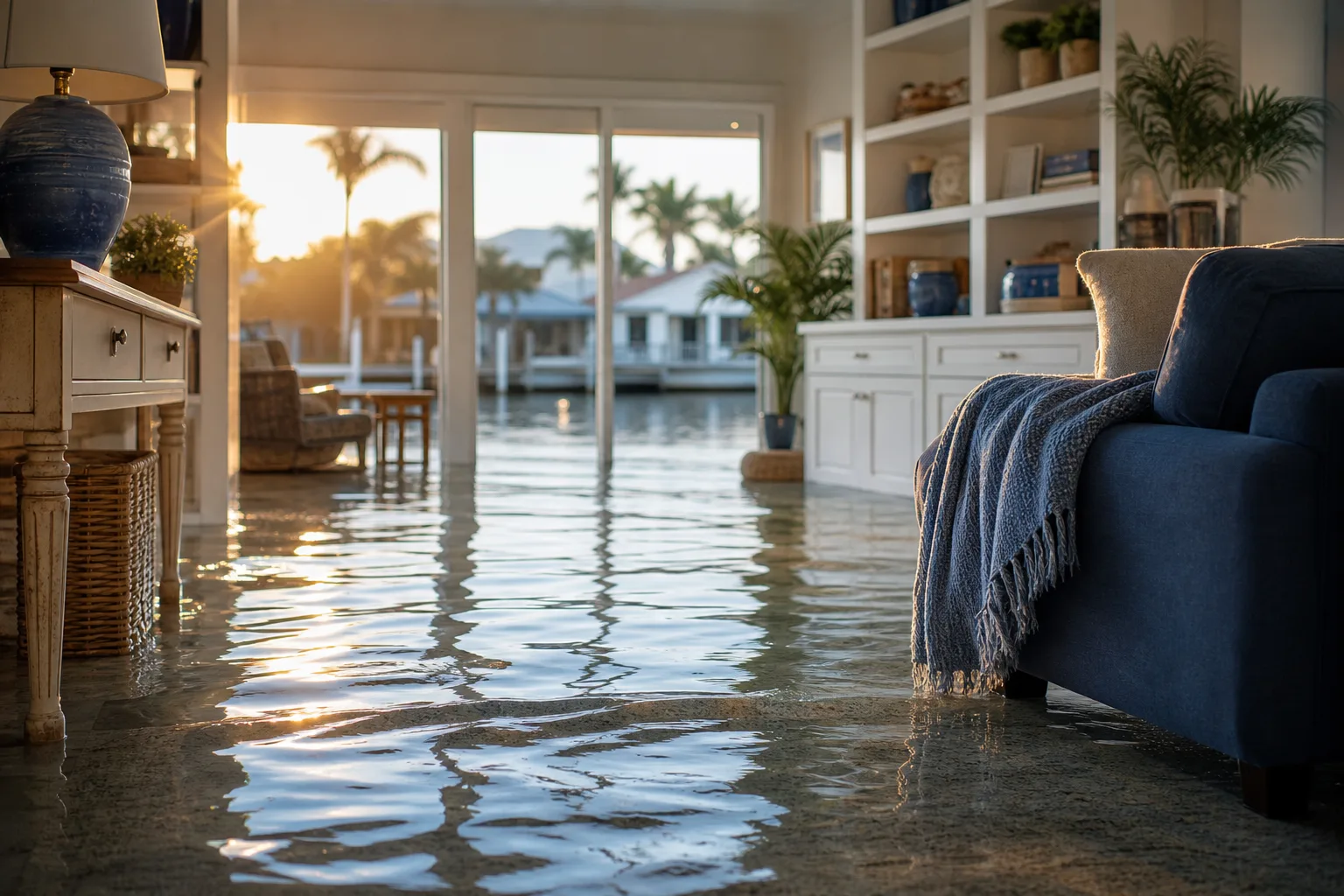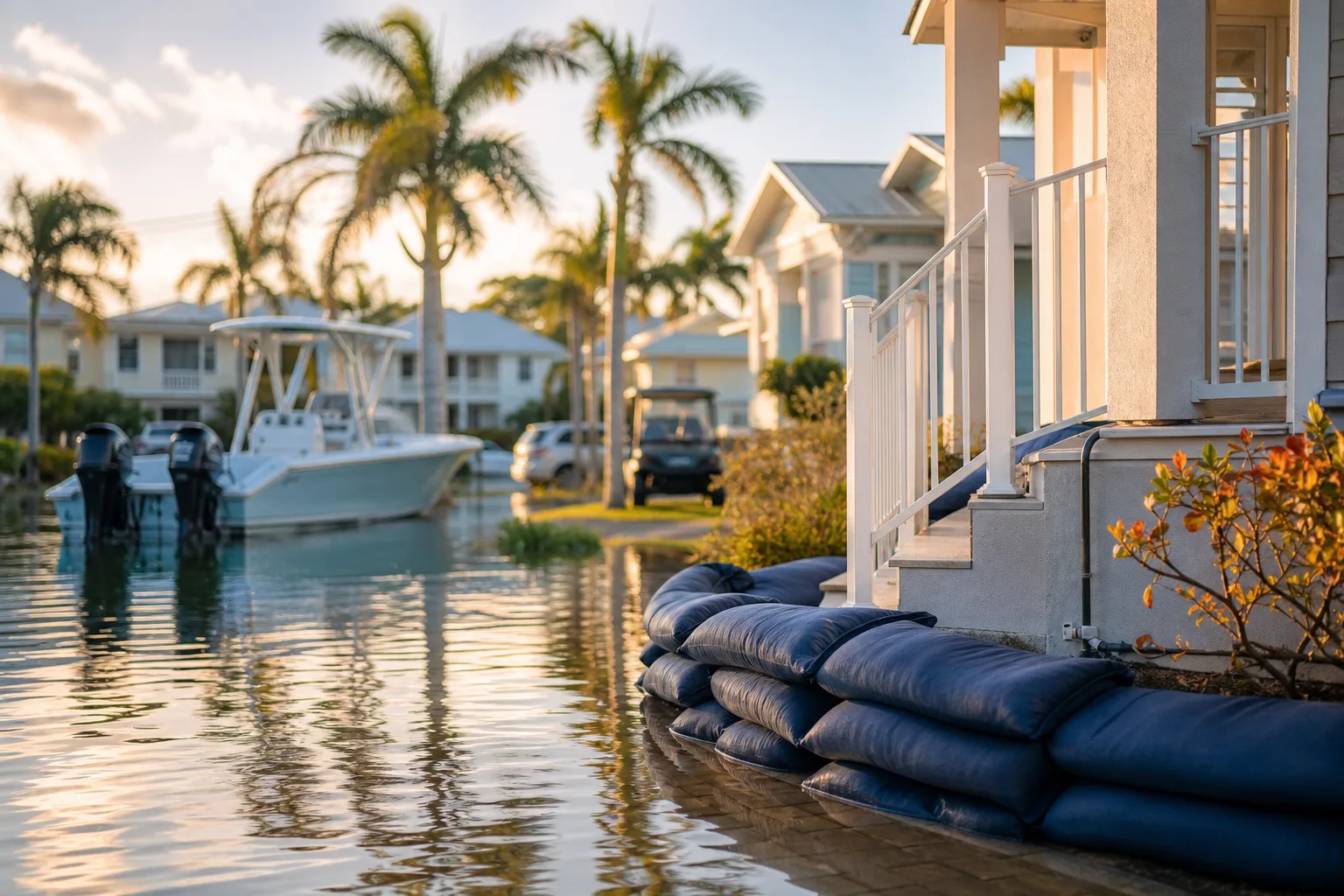
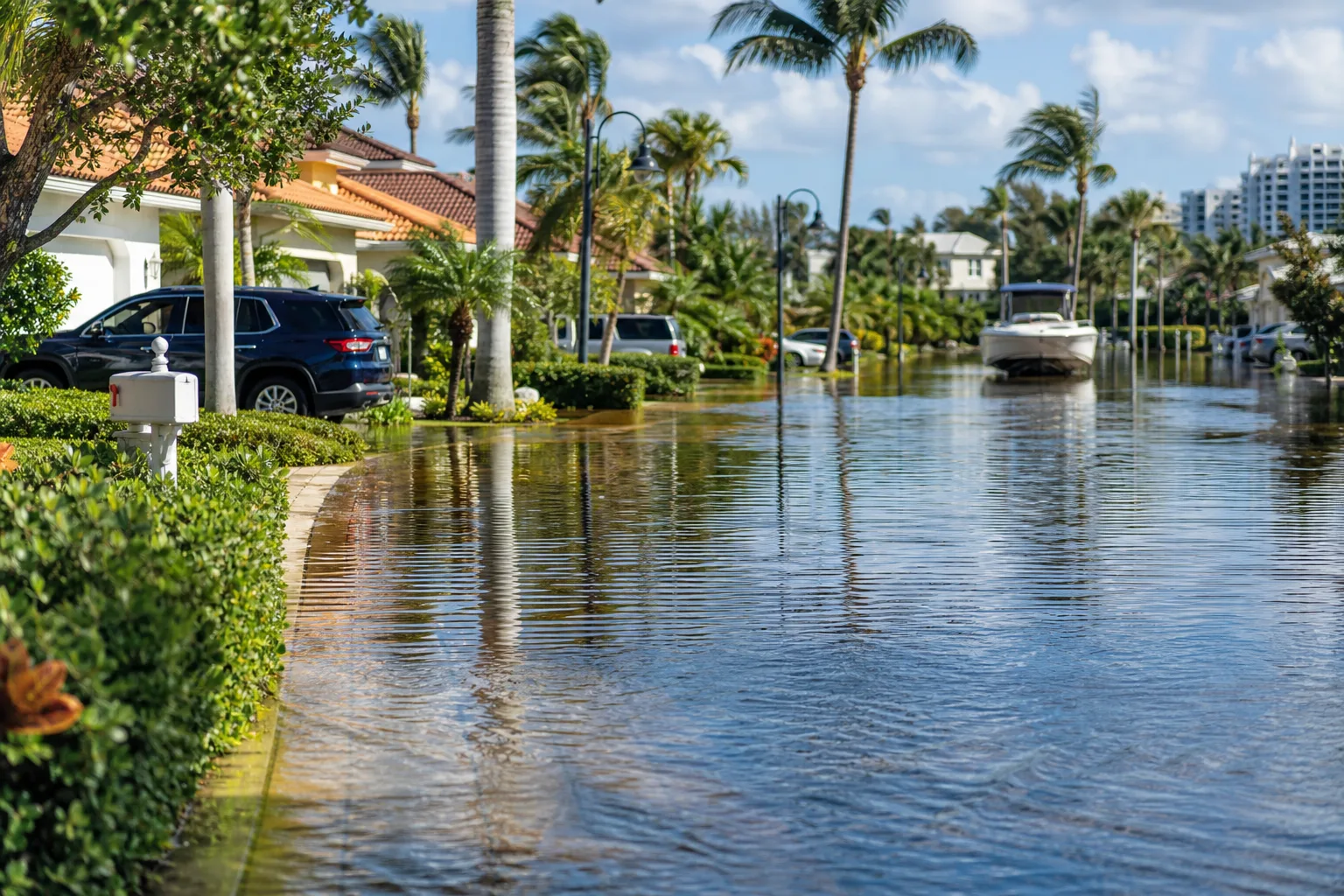
TL;DR: Inland flooding (rainwater that overwhelms drainage) and storm surge (ocean or bay water pushed ashore by a hurricane) are two separate perils under Florida insurance. Your standard homeowners policy covers neither. Flood insurance through the NFIP or a private carrier covers both in most situations, but storm surge has specific eligibility rules that trip up many policyholders. Check your declarations page now, not after a named storm.
At a Glance
| Factor | Inland Flood | Storm Surge |
|---|---|---|
| Source of water | Rain runoff, rising rivers, overwhelmed drainage | Ocean, bay, or estuary pushed inland by wind |
| Covered by standard HO policy? | No | No |
| Covered by NFIP flood policy? | Yes, if building meets eligibility rules | Generally yes, classified as flooding |
| Covered by private flood policy? | Yes, varies by carrier | Yes, varies by carrier |
| Waiting period (NFIP)? | 30-day standard | 30-day standard (exceptions apply) |
| Wind damage component? | Rarely relevant | Often paired with windstorm claim |
Why the Distinction Matters in Palm Beach County
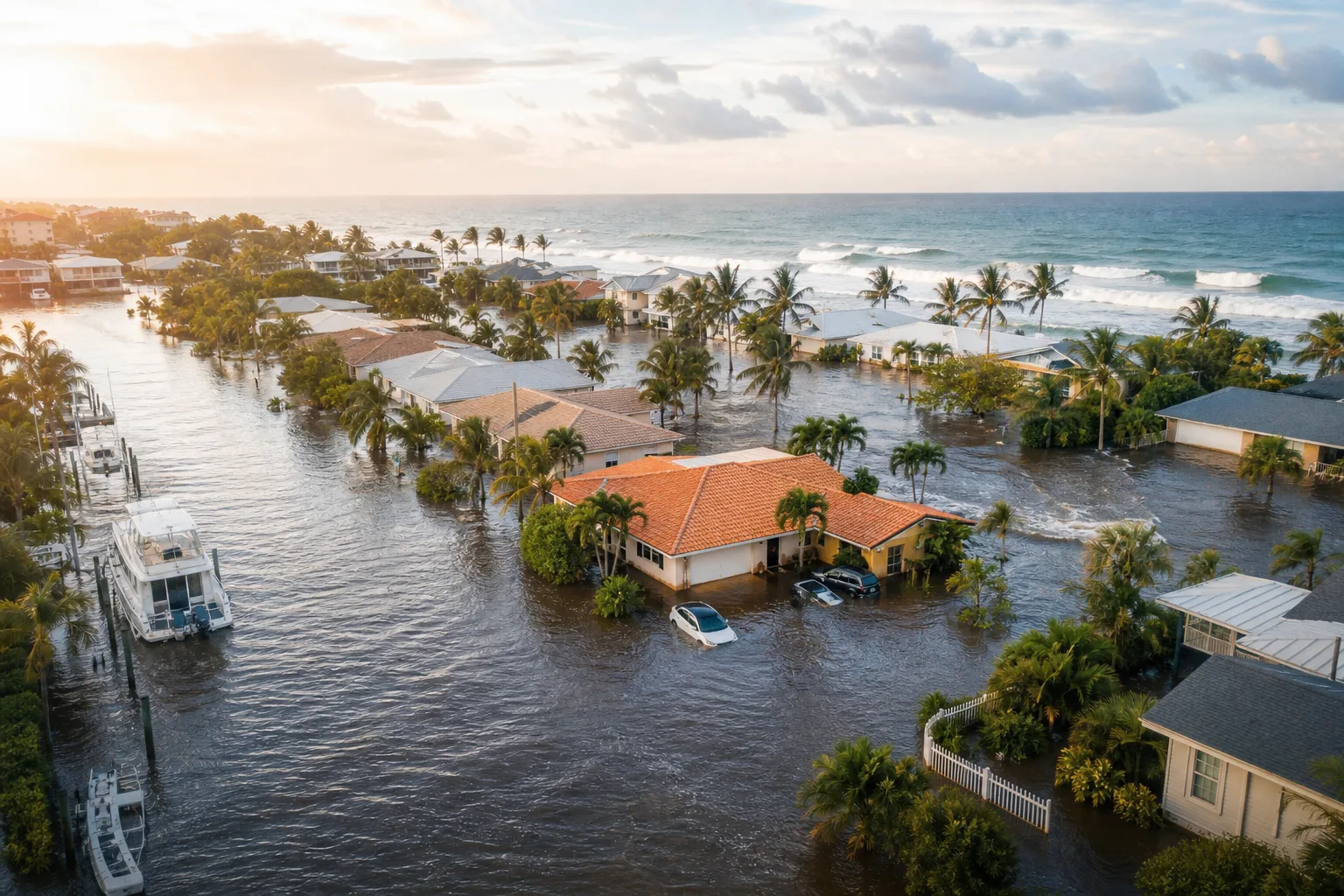
Florida sits at the intersection of two very different flood threats. Western communities near canals and the Everglades watershed, including parts of Lantana, Lake Worth Beach, and Greenacres, face inland flooding when tropical rainfall overwhelms the canal system. Eastern coastal communities face storm surge, which the National Hurricane Center defines as an abnormal rise of water generated by a storm's winds.
FEMA data shows storm surge is historically the leading cause of hurricane-related deaths in the United States. But from a property-loss standpoint, inland flooding routinely causes billions in damage outside designated high-risk zones, precisely because many homeowners there carry no flood coverage at all.
The policy language treats both as "flooding," yet the claims process and coverage triggers can differ based on how water entered your home.
What Your Standard Homeowners Policy Does and Does Not Cover
A standard Florida HO-3 policy covers wind damage to your structure. If a hurricane removes your roof and rain enters through that opening, the resulting interior damage is typically covered as a windstorm loss. That is the narrow carve-out where HO policies touch water.
But if water rises from the ground, backs up through drains, or arrives as surge, your homeowners policy does not respond. This exclusion is explicit, not a technicality. The Insurance Information Institute confirms that flood damage of any kind is excluded from standard homeowners and renters policies.
If you want protection for rising water, you need a separate flood policy. Visit our homeowners insurance page to review what your current policy structure includes.
How NFIP Flood Policies Handle Inland Flood
The National Flood Insurance Program, administered by FEMA, defines a flood as a general and temporary condition of partial or complete inundation of two or more acres of normally dry land, or of two or more properties. Inland flooding caused by heavy rain typically meets this definition when it affects a neighborhood or area, not just a single property.
NFIP building coverage pays for structural repairs up to $250,000. Contents coverage is a separate policy, capped at $100,000, and it does not cover items stored in a basement. Critically, the standard NFIP policy has a 30-day waiting period before coverage takes effect. Buying a policy the day a named storm is approaching does not help you.
Your homeowners policy doesn't cover flood. Let's fix that. Get a flood quote
How NFIP Flood Policies Handle Storm Surge
Storm surge is also classified as flooding under NFIP policy language, so the same building and contents limits apply. The key distinction for claims is how adjusters document the cause. When a hurricane hits, you may have both wind damage and surge damage to the same structure. NFIP covers the surge portion. Your windstorm or HO policy covers the wind portion. The claims process requires separating those damages, which can be contested.
One practical issue: surge can travel miles inland, affecting properties far outside traditional coastal zones. Homeowners in low-to-moderate risk zones (Zones B, C, and X on FEMA maps) often skip flood insurance because it is not required by their mortgage lender. Those properties are not immune to surge from a major storm.
Check your flood zone designation using the FEMA Flood Map Service Center.
Private Flood Insurance: Where the Rules Differ
Private flood carriers have entered the Florida market aggressively since 2019, and they often offer broader terms than the NFIP. For storm surge specifically, some private policies include replacement cost coverage on contents, higher building limits (above $250,000), and shorter or no waiting periods in some scenarios.
For inland flood, private carriers generally follow similar definitions to NFIP but may cover additional living expenses if you are displaced, which NFIP does not cover. Comparing both options before hurricane season is worth your time. B & B Insurance Agency shops multiple carriers and can compare NFIP and private flood options side by side. Start with a free quote or contact us directly.
The Wind-vs.-Water Dispute: A Real Claims Risk
After every major Florida hurricane, wind-vs.-water disputes appear. The core question: did wind cause structural damage before water entered, or did surge destroy the structure before wind mattered? The answer determines which policy pays, and how much.
To protect yourself before a storm:
- Document everything. Photograph your home's interior and exterior, including the roof, before hurricane season (June 1 is the deadline to aim for).
- Keep receipts for major contents. Contents claims under NFIP require proof of ownership.
- Know your policy numbers and carrier contact numbers. Store them somewhere other than inside your home.
- Understand your deductibles. Florida HO policies carry separate hurricane deductibles, often 2% to 5% of your insured value. Flood policies carry their own deductibles.
Verdict
Inland flood and storm surge are treated as the same peril (flooding) under NFIP and most private flood policies, but they arrive through different mechanisms and often pair with wind losses in ways that complicate claims. Your standard homeowners policy covers neither.
If you live in Palm Beach County, whether inland near canals or near the Intracoastal, carrying a separate flood insurance policy is the only way to close that gap. Review your FEMA flood zone, check whether NFIP or a private carrier fits your property better, and get that policy in place at least 30 days before the storm season peaks in August and September.
Your homeowners policy doesn't cover flood. Let's fix that.
From NFIP to private flood, B & B Insurance finds the right flood protection for your Palm Beach County home.
Frequently asked questions
Does my Florida windstorm policy cover storm surge damage?
No. Windstorm policies, including the coverage offered through Citizens Property Insurance, cover physical damage caused by wind. Storm surge is classified as flooding and requires a separate flood policy. The two coverages work together after a hurricane but are purchased and claimed separately.
What happens if I buy flood insurance right before a hurricane?
NFIP policies include a standard 30-day waiting period before coverage activates. A policy purchased after a storm is named, or within 30 days of a storm's impact, will not cover that event. Some private flood carriers offer shorter waiting periods, but you should confirm terms before relying on them.
Are canal-adjacent homes in Lantana at higher inland flood risk?
Homes near South Florida's canal system can be exposed to flooding when heavy rain overwhelms water management infrastructure, even if they are not in a FEMA high-risk flood zone. The South Florida Water Management District manages regional flood control, but local drainage capacity has limits during extreme rainfall events. Carrying flood insurance is advisable regardless of your official flood zone designation.
Does NFIP flood insurance cover my furniture and appliances if surge enters my home?
NFIP contents coverage is a separate policy from building coverage and must be purchased on its own. It is capped at $100,000, does not cover items in basements, and reimburses at actual cash value rather than replacement cost unless you have a private policy with better terms. Review your declarations page to confirm what contents coverage you currently carry.
Have a question about this topic?
Our experienced agents are happy to help — no pressure, just straight answers.