

Related coverage: Homeowners Insurance, Flood Insurance
TL;DR: Call your insurer promptly, document everything before cleanup, and keep all receipts. Deadlines matter under Florida law. Knowing the process before you need it puts you in a much stronger position.
What You Need
- Your homeowners policy declarations page (policy number, insurer contact, deductible amounts)
- A phone or camera to photograph and video damage
- A written inventory of damaged or destroyed items
- Receipts or estimates for emergency repairs
- A notebook or folder to log every call, date, and name
If you are unsure what your current policy actually covers, now is a good time to review it. You can also reach out to B & B Insurance Agency for a plain-English explanation before you ever need to file.
Step 1: Protect the Property from Further Damage
Your policy requires you to take reasonable steps to prevent additional loss. That means tarping a damaged roof, boarding broken windows, or shutting off water at the main valve.
Do this work yourself or hire someone quickly, but save every receipt. Your insurer should reimburse reasonable emergency mitigation costs under most standard policies. Do not, however, begin permanent repairs until an adjuster has inspected the damage.
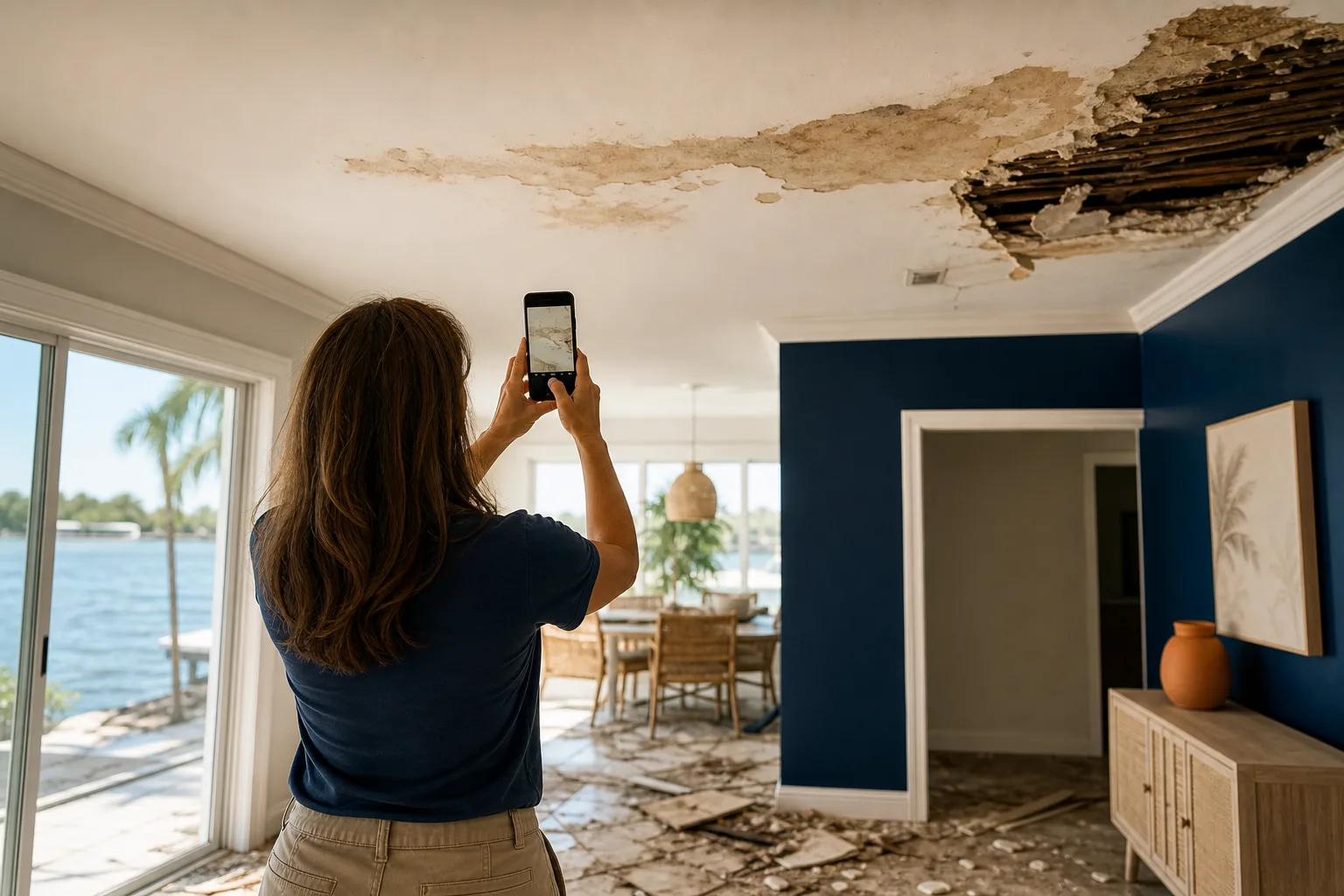
Here is what I would tell my own family: take a slow video walkthrough of every affected room before a single piece of debris is moved. That footage is often more valuable than photos alone.
Step 2: Document Everything Before Cleanup
Photograph and video all damage from multiple angles. Capture:
- Exterior damage (roof, walls, windows, fencing, outbuildings)
- Interior damage (ceilings, floors, walls, furniture, appliances)
- Any visible water intrusion lines or mold beginning to form
- Damaged personal property with serial numbers or model labels visible when possible
Create a written list of damaged or destroyed items. Note the approximate age and estimated replacement cost of each. If you documented your home contents before a storm, pull that inventory now.
Step 3: Review Your Policy Before You Call
Spend 10 minutes with your declarations page first. Look for:
- Dwelling deductible vs. hurricane/wind deductible. Florida policies often carry a separate, higher percentage-based deductible for wind events. The Florida Office of Insurance Regulation explains how these work.
- Coverage A (dwelling), Coverage B (other structures), Coverage C (personal property), and Coverage D (loss of use).
- Any exclusions relevant to your loss, such as mold caps or water backup limits.
Knowing your deductible before you call prevents surprises and helps you decide whether a small claim is worth filing at all.
Step 4: Report the Claim Promptly
Call your insurer's claims line or file online as soon as practical. As of recent legislative changes, Florida Statute 627.70132 sets a one-year deadline for hurricane-related claims from the date of loss, but this deadline has changed more than once in recent years (a prior version set a three-year period), and it applies only to claims arising after the effective date of the applicable legislation. Confirm the current deadline that applies to your specific situation with an attorney or your insurer, and do not wait anywhere near the limit regardless. Delayed reporting can complicate your claim.
When you call, have ready:
- Policy number
- Date and cause of loss
- Brief description of damage
- Your contact information and the property address
Write down the claim number, the name of the person you spoke with, and the time of the call. Every contact from this point forward gets logged.
Paying too much for Florida homeowners insurance? Get a free home quote
Step 5: Meet the Adjuster and Know Your Rights
The insurer will assign a staff adjuster or an independent adjuster. They work for the carrier. You have the right to be present during the inspection, ask questions, and point out every item of damage.
Walk the adjuster through the property yourself. Do not assume they will find everything. If you feel the inspection was rushed or items were missed, you can:
- Request a re-inspection in writing
- Hire a licensed public adjuster to represent you (Florida public adjusters are licensed by the Florida Department of Financial Services)
- Invoke the appraisal clause in your policy if you dispute the settlement amount
Step 6: Understand the Settlement Offer
The adjuster will produce a scope of loss, and the insurer will issue an Explanation of Benefits or a coverage decision. Review it carefully against your own documentation.
Actual Cash Value (ACV) vs. Replacement Cost Value (RCV). Most Florida homeowners policies pay ACV first (replacement cost minus depreciation), then release the recoverable depreciation once repairs are completed and documented. Do not pocket ACV and skip repairs if your policy requires completed work to release the holdback.
If the offer seems low, get at least one independent contractor estimate before accepting. A signed statement saying you accept the payment as full and final settlement is binding.
Step 7: Complete Repairs and Close the Claim
Hire licensed, insured contractors. In Florida, verify contractor licensing at myfloridalicense.com. Get lien releases from subcontractors before making final payment.
Submit proof of completed repairs (photos, paid invoices) to your insurer to release any withheld depreciation. Keep copies of everything for at least five years.
Common Mistakes
- Signing an Assignment of Benefits (AOB) without reading it. Florida has restricted AOB abuse, but some contractors still present these. An AOB transfers your claim rights to the contractor. Read before signing.
- Throwing away damaged items. Keep damaged property until the adjuster sees it or gives written permission to discard it.
- Forgetting loss-of-use coverage. If your home is uninhabitable, Coverage D may reimburse hotel, rental, and meal costs above your normal living expenses. Keep those receipts.
- Assuming flood damage is covered. Standard homeowners policies exclude flood. If rising water entered your home, that is a separate flood insurance claim entirely.
- Missing the supplemental claim deadline. If additional damage surfaces during repairs, report it quickly. Florida has specific deadlines for supplemental and reopened claims under Fla. Stat. 627.70132; confirm the current timeframes with an attorney or your insurer as these have been subject to legislative change.
Bottom Line
The claims process rewards people who document thoroughly, report promptly, and read before they sign. Most Florida homeowners only file a handful of claims in a lifetime, so the process feels unfamiliar when it matters most.
If your current policy has coverage gaps, high deductibles that surprised you, or exclusions you did not know about, that is exactly the kind of review B & B Insurance Agency does every day. We shop multiple carriers so your next policy fits before you need to use it. Get a no-pressure quote or ask a question here.
Paying too much for Florida homeowners insurance?
B & B Insurance shops multiple carriers to find you the right coverage at the right price, and we know Florida wind and flood rules cold.
Frequently asked questions
How long does a Florida homeowners insurer have to pay my claim?
Under Florida Statute 627.70131, insurers have generally been required to acknowledge a claim within 14 days, begin investigation promptly, and pay or deny within 90 days of receiving proof of loss, though these timeframes are subject to legislative change and certain exceptions apply, such as when the insurer suspects fraud or needs additional information. Verify the current statutory requirements with your agent or an attorney, as these deadlines may have been amended since this article was written.
Can my insurer drop me after I file a claim in Florida?
Florida law restricts non-renewals, but insurers can non-renew a policy if you have filed a certain number of claims within a set period. Filing a claim for a very small amount is sometimes not worth the long-term premium impact. Ask your agent to run through the tradeoffs before filing.
What is a public adjuster and do I need one?
A public adjuster is a licensed professional who represents you, not the insurance company, during the claims process. They can be useful for large or complex losses where you feel the insurer's settlement offer is too low. They typically charge a percentage of the settlement, so weigh that cost against the potential recovery.
Does my homeowners policy cover water damage from a burst pipe or only from storms?
Most standard homeowners policies cover sudden and accidental water damage from internal sources like burst pipes, but they exclude gradual leaks and flooding from outside the home. Flood damage from storm surge or heavy rain requires a separate flood policy. Review your policy's water damage language carefully with your agent.
Related Coverage from B & B
Have a question about this topic?
Our experienced agents are happy to help — no pressure, just straight answers.


