TL;DR: Uninsured motorist (UM) coverage steps in when a driver who hits you has no liability insurance, or not enough of it, to cover your injuries. In Florida it is optional, not required, but given the state's high rate of uninsured drivers it fills a gap that PIP alone cannot close. The right limit depends on your health coverage, income, and how much driving you do.
At a Glance
| Uninsured Motorist (UM) | Underinsured Motorist (UIM) | Florida PIP | |
|---|---|---|---|
| Triggers when | At-fault driver has zero liability coverage | At-fault driver's liability limit is too low | You are injured, regardless of fault |
| Pays for | Bodily injury, lost wages, pain and suffering | Bodily injury above the other driver's limit | 80% of medical (for emergency medical conditions up to $10,000; $2,500 cap for non-emergencies), 60% of lost wages, up to limit |
| Property damage | Optional stacked UM may help; UMPD is separate | No | No |
| Required in FL | No | No | Yes ($10,000 minimum) |
| Your passengers covered | Yes | Yes | Depends on whether passengers have their own PIP policy and other conditions; consult your policy for details |
Why Florida Is a High-Risk State for Uninsured Drivers
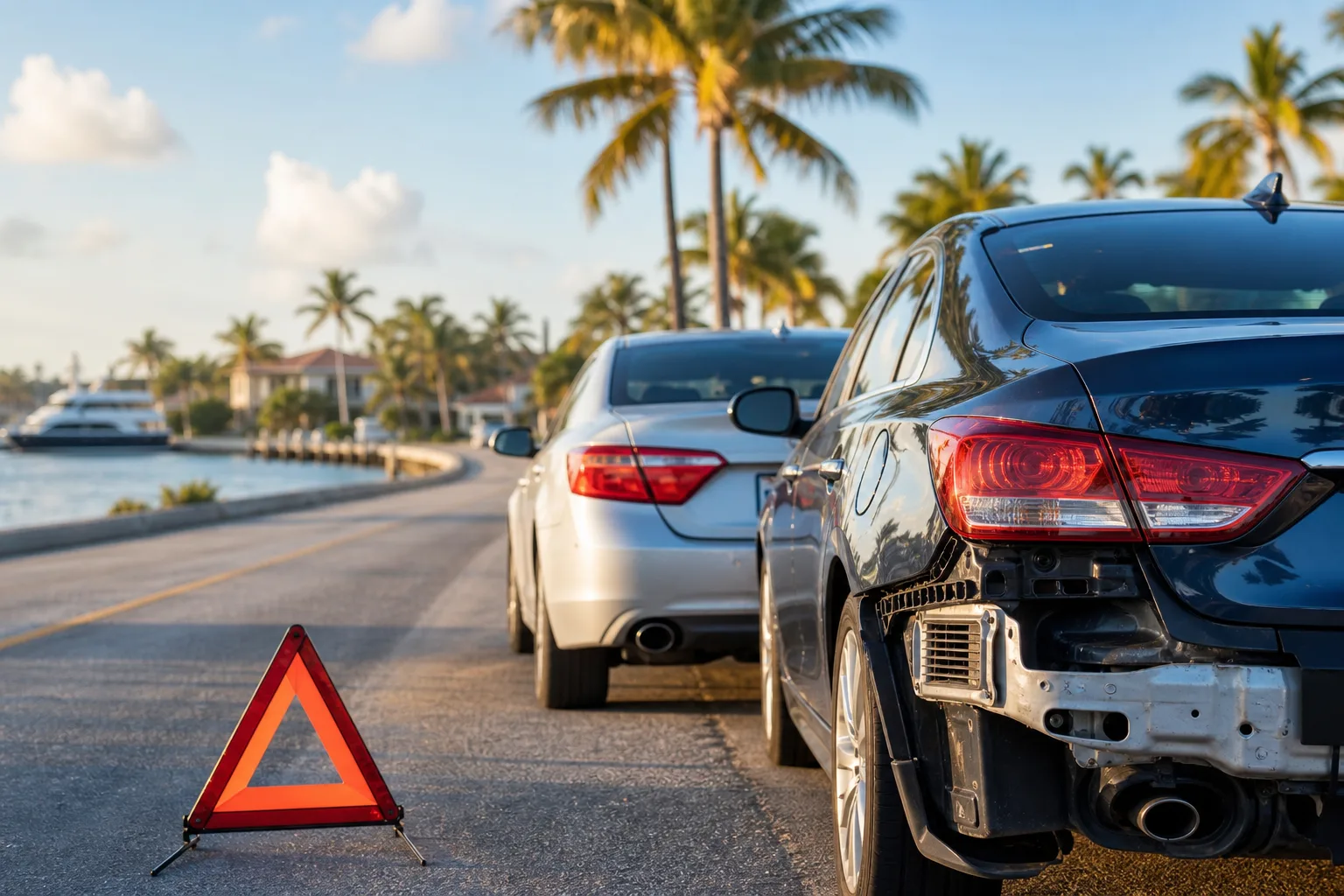
Florida consistently ranks among the top five states for uninsured motorists. The Insurance Research Council has estimated that roughly one in five Florida drivers carries no liability insurance at all. That means every fifth car sharing I-95 or US-1 with you may have nothing to pay your bills if they cause a crash.
Florida is also a no-fault state, which means your own Personal Injury Protection (PIP) pays first. But PIP maxes out at $10,000, and that full $10,000 medical benefit applies only when an emergency medical condition is diagnosed; non-emergency treatment is capped at $2,500. PIP covers only 80% of medical bills and 60% of lost wages, and does not touch pain and suffering. A serious accident blows through that limit fast.
What Uninsured Motorist Coverage Actually Pays
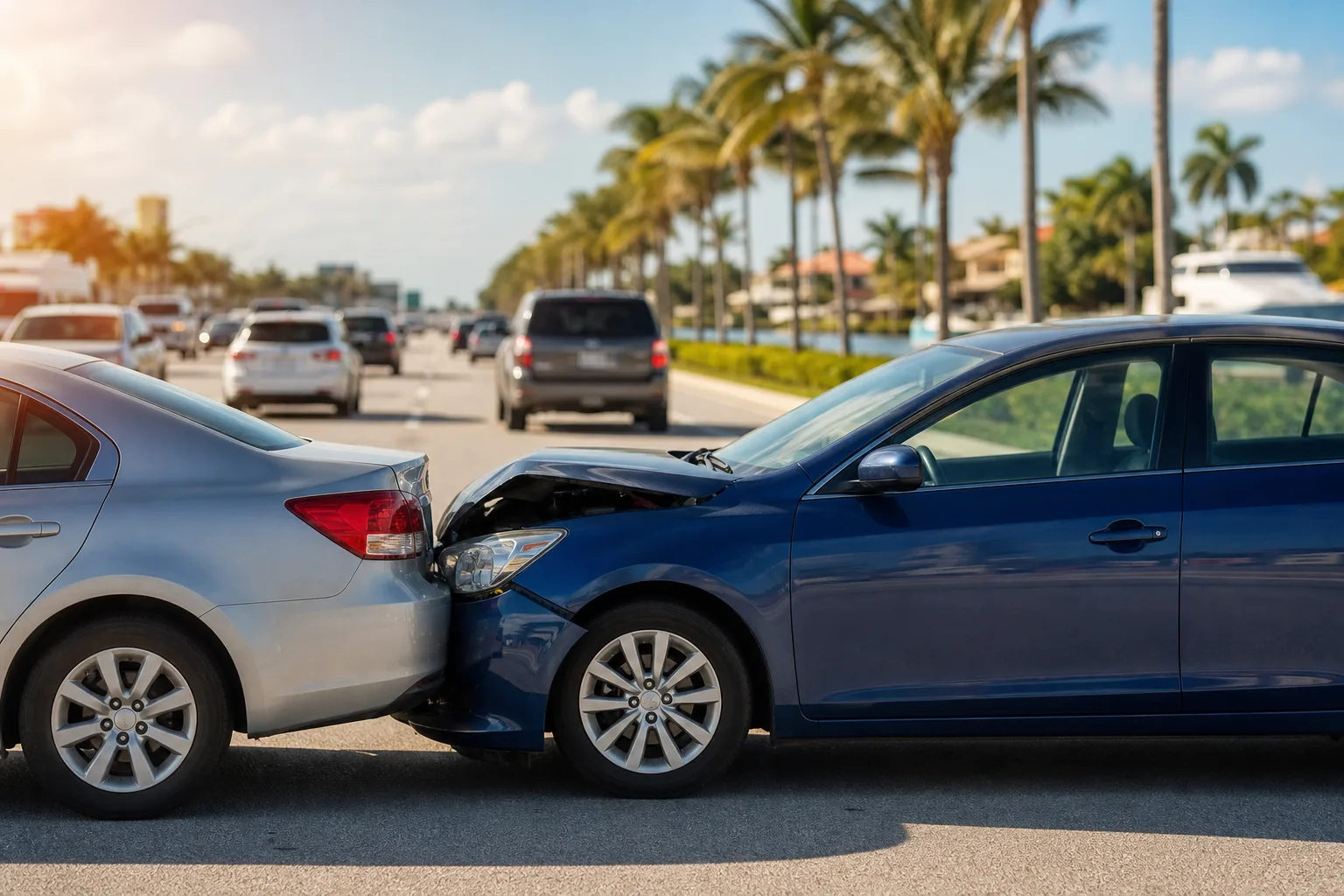
UM coverage is a first-party benefit, meaning you file the claim with your own insurer. Here is what it can cover:
- Medical expenses beyond what PIP pays, up to your UM limit
- Lost wages not fully recovered under PIP
- Pain and suffering (this is the big one PIP never touches)
- Injuries to passengers in your vehicle at the time of the crash
- Hit-and-run accidents, provided there is physical contact with your vehicle in most cases
UIM (underinsured motorist) works the same way but triggers when the at-fault driver does carry liability insurance, just not enough. In Florida, UM and UIM are typically sold together on the same coverage line.
Let's see if you're overpaying for car insurance. Get a free auto quote
What Uninsured Motorist Coverage Does NOT Pay
This is the part people miss. UM has real limits.
Property damage to your car. Standard UM covers bodily injury only. If an uninsured driver totals your car, you need collision coverage, or a separate uninsured motorist property damage (UMPD) endorsement, to repair or replace the vehicle.
Your own medical bills if you caused the crash. UM only responds when an uninsured or underinsured driver is legally at fault.
Injuries above your UM limit. If you carry $25,000 UM and your surgery costs $80,000, you are on the hook for the rest unless you have a health policy that picks up the slack.
Household members excluded by endorsement. Some policies exclude named household members from UM. Read that declarations page carefully.
Non-contact hit-and-run in some cases. If a phantom vehicle runs you off the road without touching your car, carriers often contest the claim. Florida law generally requires physical contact with an unidentified vehicle to trigger UM in a hit-and-run scenario, as set out in Florida Statute 627.727, though Florida courts have recognized limited exceptions, for example, where an independent witness corroborates the phantom vehicle's involvement.
Stacked vs. Non-Stacked UM: A Florida-Specific Decision
Florida gives you a choice most states do not: stacked or non-stacked UM coverage.
Non-stacked means your UM limit applies per vehicle involved in the claim. If you have one car with $100,000 UM, that is your ceiling.
Stacked means if you insure multiple vehicles on the same policy (or across policies with the same insurer in some cases), you can multiply the limit by the number of vehicles. Two cars with $100,000 each gives you $200,000 in stacked coverage.
Stacked costs more, sometimes noticeably more. But for families with multiple vehicles and modest health coverage, it can make a real difference when a serious injury claim exceeds a single-vehicle limit.
Here is what I would tell my own family: if you own two or more vehicles, get a stacked quote alongside the non-stacked quote and compare the premium difference against the extra coverage. Often the gap is smaller than people expect.
How to Choose Your UM Limit
Use this diagnostic sequence:
- Check your health insurance. A solid group health plan with low out-of-pocket maximums reduces your exposure. If your health coverage is thin or you are uninsured, UM matters even more.
- Look at your income. Lost wages not covered by PIP come out of your pocket. Higher earners lose more per week out of work.
- Match UM to your liability limit. Florida allows you to choose a UM limit lower than your bodily injury liability, but carriers must offer UM equal to your BI limit. Many agents, including me, suggest matching them. If you trust your own driving enough to carry $300,000 BI liability, you deserve the same protection when someone else is at fault.
- Consider an umbrella. A personal umbrella policy can extend UM coverage in some situations, though terms vary by carrier. Ask your agent specifically whether the umbrella picks up UM losses.
- Revisit annually. Medical costs rise. Your UM limit should keep pace.
Verdict
UM coverage is one of the most valuable, and most overlooked, additions to a Florida auto policy. PIP is required but thin. Health insurance helps but does not cover pain and suffering or 100% of lost wages. UM fills exactly that gap, especially on roads where one in five drivers may have nothing.
The coverage gap I see most often: drivers who carry high liability limits to protect others but minimal UM to protect themselves. That is backwards. Protect your family the same way you protect your assets.
If you want to compare UM options across multiple carriers, get a free quote from B & B Insurance Agency or browse our auto insurance page to see what we can shop for you. We have been helping Palm Beach County families find the right coverage since 1998, and we will never push you toward a limit that does not fit your situation.
Let's see if you're overpaying for car insurance.
As an independent agency we compare rates across carriers so you don't have to. Free quotes, local service since 1998.
Frequently asked questions
Is uninsured motorist coverage required in Florida?
No. Florida requires PIP and property damage liability, but UM coverage is optional. Insurers must offer it, and you must reject it in writing if you decline. Given Florida's high rate of uninsured drivers, declining without other solid coverage in place is a risk worth thinking through carefully.
Does UM coverage pay for my car repairs after a hit-and-run?
Standard UM bodily injury coverage does not pay for vehicle damage. You would need collision coverage or a separate uninsured motorist property damage (UMPD) endorsement to cover repairs. Florida also generally requires physical contact with an unidentified vehicle before most carriers will honor a hit-and-run UM claim, though courts have recognized limited exceptions.
Can I carry a lower UM limit than my bodily injury liability limit?
Florida law allows you to select a UM limit lower than your BI liability limit, but your insurer must first offer you a UM limit equal to your BI limit and you must sign a written rejection of the higher amount. Many agents recommend matching the two limits so you are as protected as a victim as you are protected as a defendant.
Does UM coverage protect my passengers?
Yes. Passengers in your vehicle at the time of a crash with an uninsured or underinsured driver are generally covered under your UM policy, up to your limit. This is one advantage UM has over PIP, which covers passengers differently depending on whether they carry their own PIP policy and other conditions, consult your policy or agent for specifics.
Have a question about this topic?
Our experienced agents are happy to help — no pressure, just straight answers.