

Related coverage: Auto Insurance, Homeowners Insurance
TL;DR: Standard auto and homeowners liability limits can be exhausted faster than most Floridians expect. A personal umbrella policy sits on top of those underlying policies and pays out when the base coverage runs dry. Four situations drive most of the gap-filling: serious auto accidents, injuries on your property, watercraft incidents, and personal injury lawsuits.
Why Florida Residents Need to Think About This
Florida is a notoriously litigious state. According to the Insurance Information Institute, personal umbrella policies provide an extra layer of liability protection that typically starts at $1 million in additional coverage, sitting above the limits of your existing policies. That extra layer costs relatively little, usually somewhere in the range of a few hundred dollars a year, but it can be the difference between a covered claim and losing assets you spent decades building.
Before we walk through the four situations, one quick note: I spend most of my days talking boats, golf carts, and watercraft, so if you see me sneak in a nautical reference or two, you have been warned. But umbrella coverage genuinely matters to every kind of Florida lifestyle, from the weekend boater to the backyard barbecue host, and it deserves a straight conversation.
Let's get into it.
1. A Serious Auto Accident Where Injuries Exceed Your Policy Limits
This is the most common umbrella trigger and the one most people never see coming.
Imagine you are driving home on I-95 near Lake Worth Beach and you rear-end a vehicle at highway speed. The other driver and two passengers are injured. Medical bills, lost wages, and pain-and-suffering claims stack up quickly. Florida's minimum liability requirements are, frankly, low. A $100,000 bodily injury limit sounds like a lot until you consider a week in a trauma ICU.
If the total judgment against you is $450,000 and your auto policy carries $100,000 in bodily injury liability, you are personally on the hook for the remaining $350,000. Your wages, your bank account, your home equity, all of it is fair game under Florida collections law.
An umbrella policy bridges that gap. It picks up where your auto insurance stops and covers the excess judgment, up to your umbrella limit.
What makes Florida especially risky here
Florida's auto liability and tort rules have changed significantly in recent years, and the rules governing when lawsuits can proceed and what damages may be recovered continue to evolve. Readers should consult current resources or speak with their agent for up-to-date guidance. The Florida Division of Financial Services explains current auto insurance rules for residents who want the full picture.
The bottom line on this situation: higher auto liability limits are smart, and an umbrella on top of those limits is smarter.
2. An Injury at Your Home or on Your Property
Homeowners liability coverage is something people tend to assume is "plenty." Most standard policies carry $100,000 to $300,000 in personal liability. In Palm Beach County, where property values are high and guests at your home might themselves be professionals with significant income, that amount can disappear fast.
Common scenarios that trigger homeowners liability claims:
- A guest slips on your wet pool deck and fractures a hip
- A neighborhood child is injured on a trampoline or backyard playset
- A contractor not covered by their own workers' compensation is hurt on your job site
- Your dog bites a visitor (Florida follows strict liability for dog bites under Florida Statute 767.04)
That last one is worth pausing on. Florida does not require a dog owner to have prior knowledge of a dog's aggression for liability to attach. One bite, one lawsuit, and your $100,000 liability limit is gone if the injuries are serious enough.
Your homeowners insurance liability section pays first. Once that limit is exhausted, your umbrella policy takes over. If you are a renter, the same logic applies to your renters insurance liability coverage.
A $1 million umbrella on top of a $300,000 homeowners liability limit gives you $1.3 million total before you face personal exposure. For most Palm Beach County households, that is a much more realistic buffer.
Want a second look at your car insurance? Get a free auto quote
3. A Boating or Watercraft Incident on Florida Waters
Okay, here is where I get to nerd out a little. Florida has historically ranked as one of the top states for registered recreational vessels, according to the U.S. Coast Guard's Recreational Boating Statistics. More boats on the water means more opportunity for accidents, and boating accidents can be expensive.
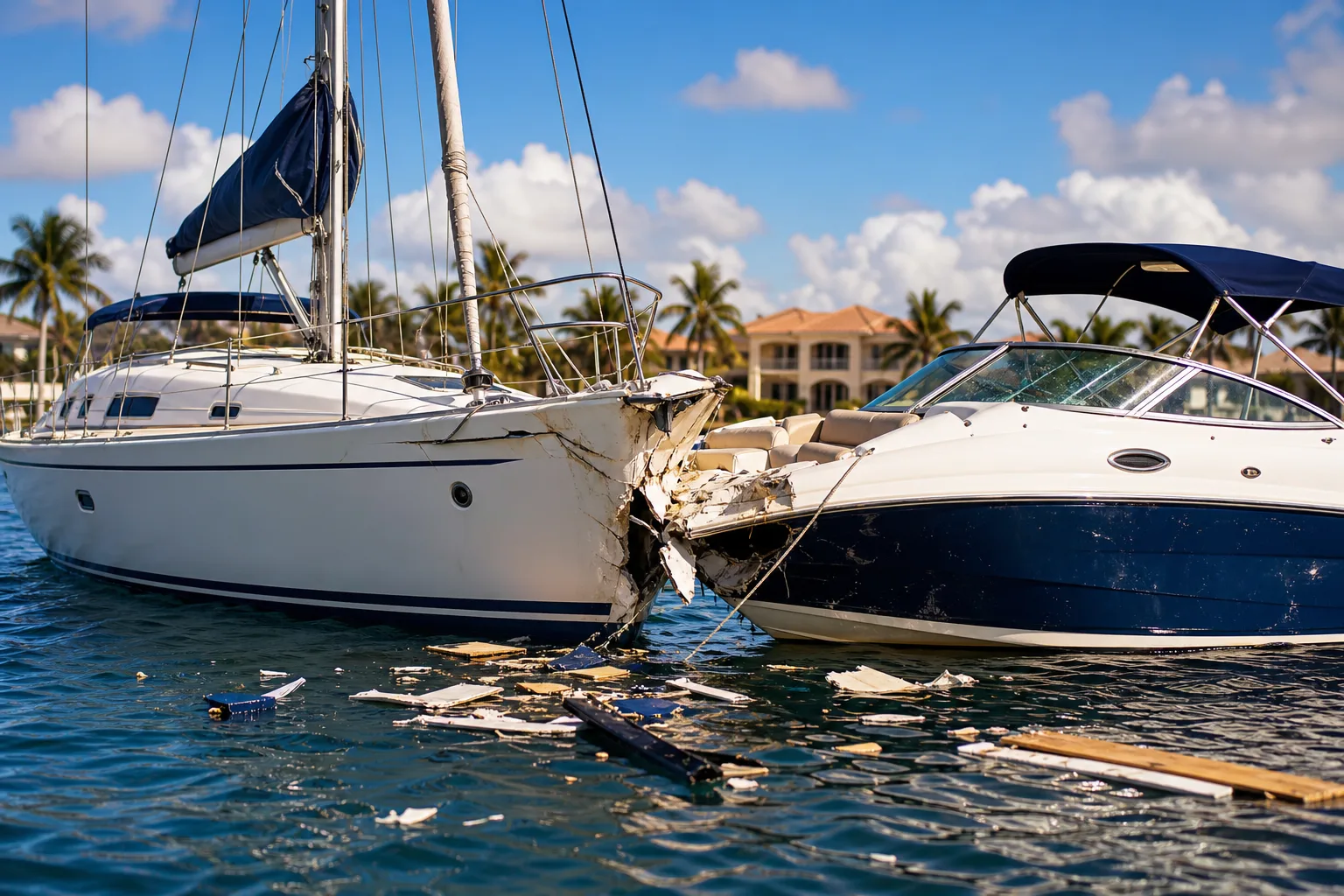
A collision between two vessels can result in:
- Serious bodily injury to passengers or people in the water
- Property damage to another boat, a dock, or navigational equipment
- Wrongful death claims if a fatality occurs
Your boat insurance policy includes liability coverage, but those limits vary widely and many recreational policies are written with $100,000 or $300,000 in liability. A catastrophic collision or a fatality claim can blow past those numbers.
Here is the catch that surprises a lot of boaters: not all umbrella policies automatically extend to watercraft. Many umbrella carriers will cover a boat or personal watercraft only if the underlying boat policy is also placed with them or if the boat meets certain size and horsepower restrictions. You need to ask that question explicitly when you are shopping.
At B & B Insurance Agency, we look at your entire picture, including what you have tied up at the dock, to make sure the umbrella you are buying actually covers the toys you own. If you have a personal watercraft or a larger vessel, check out what personal watercraft insurance covers on its own before assuming the umbrella fills all the gaps automatically.
The upside? If your umbrella does extend to watercraft, you get a meaningful cushion for one of the highest-stakes liability environments in Florida.
4. Personal Injury Claims: Defamation, Slander, and More
This one surprises people the most, because it has nothing to do with a car or a boat.
Personal injury liability under an umbrella policy typically covers claims that your auto or homeowners policy does not, including:
- Defamation and slander (say, a negative review posted online that a business owner claims damaged their reputation)
- Libel
- False arrest or malicious prosecution
- Invasion of privacy
In an era when social media lets everyone broadcast opinions to hundreds or thousands of followers, defamation claims are rising. You do not have to be a public figure to be sued for something you posted. A disgruntled comment about a neighbor, a contractor, or a local business could theoretically become a lawsuit.
Standard homeowners policies often have very limited or no coverage for personal injury claims in this category. Umbrella policies are specifically designed to include these exposures.
This is also relevant if you serve on a condo board, a homeowners association, or a nonprofit board of directors. Decisions made in those roles can generate personal liability claims. Some umbrella policies provide limited coverage for those scenarios, though a dedicated directors and officers policy is sometimes a better fit depending on your role.
The key takeaway: an umbrella is not just for catastrophic physical injury. It is a broader personal liability net.
How an Umbrella Policy Actually Works
Before wrapping up, here is the mechanics in plain English:
- You carry underlying policies, typically auto and homeowners, with minimum liability limits that most umbrella carriers require. These thresholds vary by carrier, as illustrative examples, some carriers require underlying auto bodily injury liability in the range of $250,000 to $300,000 and homeowners liability of $300,000, but actual requirements differ and you should confirm the specific figures with your agent.
- A covered claim occurs and your underlying policy pays up to its limit.
- Once that limit is exhausted, the umbrella kicks in and pays the remaining covered amount, up to the umbrella limit.
Umbrella policies do not cover everything. They generally exclude your own injuries, damage to your own property, intentional acts, and business-related liability. For business exposures, a separate general liability policy is the right tool.
Bottom Line
Florida's combination of high traffic, heavy waterway activity, strict dog-bite law, and active plaintiff bar makes personal liability exposure a real concern for everyday residents in Lantana, West Palm Beach, and throughout Palm Beach County. A personal umbrella policy is one of the more affordable ways to extend your protection significantly.
If you want to talk through whether your current auto, homeowners, or boat liability limits are set up correctly to support an umbrella, the team at B & B Insurance Agency has been comparing coverage and pricing from multiple carriers for South Florida families since 1998. We will look at what you already have and tell you honestly where the gaps are. Reach out for a free quote and let's put the full picture together.
Want a second look at your car insurance?
As an independent agency we compare coverage and pricing from multiple carriers. Free quotes, local service since 1998.
Frequently asked questions
How much does a personal umbrella policy typically cost in Florida?
Umbrella policies are generally considered affordable relative to the coverage they provide, with many starting in the range of a few hundred dollars per year for $1 million in additional liability. Exact premiums depend on the number of underlying policies, your driving record, and whether you own watercraft or other higher-risk assets. An independent agency like B & B Insurance Agency can compare coverage and pricing from multiple carriers for your specific situation.
Do I need to have my auto and homeowners insurance with the same company to get an umbrella policy?
Not always, but many umbrella carriers do require that you carry your underlying auto and homeowners policies with them or that those policies meet minimum liability limit requirements. Some carriers are more flexible than others. It is worth asking specifically about this when getting quotes, especially if you want the umbrella to cover a boat or personal watercraft.
Does a personal umbrella policy cover my boat or golf cart in Florida?
It depends on the carrier and the specific policy language. Many umbrella policies will extend to recreational watercraft if the underlying boat policy meets required limits, but some exclude higher-horsepower vessels or personal watercraft entirely. For standard golf carts, coverage may also need to be confirmed explicitly with your carrier. B & B Insurance Agency writes coverage for standard golf carts; if you own a street-legal cart or low-speed vehicle (LSV), we recommend working with a specialist who handles those classifications. Always confirm golf cart and watercraft coverage explicitly before assuming the umbrella applies.
What liability limits should I carry on my auto policy before adding an umbrella?
Most umbrella carriers require minimum underlying auto liability limits before the umbrella will attach, but the exact thresholds vary by carrier. As a general illustration, some carriers require at least $250,000 to $300,000 in bodily injury liability, but you should confirm the specific requirement with your agent. Carrying lower limits than your carrier requires could leave a gap between what your auto policy pays and where the umbrella begins. Your agent can help you set the underlying limits correctly so there is no unintended gap in coverage.
Can an umbrella policy cover a lawsuit related to something I posted on social media?
Many personal umbrella policies include personal injury liability coverage, which can cover claims like defamation or slander arising from statements made online. However, the specific language varies by carrier, and some policies have exclusions or sublimits for these claims. Review your policy wording carefully and ask your agent to confirm what personal injury scenarios are included before assuming you are covered.
Does an umbrella policy replace my homeowners or auto liability coverage?
No. An umbrella policy is excess coverage, meaning it only activates after your underlying homeowners or auto liability limits are fully exhausted. It does not replace those policies and cannot be purchased without maintaining the required underlying coverage. Think of it as a second layer of protection rather than a standalone product.
Related Coverage from B & B
Have a question about this topic?
Our experienced agents are happy to help — no pressure, just straight answers.


