TL;DR: Flood claims in Florida get underpaid most often because of poor pre-loss documentation, misunderstood policy sublimits, confusion about what flood versus homeowners policies cover, and missed proof-of-loss deadlines. Fix each of these before hurricane season peaks in August and September.
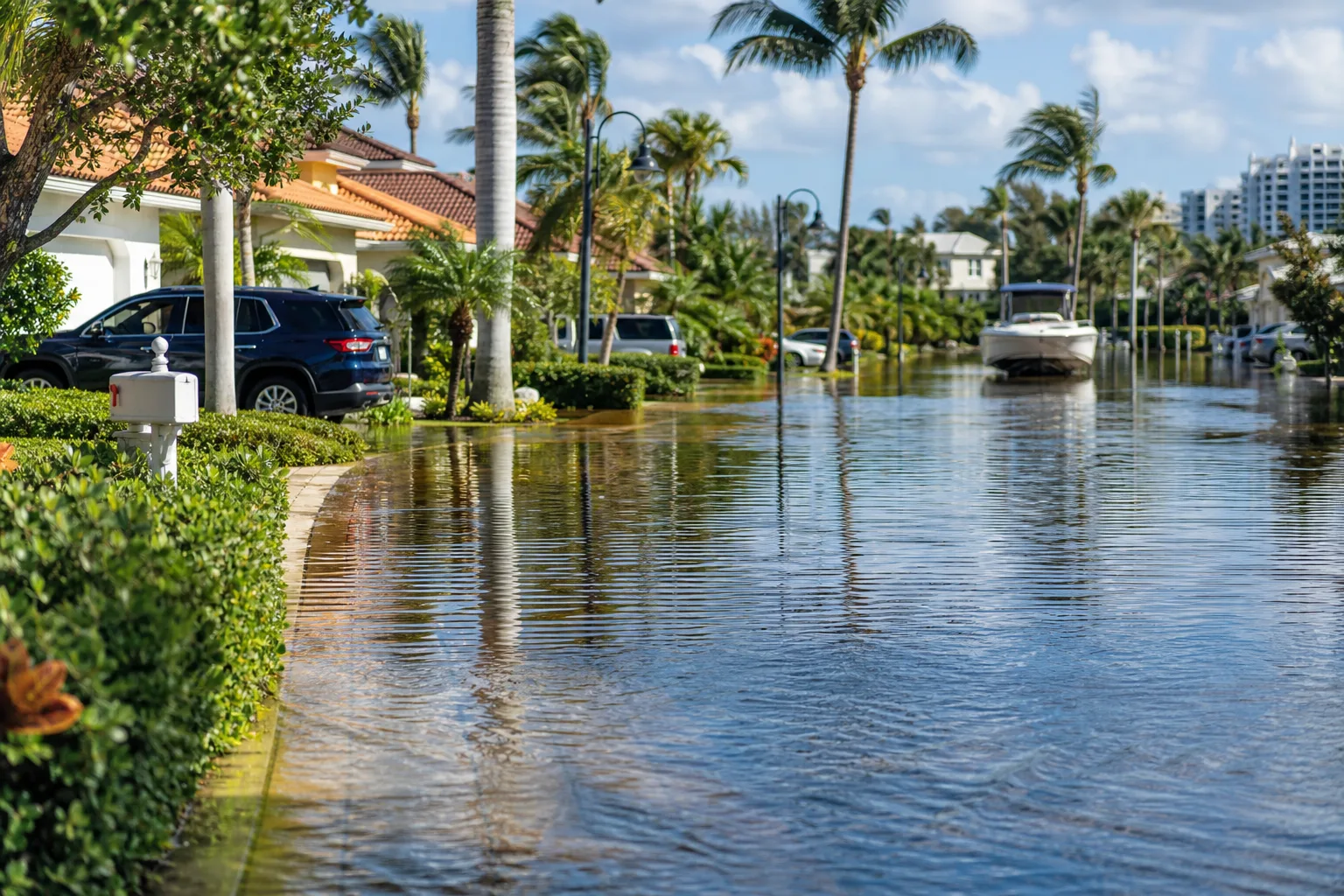
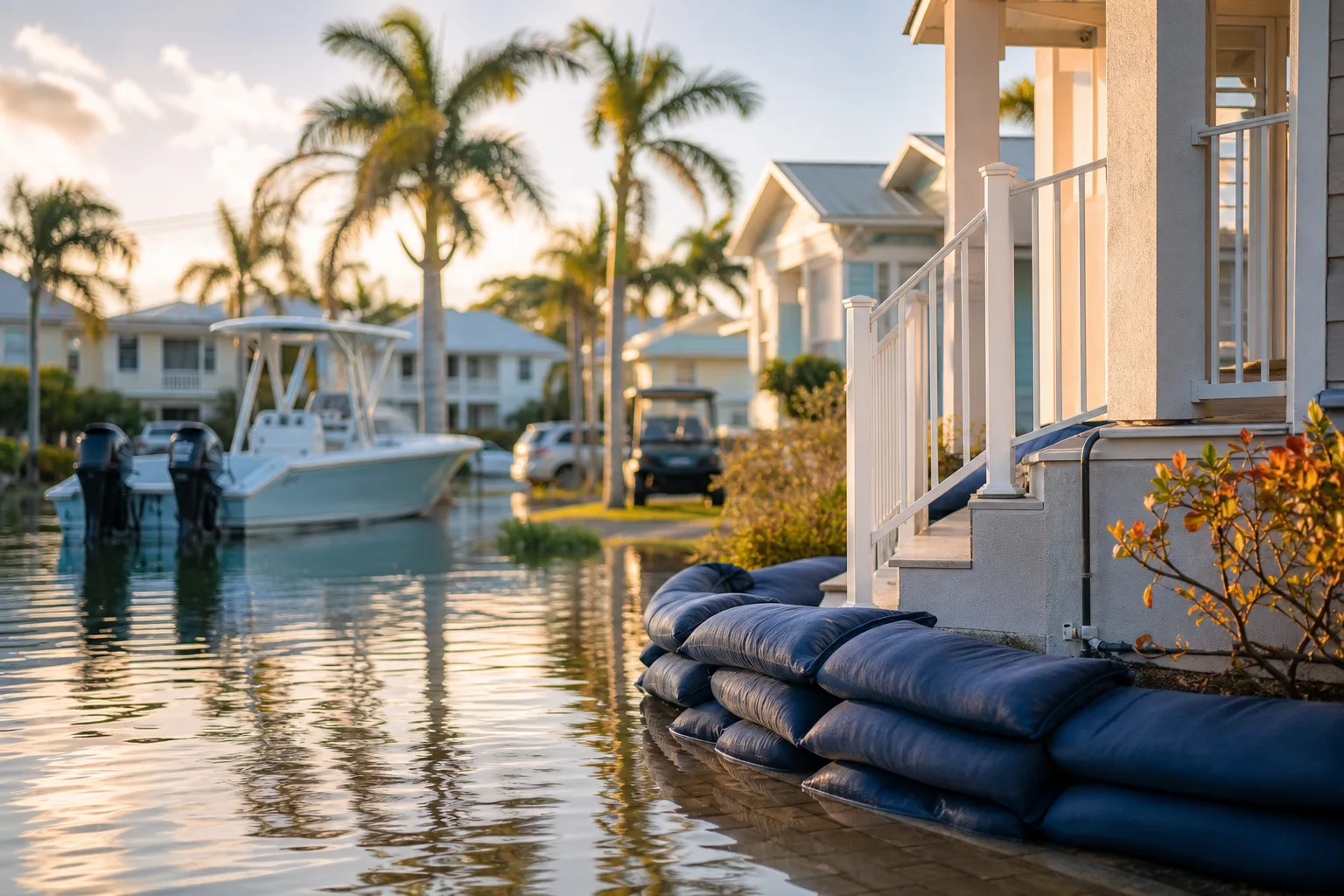
Filing a flood claim after a South Florida storm can feel like a second disaster. You expected your flood insurance to cover the damage, but the settlement comes in far below what repairs actually cost. That gap is rarely random. Four specific, preventable problems drive most underpayments, and you can address all of them before a storm threatens Palm Beach County.
1. No Pre-Loss Documentation of Your Belongings and Structure
NFIP adjusters and private flood adjusters work from what they can verify, not what you remember. If you cannot show that a ruined appliance, piece of furniture, or finished floor existed before the flood, the adjuster may exclude it or value it at a lower amount.
What to do before the season:
- Walk every room with your phone and record a slow video, opening cabinets and closets.
- Photograph serial numbers on appliances, HVAC units, water heaters, and electronics.
- Note the age and brand of flooring, cabinetry, and built-ins.
- Save receipts or warranty cards digitally, ideally in cloud storage you can reach from a shelter.
- Store a copy of the video off-site or in cloud backup, not just on a device that may flood.
FEMA recommends maintaining a home inventory specifically to support disaster-related insurance claims. (FEMA Home Inventory Guidance)
2. Misunderstood Sublimits on Contents and Basement Items
Standard NFIP policies carry separate building and contents limits, and neither is automatic. Contents coverage must be purchased separately. Beyond that, certain items face strict sublimits regardless of your overall limit.
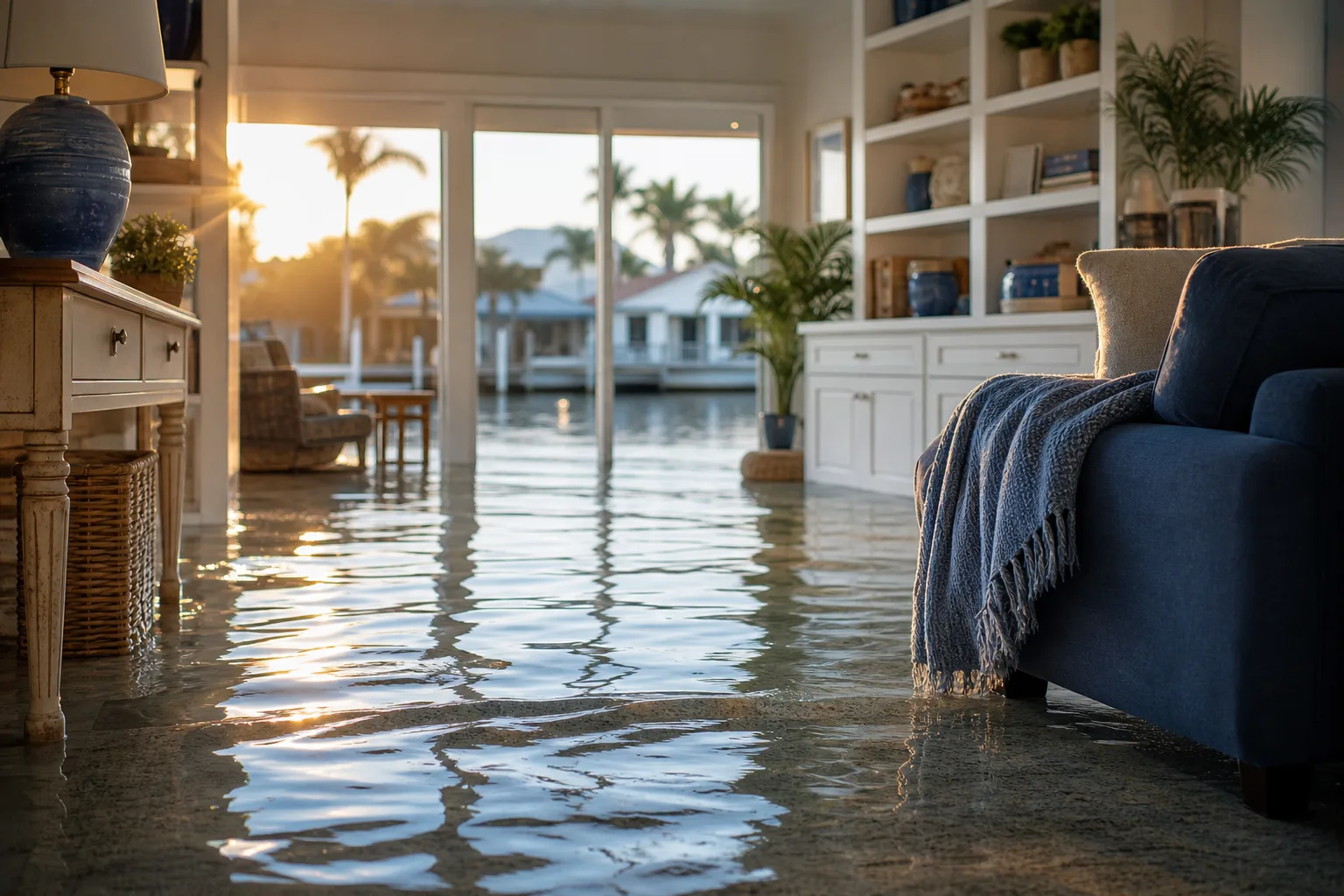
Under a standard NFIP policy, coverage for items in a basement or below the lowest elevated floor is sharply restricted. Finished walls, flooring, and most personal property stored below grade receive little or no coverage. Many South Florida homeowners do not realize their finished ground-floor space may be treated similarly if the building is elevated on a slab and the finished area sits below the Base Flood Elevation.
Decision table: Where does the item sit?
| Item location | Typical NFIP building coverage | Typical NFIP contents coverage |
|---|---|---|
| Above Base Flood Elevation | Yes, up to policy limit | Yes, if contents rider purchased |
| At or below Base Flood Elevation | Very limited or excluded | Generally excluded |
| Detached garage | Limited to 10% of building limit | Not covered |
Private flood policies sometimes offer broader sublimit structures. An independent agency like B & B Insurance Agency can compare NFIP and private market options side by side before you commit.
Your homeowners policy doesn't cover flood. Let's fix that. Get a flood quote
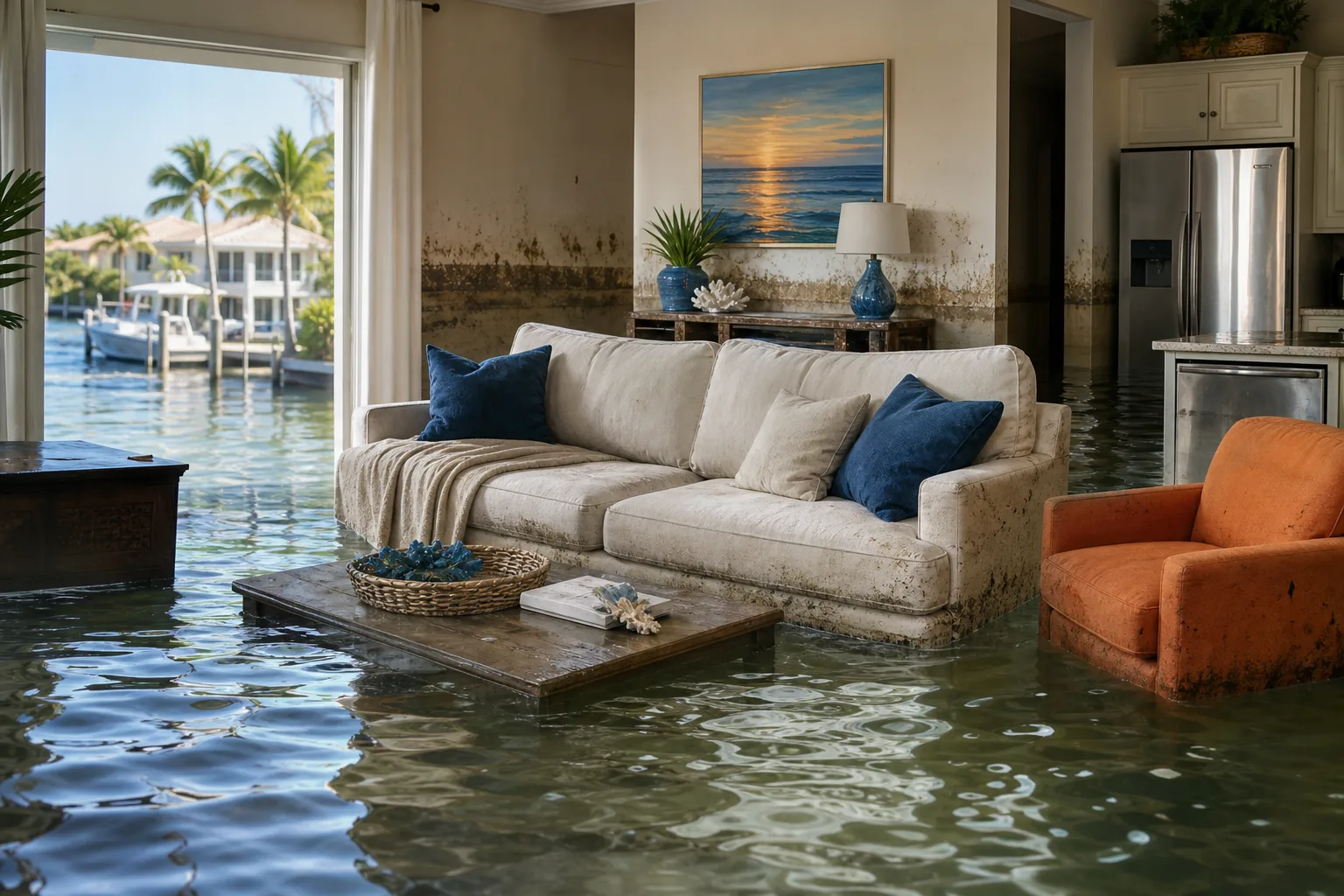
3. Confusing What Flood Policy Covers vs. What Homeowners Policy Covers
This is one of the most common sources of claim shock in South Florida. A standard homeowners insurance policy does not cover flood damage. Water that enters from outside the structure during a storm, storm surge, or overland flooding is a flood event, not a windstorm event, even if the storm also caused wind damage.
The two claims run on separate tracks with separate adjusters, separate deductibles, and separate timelines.
How to separate the damage correctly:
- Wind damage (broken windows, missing roof sections, wind-driven rain through a breach) goes to your homeowners carrier.
- Flood damage (water that rose from the ground, storm surge, or overloaded drainage) goes to your flood carrier.
- If both occur, document each type of damage distinctly, with timestamps if possible, so neither adjuster can push the loss onto the other policy.
Mixing the two when filing means delays, denials, and reduced settlements. The Insurance Information Institute notes that flood and wind damage require separate claims precisely because they are covered under different policies. (III on Flood Insurance)
4. Missing the Proof-of-Loss Deadline
NFIP policies require you to submit a signed Proof of Loss within 60 days of the flood event. Missing that deadline, or submitting an incomplete form, gives the insurer grounds to deny or reduce payment. Extensions have sometimes been granted after major disasters, but you cannot count on a waiver.
A simple post-flood sequence to protect your claim:
- Photograph all damage before any cleanup, even if you need to move items to prevent mold.
- Keep every receipt for emergency repairs, pumping services, and temporary housing.
- Contact your flood insurer within the first 24-48 hours to open the claim and get a claim number.
- Request the Proof of Loss form immediately. Do not wait for the adjuster's visit to start gathering information.
- Submit your completed Proof of Loss well before day 60. Mailing it on day 59 leaves no room for error.
If your adjuster's estimate arrives late or seems low, you can submit your own Proof of Loss for the amount you believe is correct and dispute the difference afterward.
Bottom Line
Underpaid flood claims in Florida almost always trace back to the same four problems: missing documentation, misunderstood sublimits, mixed-up flood-versus-wind coverage, and blown deadlines. All four are fixable before a storm arrives. Start your home inventory now, review your policy sublimits with someone who can explain them plainly, and keep the 60-day proof-of-loss rule on your calendar for the moment water enters the house.
If you want a second set of eyes on your current flood coverage or want to compare NFIP against private flood options available in Palm Beach County, reach out to B & B Insurance Agency. We have been helping South Florida families sort out coverage since 1998, and we are glad to walk through your policy before the next storm is on the radar.
Your homeowners policy doesn't cover flood. Let's fix that.
From NFIP to private flood, B & B Insurance finds the right flood protection for your Palm Beach County home.
Frequently asked questions
Can I dispute a low flood settlement after I have already accepted a partial payment?
Yes, in most cases. Accepting an initial payment does not waive your right to dispute the total amount, as long as you have submitted a Proof of Loss and have not signed a final release. You can file a supplemental claim or request a re-inspection if new damage is discovered or the estimate was incomplete.
Does a private flood policy handle the proof-of-loss deadline differently than NFIP?
Private flood insurers set their own claim timelines in the policy contract, which may differ from the NFIP's 60-day rule. Read your declarations page and policy language carefully, and ask your agent to point out the specific deadline when you purchase the policy.
What counts as a 'basement' under NFIP rules in Florida, where most homes are slab-built?
FEMA defines a basement as any area of a building with a floor below ground level on all sides. However, enclosures below an elevated building, including enclosed ground-floor areas on homes built on piers or elevated slabs, may also face restricted coverage. Review your Elevation Certificate with your agent to understand how your home is classified.
Is mold damage after a flood covered by flood insurance?
NFIP policies generally cover mold damage that results directly and solely from a covered flood event, provided you took reasonable steps to dry out the structure promptly. Mold that develops because cleanup was delayed may be excluded. Document your mitigation efforts, including dates and receipts for drying equipment, to support any mold-related portion of your claim.
This article is general information, not legal or financial advice. Coverage depends on the terms, conditions, and exclusions of your specific policy, so talk with a licensed insurance agent about your situation.
Have a question about this topic?
Our experienced agents are happy to help — no pressure, just straight answers.