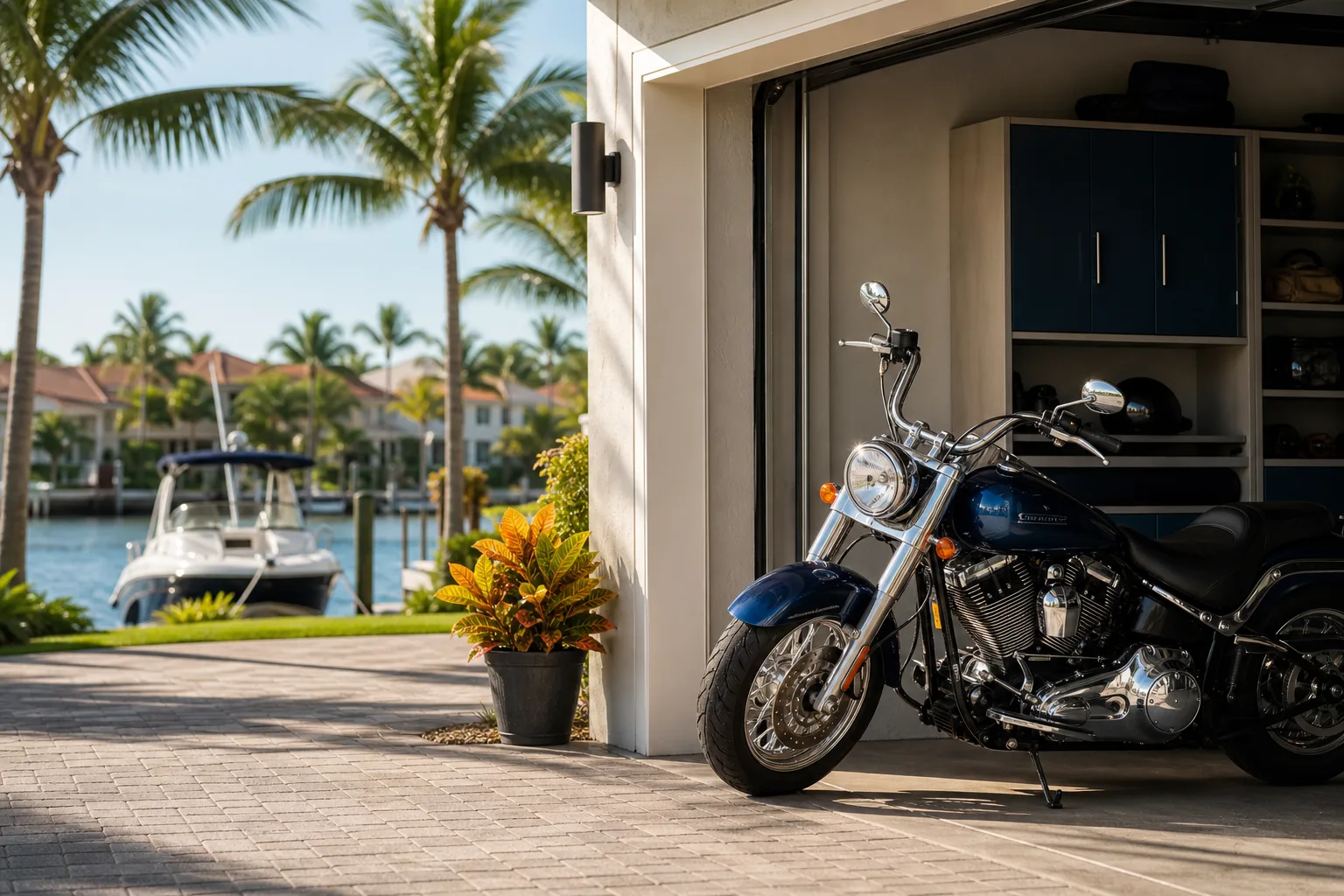
TL;DR: A true "seasonal" motorcycle policy doesn't exist as a single product in Florida. Your practical options are a full year-round policy, a lay-up endorsement that suspends liability while the bike is stored, or dropping to comprehensive-only storage coverage. Which fits depends on your ride schedule, storage situation, and any lender requirements.
What You Need Before You Decide
- Your average yearly mileage and the months you actually ride
- Whether the bike is financed (lenders typically require continuous coverage)
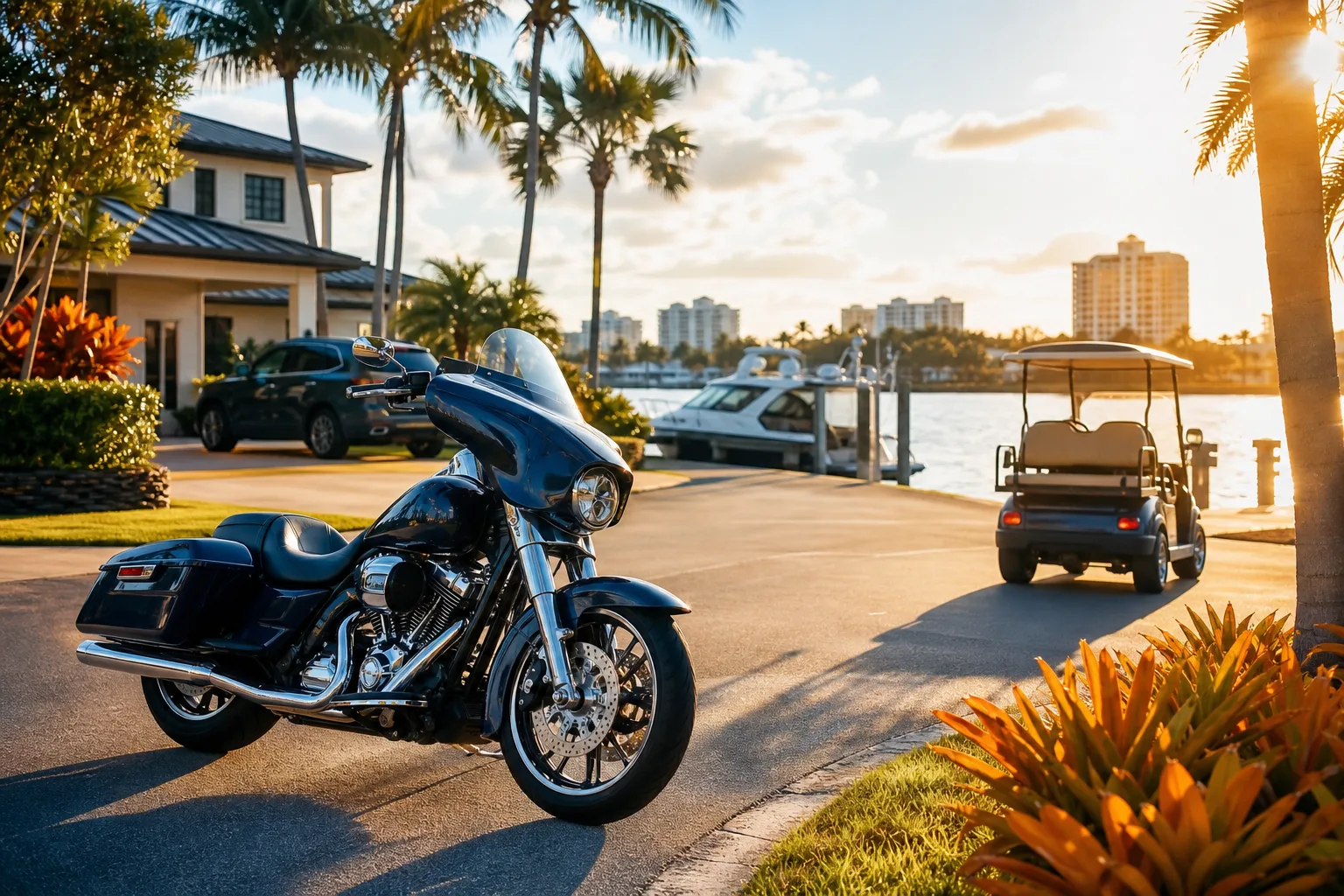
- Where the motorcycle will be stored (garage, carport, outdoor, storage unit)
- Your current insurer's lay-up or storage endorsement rules
- Florida's minimum liability requirements, which you can verify at the Florida Department of Highway Safety and Motor Vehicles
Florida law does not require motorcycle owners to carry liability insurance the way it does for cars, but if you ride on public roads even once, you are legally and financially exposed without it. And if you have a loan, the lender's contract almost certainly requires both collision and comprehensive regardless of season.
Step 1: Map Your Actual Ride Season
South Florida's weather is genuinely ride-friendly almost year-round, so "seasonal" here often means a snowbird pattern: parked from roughly May through September during storm season, active the rest of the time.
Write down your realistic off-season window. If it's less than three months, the math rarely favors suspending coverage. Administrative fees and the hassle of reinstating before you ride can eat any savings.
If you're parked four months or more, a lay-up endorsement starts to make financial sense worth asking about.
Step 2: Understand Your Three Coverage Options
Option A: Full year-round policy You keep all coverages active whether you ride or not. This is the simplest approach, avoids any lapse, and is required if you have a loan. Premiums for motorcycles are generally lower than for cars, so the "waste" during off months is often modest.
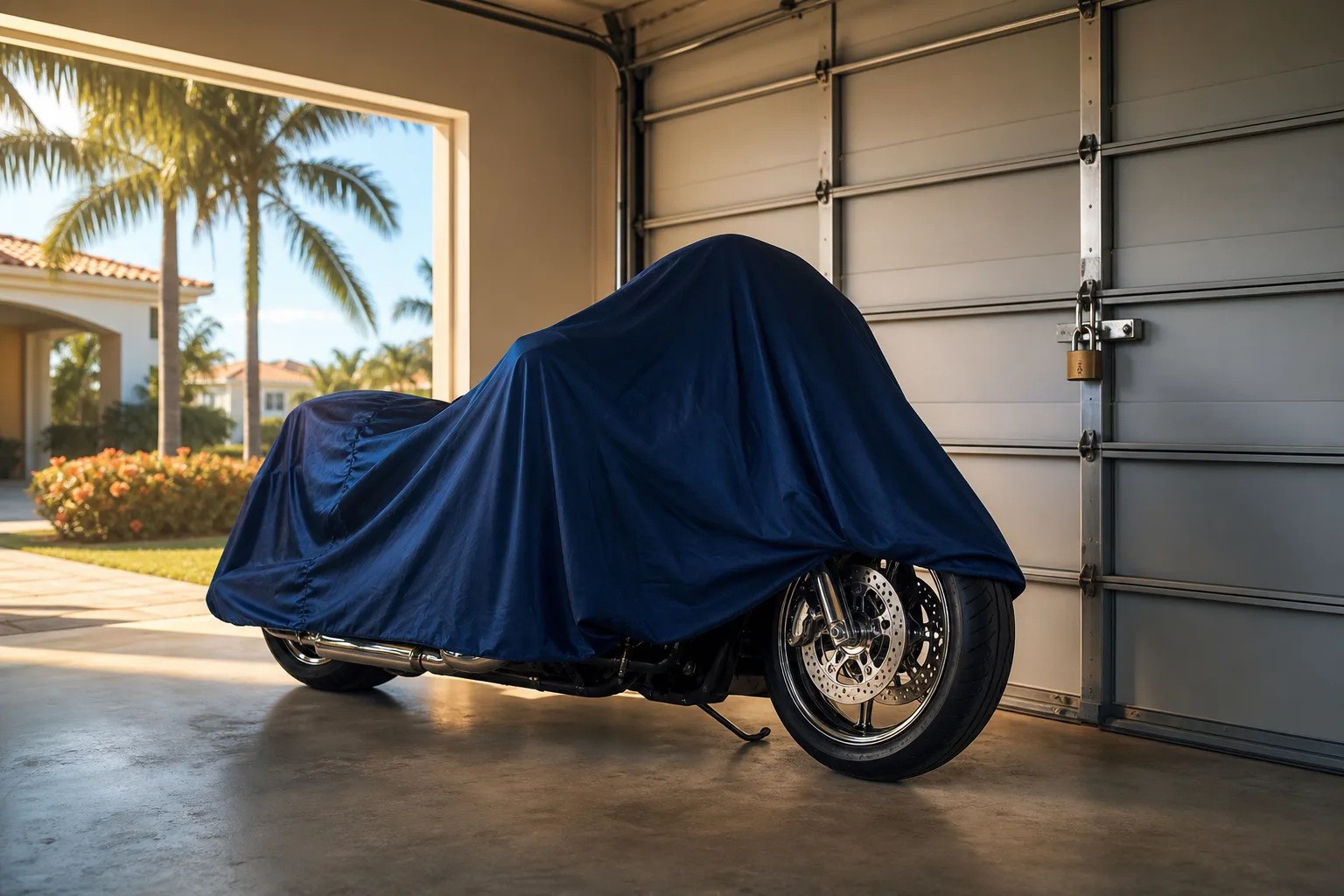
Option B: Lay-up endorsement Some insurers offer a lay-up or storage endorsement that suspends liability and collision during a declared storage period, while keeping comprehensive active. Comprehensive covers fire, theft, wind, falling objects, and other non-collision events as listed in your policy , note that flood coverage under comprehensive varies by policy and carrier, so confirm whether it is included in yours before assuming it applies. This matters during Florida's hurricane season. You cannot legally ride during a lay-up period. Check with your carrier whether this endorsement is available in Florida before counting on it.
Option C: Drop to comprehensive-only If the bike is unfinanced, you can cancel liability and collision and carry only comprehensive while stored. This keeps the bike covered against physical damage and typically costs very little. Before you ride again, you reinstate full coverage. The risk: if you forget to reinstate before even a short trip, you are uninsured on the road.
Step 3: Check Lender Requirements
If you financed your motorcycle, read the loan agreement before making any coverage changes. Most lenders require continuous collision and comprehensive at agreed limits. Dropping coverage, even temporarily, can put you in default and trigger force-placed insurance, which is typically more expensive and protects only the lender, not you. The Insurance Information Institute explains force-placed insurance here.
If the bike is paid off, you have full flexibility.
Let's see if you're overpaying for car insurance. Get a free auto quote
Step 4: Review Your Storage Situation
Where you store the motorcycle affects both risk and premium.
| Storage Type | Risk Profile | Notes |
|---|---|---|
| Locked garage | Lowest theft and weather risk | Best for rate and protection |
| Covered carport | Moderate weather exposure | Hurricane prep matters here |
| Outdoor, unsecured | Higher theft and hail risk | Comprehensive is especially important |
| Off-site storage unit | Variable | Confirm unit is climate-appropriate; notify insurer of address |
Letting your insurer know the storage address is not optional. If a claim arises and the bike was somewhere other than the listed location, coverage could be disputed.
Step 5: Get Quotes Across Multiple Carriers
Because B & B Insurance Agency is an independent agency, we compare rates and endorsement options across multiple carriers rather than being locked into one company's products. That matters for seasonal riders because lay-up endorsement availability and storage-only pricing vary significantly by insurer.
Before your next off-season, request a free quote or explore what motorcycle insurance options look like for your specific bike and schedule. If you also ride a golf cart around the neighborhood during your off-bike months, it's worth knowing that golf cart insurance is a separate product your homeowners policy likely does not fully cover.
Common Mistakes Seasonal Riders Make
Assuming homeowners covers the parked bike. Standard homeowners policies generally exclude motorized vehicles that are subject to motor vehicle registration , such as a street-legal motorcycle , from personal property coverage, though policy forms and carrier endorsements vary. They also won't cover any liability if someone is injured around it. Do not count on it.
Canceling the policy entirely. A full cancellation creates a lapse in coverage history. Some carriers treat a lapse as a risk factor and charge higher rates when you reinstate. It also leaves the bike completely unprotected in storage.
Forgetting to reinstate before riding. If you drop to comprehensive-only or use a lay-up endorsement, riding without reinstating liability is both illegal (if your state requires it for your bike class) and financially reckless. Set a calendar reminder two weeks before your planned first ride.
Not updating the storage address. Moving the bike to a storage unit or a family member's property without telling your insurer is a coverage gap waiting to happen.
Bottom Line
For most South Florida riders with a financed motorcycle, a year-round policy is the safest and often simplest choice. If the bike is paid off and you park it for four or more months, a lay-up endorsement or comprehensive-only approach can trim costs without leaving the bike exposed. Either way, the decision deserves a conversation with someone who can compare actual carrier options for your situation, not just one company's offerings. Reach out to B & B Insurance Agency and we'll help you match your ride schedule to the right coverage without gaps.
Let's see if you're overpaying for car insurance.
As an independent agency we compare rates across carriers so you don't have to. Free quotes, local service since 1998.
Frequently asked questions
Does Florida law require motorcycle insurance if I only ride a few months a year?
Florida does not mandate liability insurance for motorcycles the way it does for cars, but that doesn't mean you're protected if you cause an accident. Any time you ride on public roads you are personally liable for damages. If you have a loan, your lender requires continuous coverage regardless of how little you ride.
Will my comprehensive-only storage coverage pay if my motorcycle is damaged in a hurricane?
Comprehensive coverage is designed to cover non-collision events including wind, falling objects, fire, and theft, and may cover flood damage , but flood coverage under comprehensive varies by policy and carrier. Confirm with your agent whether flood is listed as a covered peril in your specific policy before relying on it. Given South Florida's hurricane exposure, keeping at least comprehensive active during storage season is strongly recommended.
How far in advance should I reinstate full coverage before my riding season starts?
Most agents recommend reinstating at least a few days before your first planned ride to avoid any processing delays. If you're reactivating after a true policy cancellation rather than a lay-up endorsement, allow more lead time because underwriting may be required. A quick call to your agent ahead of time prevents last-minute gaps.
Can I insure two motorcycles on one policy if I ride them in different seasons?
Many carriers offer multi-bike discounts on a single policy, which can be more cost-efficient than separate policies. Ask your agent whether a lay-up endorsement can be applied to individual bikes on a multi-bike policy, since availability varies by insurer.
This article is general information, not legal or financial advice. Coverage depends on the terms, conditions, and exclusions of your specific policy, so talk with a licensed insurance agent about your situation.
Have a question about this topic?
Our experienced agents are happy to help — no pressure, just straight answers.