TL;DR: A standard Florida renters policy covers your belongings and liability in many situations away from home, including theft from your car, incidents at a hotel, and accidents you cause somewhere else. Coverage limits and exclusions vary by carrier, so it pays to read your declarations page and ask an independent agent to compare options.
Most renters think their policy protects the stuff inside their apartment. That is true, but it is only part of the story. A standard HO-4 renters policy, the form used by most Florida carriers, includes off-premises coverage built right into the personal property and liability sections. Here are five real-world situations where that matters.
1. Theft of Your Belongings From a Parked Car
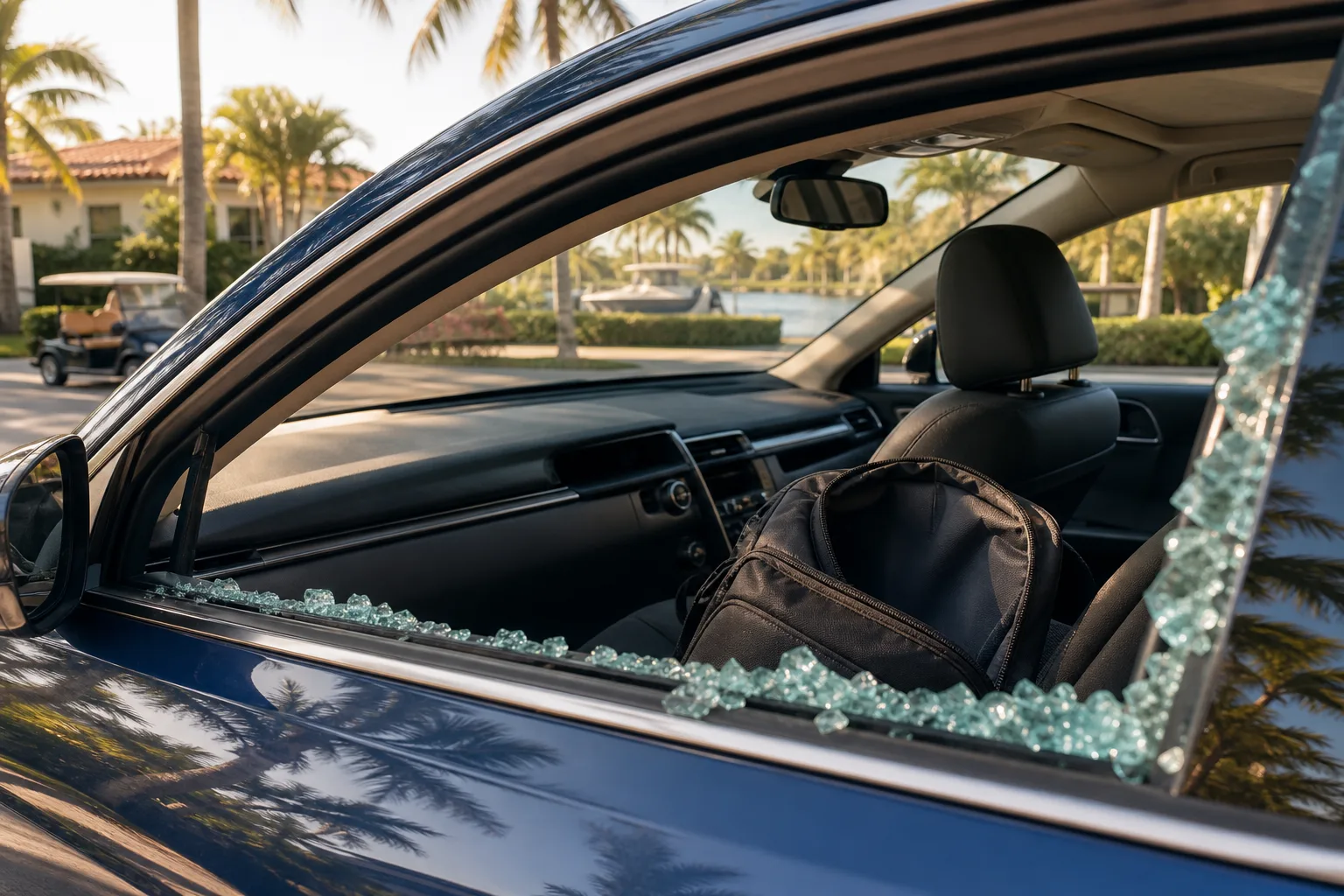
If someone breaks into your car and steals your laptop, camera, or gym bag, your auto insurance generally does not cover personal property inside the vehicle. Comprehensive covers damage to the car itself, not your stuff.
Your renters policy, however, treats that theft as a covered loss under personal property, subject to your deductible. One important note: many policies apply a sub-limit for property stolen from a vehicle, often around 10% of your personal property limit. Check your policy for that language before you assume full coverage applies.
What I'd tell my own family: Keep a quick photo inventory of anything you regularly carry in your car. A claim goes much smoother when you can show what was taken.
2. Belongings Stolen or Damaged in a Hotel Room
A hotel stay in Orlando or a long weekend in the Keys is still covered under most renters policies. If a thief takes your luggage or a fire damages your belongings in your room, your personal property coverage can respond.
Again, the off-premises sub-limit may apply, typically 10% of your Coverage C limit. On a policy with $30,000 of personal property coverage, that means up to $3,000 away from home. Higher-value items like jewelry or electronics may have their own scheduled sub-limits under standard forms. If you travel often with expensive gear, ask about a scheduled personal articles floater to fill that gap.
3. Liability if You Accidentally Injure Someone Away From Home
Personal liability on a renters policy is not location-dependent. If you accidentally knock someone down at a friend's birthday party, cause a dog bite at the park, or break an expensive item at someone else's home, your liability coverage can help pay for medical bills, legal fees, and judgments against you.
Florida does not require renters insurance by law, but landlords increasingly require it. The liability portion is often what makes the policy most valuable. According to the Insurance Information Institute, most renters policies include at least $100,000 in personal liability, and higher limits are usually available for a small additional premium.
Coverage gap people forget: Liability on a renters policy excludes business activities. If you are doing gig work or running any kind of side business, that is a separate conversation.
Paying too much for Florida homeowners insurance? Get a free home quote
4. Medical Payments to Others, Regardless of Fault
This one surprises a lot of people. Renters policies typically include a Medical Payments to Others section, sometimes called Coverage F. If a guest gets hurt at your place, or in some cases if you accidentally injure someone elsewhere, this coverage pays their medical bills up to a small limit, usually $1,000 to $5,000, without a lawsuit or a finding of fault.
It is not meant to cover your own medical bills. Think of it as a goodwill payment that keeps a minor incident from becoming a major dispute. Small limit, but it can prevent a friendship and a claim from going sideways at the same time.
5. Additional Living Expenses If Your Apartment Becomes Uninhabitable
This one is technically away from home by necessity. If a covered peril, such as a fire, a burst pipe, or storm damage, makes your rental unit uninhabitable, Loss of Use coverage pays for a comparable temporary place to stay, meals above your normal food budget, laundry costs, and similar extra expenses while repairs are made.
In South Florida, where post-hurricane hotel availability can tighten fast, having this built into your renters policy is genuinely useful. Limits vary by carrier, so compare that line item when you shop.
A Simple Off-Premises Coverage Diagnostic
Before you assume your renters policy has you covered in a given situation, work through this quick sequence:
- Is the item listed under personal property? High-value items like jewelry, electronics, and musical instruments may have per-item sub-limits.
- Is the loss a covered peril? Renters policies are usually named-peril for personal property. Flood is almost never included. See flood insurance for that gap.
- Does an off-premises sub-limit apply? Find the percentage in your declarations or policy jacket.
- Is any business use involved? If yes, personal lines coverage likely does not respond.
- Is the liability claim related to a motor vehicle? Auto liability is excluded from renters policies. That belongs on your auto insurance.
Bottom Line
A Florida renters policy travels with you more than most people realize, covering stolen belongings, hotel incidents, and personal liability far beyond your apartment walls. The gaps that matter most are sub-limits on off-premises property, per-item jewelry and electronics caps, flood exclusions, and business-activity exclusions.
If you are renting in Lantana, West Palm Beach, or anywhere in Palm Beach County and are not sure what your current policy actually covers, B & B Insurance Agency shops multiple carriers to find you the right combination of limits at a price that makes sense. Reach out for a free quote and we can walk through your declarations page together.
Paying too much for Florida homeowners insurance?
B & B Insurance shops multiple carriers to find you the right coverage at the right price — and we know Florida wind and flood rules cold.
Frequently asked questions
Does Florida renters insurance cover belongings in a storage unit?
Most standard renters policies do extend personal property coverage to items in a storage unit, but the same off-premises sub-limit, often 10% of your Coverage C limit, typically applies. If you store high-value items, ask your agent whether a separate storage-unit endorsement or higher limit makes sense.
Will my renters policy cover my laptop if I use it for work from home?
A personal renters policy generally covers your laptop as personal property, but if it is employer-owned or used exclusively for a business you run, coverage may be limited or excluded. Check your policy language and ask your agent if a business personal property endorsement is needed.
Does renters insurance cover identity theft?
Standard HO-4 renters policies do not include identity theft restoration by default, though many carriers offer it as an affordable add-on endorsement. If that coverage matters to you, ask your agent to quote it alongside your base policy.
Can my roommate be added to my renters policy?
Some carriers allow a second named insured on a renters policy, but a roommate who is not a relative is often not automatically covered. The safest approach is for each person to carry their own policy, which is usually inexpensive, rather than assuming one policy covers everyone in the unit.
Have a question about this topic?
Our experienced agents are happy to help — no pressure, just straight answers.