TL;DR: Your boat's storage location, marina slip versus your own property, directly shapes what coverage you need and where your gaps are. A homeowners policy rarely covers a boat adequately in either situation. A dedicated boat insurance policy is usually the right foundation for both, but the specific endorsements and liability limits you need differ depending on where your vessel lives.
At a Glance
| Factor | Marina / Slip Storage | On Your Property |
|---|---|---|
| Hull coverage needed | Yes, standalone policy | Yes, standalone policy |
| Homeowners fills the gap? | Almost never | Rarely, and only for tiny boats |
| Third-party liability exposure | Higher (neighbors' boats, dock) | Lower (but still exists) |
| Marina may require liability minimum | Often yes | Not applicable |
| Theft / vandalism risk | Moderate to high | Depends on neighborhood |
| Hurricane haul-out provisions | Policy language varies | Easier to control yourself |
| Flood risk to stored boat | Low (it floats) | Higher if land-stored and area floods |
Why Your Homeowners Policy Is Not a Backup Plan
Let's get this out of the way gently: your homeowners insurance almost certainly does not cover your boat the way you think it does. Most Florida homeowners policies limit watercraft coverage to typically somewhere in the range of $1,000 to $2,500 for small, low-horsepower boats, though limits vary by carrier and policy. That sublimit typically excludes liability on the water and may not cover physical damage from most perils. The Insurance Information Institute confirms that most homeowners policies exclude watercraft liability once you leave the dock.
If your boat is docked at a marina and another vessel breaks free during a storm and damages yours, your homeowners carrier is not writing that check.
Insuring a Boat Stored at a Marina
What the Marina's Insurance Covers (Hint: Not Your Boat)
A marina carries its own general liability and property coverage for the facility. That protects the marina's structures, not the vessels inside them. If a fire starts in the marina building and spreads to your boat, the marina's policy covers the marina's losses. Your boat's losses come back to you unless you have your own hull coverage.
Some marinas in Palm Beach County require slip tenants to carry a minimum liability limit, often $100,000 or more, before they'll sign a slip agreement. Ask for the marina's requirements in writing before you shop.
Unique Risks at a Marina
- Third-party liability. Your boat could bump a neighbor's vessel during a windstorm, or a guest could slip boarding your boat from the dock. You need liability coverage that follows the boat, not just your home address.
- Theft and vandalism. Boats stored at a marina are accessible to anyone with dock access. Electronics, outboard motors, and fishing gear are common targets.
- Wreck removal. If your boat sinks at the slip, many marinas require the owner to pay for removal. Some boat policies include a wreck removal rider; confirm yours does.
- Hurricane haul-out compliance. Many carriers include a named-storm clause that requires you to move the vessel or follow a haul-out plan when a hurricane watch is issued. At a marina, coordinate this plan with your slip agreement ahead of time.
What a Marina-Storage Policy Should Include
- Agreed value or actual cash value hull coverage (agreed value is preferable so you're not surprised at depreciation after a loss)
- Liability coverage meeting or exceeding your marina's minimum requirement
- Uninsured boater coverage
- Wreck removal
- Personal effects coverage for gear stored aboard
- Confirm whether the policy covers the boat while in transit to a haul-out yard
Cover your boat, yacht, or jet ski the right way. Get a boat quote
Insuring a Boat Stored on Your Property
Different Risk Profile, Different Gaps
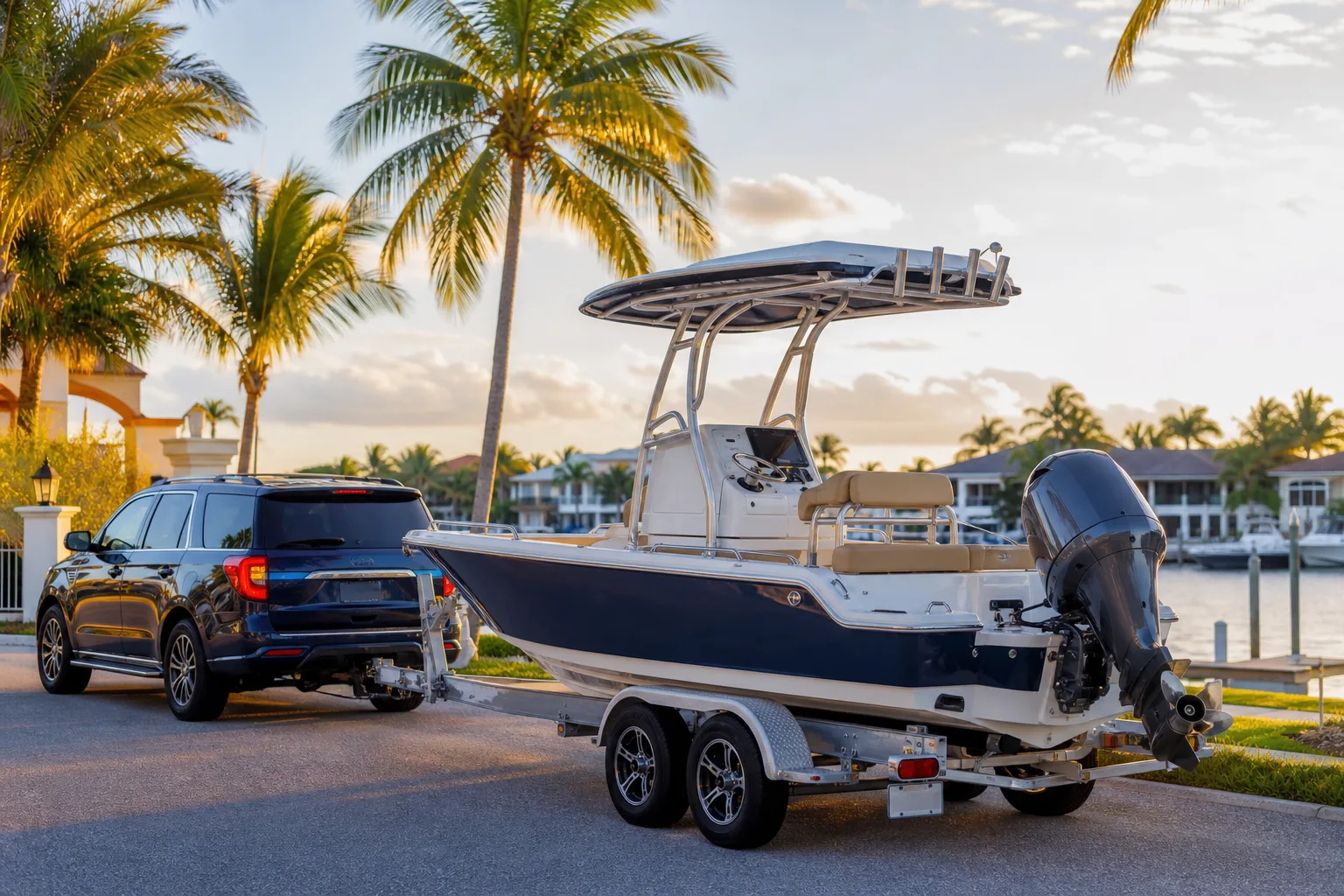
Keeping your boat in your driveway or backyard sounds safer, and in some respects it is. You control access, you can hitch it to a truck and move it ahead of a storm, and there's no marina liability exposure to worry about day-to-day.
But the risks don't disappear. They just shift.
- Flood damage while land-stored. A boat on a trailer in a low-lying South Florida yard can be damaged by rising floodwater even before it ever launches. Hull policies handle physical damage; under standard NFIP flood insurance policies, coverage applies to your dwelling and contents, not typically to a boat or trailer on your property, though private flood policies may differ. Check your specific boat policy language.
- Theft. Outboard motors, electronics, and the trailer itself are common theft targets at residential properties. Confirm whether your boat policy covers theft of the motor separately from the hull.
- Liability from your property. If a neighbor's child climbs on your stored boat and is injured, homeowners liability may apply, but the interaction between your homeowners and boat policy should be reviewed so there are no gaps.
- HOA and local ordinances. Some Palm Beach County municipalities limit how long or how visibly a boat can be stored residentially. This is a zoning issue, not an insurance one, but it affects your planning.
What a Property-Storage Policy Should Include
- Hull coverage for physical damage while on the trailer (fire, theft, weather)
- Liability coverage for on-water use when you launch
- Trailer coverage (sometimes bundled, sometimes a separate endorsement)
- Theft coverage for motors and electronics
- Confirm coverage applies from your driveway to the ramp and back
Decision Table: Which Situation Fits You?
| Your Situation | Priority Coverages to Confirm |
|---|---|
| Slip at a South Florida marina, boat stays in water | Agreed-value hull, liability min per slip agreement, wreck removal, named-storm haul-out clause |
| Dry-storage rack at a marina | Same as above; confirm coverage during forklift handling |
| Boat on trailer in your driveway or yard | Hull on trailer, trailer coverage, theft of motor/electronics, liability for water use |
| Split: marina in season, home in off-season | Policy must cover both scenarios; verify with your carrier that the storage location change is permissible without a new declaration |
The Independent Agency Advantage Here
This is exactly the kind of comparison that gets muddled when you're shopping a single carrier's website. An independent agency like B & B Insurance Agency can pull quotes from multiple carriers and line up the policy language side by side, specifically checking haul-out clauses, wreck removal limits, and whether your marina's liability minimums are actually met.
If you're in Lantana, West Palm Beach, or elsewhere in Palm Beach County, you can request a quote or ask questions here.
Verdict
Neither storage scenario is covered well by a homeowners policy alone. Marina storage raises your third-party liability exposure and often triggers minimum coverage requirements from the slip agreement. Property storage shifts the risk toward theft, trailer damage, and flood exposure on land. In both cases, a standalone boat insurance policy is the right foundation. The key difference is which endorsements you prioritize and what liability limits make sense for your situation. Getting both scenarios quoted at the same time is the cleanest way to confirm you're covered wherever the boat ends up.
Cover your boat, yacht, or jet ski the right way.
Florida marine coverage from an independent agency that lives on the water too. Tell us what you ride.
Frequently asked questions
Does a marina's insurance cover damage to my boat while it's in the slip?
No. The marina's policy covers the marina's own property and liability, not individual vessels. If a fire, storm, or other event damages your boat while docked, you need your own hull coverage to pay for repairs or replacement.
What is an agreed-value boat policy and why does it matter at a marina?
An agreed-value policy pays the amount you and the insurer agreed on at the time the policy was written, without depreciation applied at claim time. This matters at a marina because repair costs after a dock incident or storm can be significant, and an actual cash value policy may leave you short after depreciation is subtracted.
Will my boat policy cover the vessel while a marina's forklift is moving it in dry storage?
Some policies include coverage during handling by marina staff and some exclude it. Ask your carrier or agent to confirm whether the policy language covers mechanical handling, and get it in writing before you commit to a dry-stack facility.
Does my liability coverage follow my boat when I trailer it to a different launch ramp?
Most standalone boat policies cover the vessel for liability wherever it's used within the policy's geographic territory, but confirm this with your carrier. Some policies limit coverage to specific bodies of water or regions, which can matter if you launch at multiple South Florida locations.
Have a question about this topic?
Our experienced agents are happy to help — no pressure, just straight answers.