TL;DR: Not all boat policies are built the same, and the cheapest quote often skips the coverage you'll actually need after a storm, a breakdown offshore, or a dock mishap. Before you buy, ask about agreed value versus actual cash value, hurricane haul-out rules, towing, liability limits, and who's allowed to drive. Get the answers in writing, not just a verbal promise from whoever sold you the policy.
Hey neighbor, Coastal Kayla here. I love a good sunset cruise out past the Lantana bridge as much as anyone, but I've also seen what happens when someone buys a boat policy the way they'd buy a beach umbrella. Quick decision, lowest price, done. Then a named storm shows up, or the outdrive throws a rod twenty miles offshore, and suddenly that policy doesn't do what they assumed it would.
Your homeowners policy is not going to bail you out here either. I know it feels like it should cover "everything you own," but boats are almost always excluded or barely covered under a standard homeowners insurance policy, especially once you're talking about anything with real horsepower. Boats get their own policy for a reason. So before you buy one, here are five questions worth asking, whether you're insuring a center console out of the Boynton Inlet or a pontoon on the Intracoastal.
1. Is this Agreed Value or Actual Cash Value?
This is the single biggest fork in the road on any boat policy, and it's the one most people never ask about.
Agreed Value means you and the insurer agree on the boat's value up front, and that's what you get paid on a total loss, no depreciation deducted. Actual Cash Value (ACV) means the payout gets reduced for depreciation, sometimes significantly, especially on engines and electronics that lose value fast.
Here's why this matters in South Florida specifically: after a hurricane or a bad line of storms, insurers see a wave of total-loss boat claims all at once. If you're on an ACV policy, you might be shocked to find your five-year-old boat is only worth a fraction of what you paid, right when you need to replace it. Ask directly: "Is this Agreed Value or ACV, and how is depreciation calculated?" Get the answer in writing on the policy, not just from a sales conversation.html
2. What are the hurricane haul-out and storm-plan requirements?
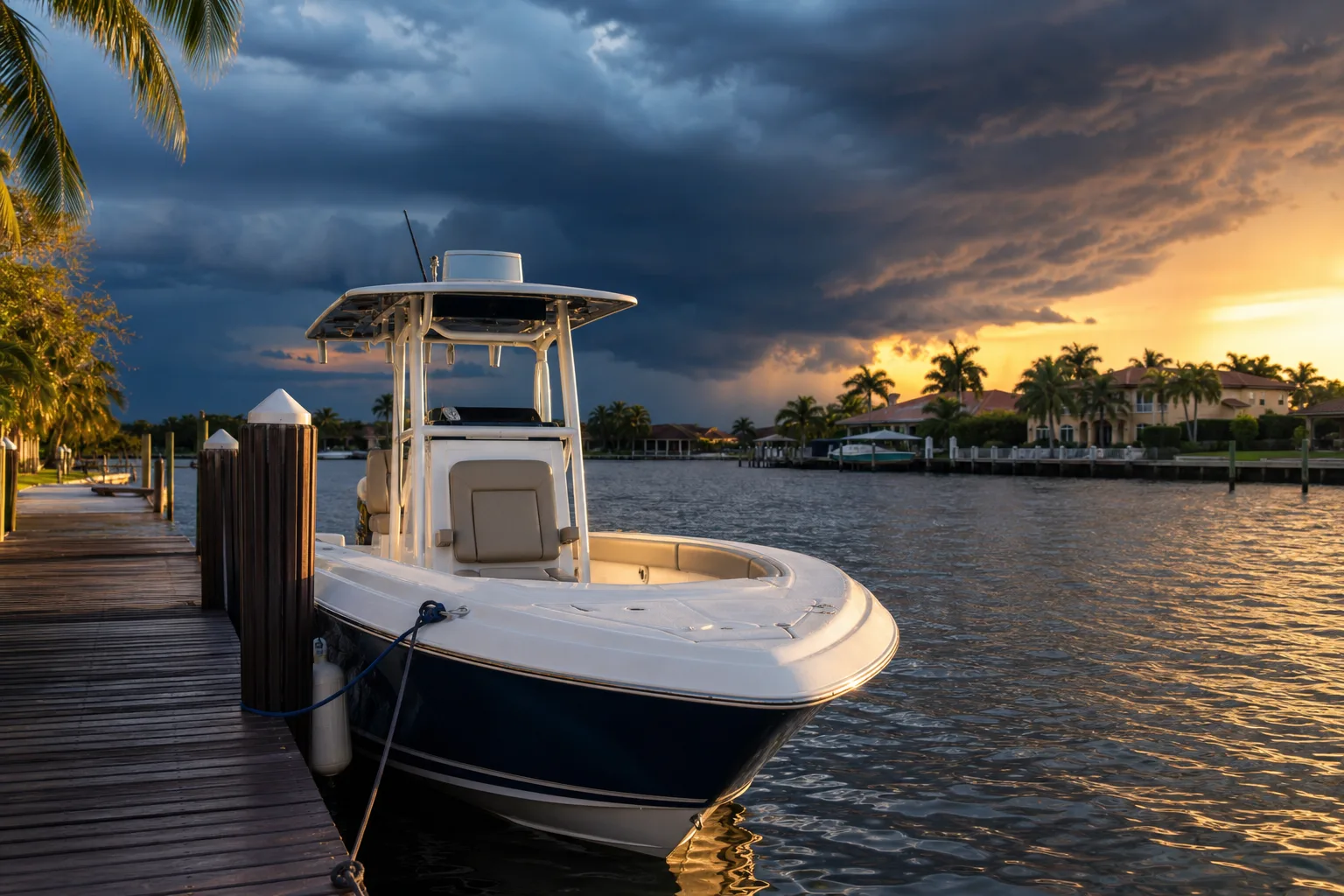
A lot of boat policies in hurricane-prone areas include a named-storm clause that requires you to haul the boat out, move it to a specific location, or follow a written hurricane plan once a storm is named. If you don't comply, and a claim happens anyway, the insurer may reduce or deny the payout.
Ask your agent point blank: does my policy require a haul-out plan for named storms? If so, what's the deadline (some require action once a hurricane watch or warning is issued for your area), and does the marina or storage yard I'm using count as an approved location?
This is a big deal in Palm Beach County because marina space and trailer storage get scarce fast once a storm is tracking toward Florida. NOAA's National Hurricane Center is the best source for tracking storm timing so you're not scrambling last minute (nhc.noaa.gov). Figure out your plan before hurricane season, not during it.
3. Does towing and on-water assistance actually cover where I boat?
Most boat policies offer some form of towing coverage, but the details vary a lot. Some plans only cover towing to the nearest marina, not the one you actually want. Some cap the dollar amount per incident in a way that barely covers a single tow from offshore. Some exclude soft groundings entirely, which, if you've ever boated around the sandbars near the Lake Worth Inlet, you know happens to good boaters all the time.
Ask specifically:
- Is towing included, or is it a separate rider?
- Does it cover fuel delivery, jump starts, and soft ungroundings, or just mechanical breakdown tows?
- Is there a distance or dollar limit per tow?
If you spend real time offshore fishing the reef line or running to the Bahamas, this coverage is worth getting right rather than assuming it's included at a level that actually helps you.
Cover your boat, yacht, or jet ski the right way. Get a boat quote
4. What liability limits make sense for my boat and how I use it?
Boat liability works a lot like auto liability. It covers injury or property damage you cause to someone else, but the limits people pick are often way too low for the boat they're actually running. A 26-foot center console with two 300s on the back can do real damage to another boat, a dock, or a person in the water, and lawsuits after a serious boating accident can get expensive fast.
The Florida Fish and Wildlife Conservation Commission tracks boating accident data each year, and collisions with vessels, docks, and swimmers show up consistently in their reports (myfwc.com). That's a good reminder that liability isn't just a box to check, it's the part of the policy that protects your savings and your home if something goes seriously wrong on the water.
If you're financing a boat, the lender may set a minimum liability requirement, but that minimum isn't necessarily the right number for your situation. Talk through actual limits with your agent based on the boat's size, speed, and how often you have guests aboard.
5. Who's covered to operate the boat, and does that include guests, kids, or a captain?
This one trips up a lot of families. Some boat policies name specific operators. Others cover "any operator with permission," but with conditions, like minimum age or boating safety course requirements. If your teenager drives the boat, or you let a buddy take the helm while you fish, you want to know ahead of time whether they're covered if something happens.
It's also worth asking about hired captains or charter use. If you ever rent out the boat, use it for a informal charter, or hire a captain for a delivery, that's a different risk category, and a personal boat policy often excludes commercial use entirely.
And a quick aside since we're talking about who's on the water: if your dock or waterfront home also has a golf cart running guests down to the seawall, don't assume that's automatically covered either. Golf carts have their own coverage considerations, especially street legal golf cart setups that get driven on public roads between the house and the marina.
Bottom line
A boat policy is one of those things where the details matter more than the sticker price. Agreed Value versus ACV, hurricane haul-out rules, real towing coverage, right-sized liability, and clarity on who can operate the boat, these five questions will tell you more about a policy than the premium ever will.
At B & B Insurance Agency, we've been shopping boat coverage for South Florida families since 1998, and we're happy to walk through these questions with you carrier by carrier rather than just handing you a quote. We also write personal watercraft insurance if a jet ski or two rounds out the fleet, plus homeowners, flood, and auto insurance if you're looking to bundle everything under one local agency. Reach out through our contact page and let's get your boat covered the right way before the next named storm has other plans.
Cover your boat, yacht, or jet ski the right way.
Florida marine coverage from an independent agency that lives on the water too. Tell us what you ride.
Frequently asked questions
Does my homeowners policy cover my boat?
Usually not, or only in a very limited way for small boats with low horsepower. Most boats with real engines need a standalone boat policy, since homeowners insurance typically excludes or caps watercraft coverage.
What's the difference between Agreed Value and Actual Cash Value on a boat policy?
Agreed Value pays a pre-set amount on a total loss with no depreciation deducted. Actual Cash Value reduces the payout for depreciation, which can mean a much smaller check on an older boat or engine.
Do I have to haul my boat out of the water before a hurricane?
Many South Florida boat policies include a named-storm clause requiring a haul-out or specific storage plan once a storm is named. Check your policy's exact deadline and approved locations well before hurricane season starts.
Is towing coverage automatically included on a boat policy?
Not always, and even when it is, the coverage limits and what counts as a covered incident vary a lot between insurers. Ask whether soft groundings, fuel delivery, and offshore tows are included, not just mechanical breakdowns.
Can someone else legally drive my insured boat?
It depends on the policy. Some name specific operators while others cover any permitted operator, sometimes with age or boating course conditions, so it's worth confirming before you hand over the keys.
How much liability coverage do I need on a boat?
There's no single right number, but it should reflect your boat's size, speed, and how often you have passengers aboard, not just the lender's minimum if you're financing. An agent can help size it to your actual risk.
Have a question about this topic?
Our experienced agents are happy to help — no pressure, just straight answers.