

Related coverage: Homeowners Insurance, Flood Insurance
TL;DR: Flood insurance separates your building from your contents, and contents coverage is optional. Most Florida homeowners who buy only the building coverage find out too late that their furniture, clothing, and appliances were not protected. The rules differ between NFIP policies and private flood policies, and where items are stored inside your home also matters.
What Happened
After nearly every South Florida flooding event, a familiar pattern emerges. Homeowners file flood claims expecting their belongings to be covered, then learn that their policy insured the structure but not the contents. This is not a loophole or a technicality. It is a deliberate design of how flood insurance is structured.
Under the National Flood Insurance Program (NFIP), building coverage and contents coverage are sold as two separate, optional components. According to FEMA's NFIP policyholder guide, you must purchase contents coverage specifically, and it is priced and issued independently from the building policy.
Private flood carriers generally follow a similar contents-separate structure, though their terms vary more widely.
Why It Matters
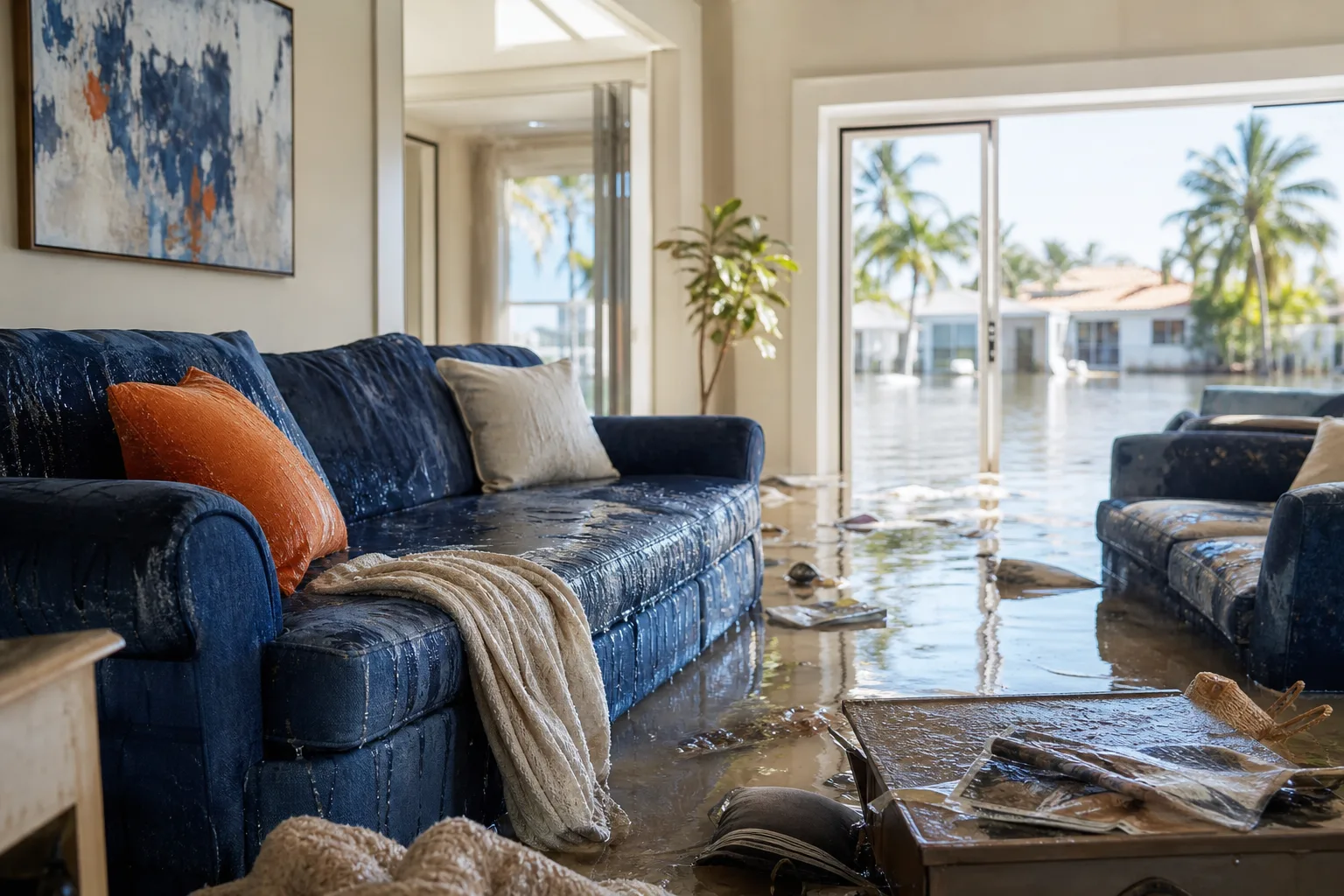
Florida sits in one of the most flood-prone regions in the country. Palm Beach County properties near the Intracoastal, canals, and low-lying neighborhoods can flood from tropical storms, king tides, and heavy rain events, not only named hurricanes. A homeowners policy does not cover flood damage. Your windstorm or HO3 policy will not pay for a soaked sofa.
The coverage split matters in three specific ways:
1. Contents coverage must be elected at purchase. You cannot add it after a storm is named or after water enters your home. NFIP has a standard 30-day waiting period before coverage takes effect, with limited exceptions for loan closings. Private flood carriers often have shorter waiting periods but still require advance purchase.
2. Basement and below-grade areas have restricted coverage. NFIP defines "basement" broadly, including any area below the lowest elevated floor in a post-FIRM building. Personal property stored in a basement is generally not covered under NFIP contents coverage. This catches many South Florida homeowners off guard when items stored in a garage at grade or a lower-level storage area are excluded. See FEMA's basement coverage limitations for the specific list.
3. Coverage limits are capped. NFIP contents coverage maxes out at $100,000 for residential properties. High-value items such as artwork, jewelry, and collectibles have sublimits and may require separate scheduled coverage. Private flood policies sometimes offer higher contents limits and may include replacement cost rather than actual cash value, which is important in Florida's humid climate where depreciation on electronics and furniture is steep.
What NFIP Contents Coverage Actually Pays For
When you have NFIP contents coverage and a covered flood event occurs, the policy generally covers:
- Clothing, furniture, and electronic equipment on or above the lowest elevated floor
- Curtains and window treatments
- Portable and window air conditioning units
- Carpets not permanently installed
- Washers and dryers
- Food freezers and their contents
- Some valuables up to $2,500
What it generally does not cover:
- Currency, stock certificates, or precious metals
- Personal property stored below the lowest elevated floor (including most garages and lower-level storage)
- Vehicles (those are covered under your auto insurance policy, potentially under comprehensive coverage)
- Outdoor property such as patio furniture, fences, and landscaping
- Temporary housing or additional living expenses, which may be covered under your homeowners insurance policy after a separate covered peril
Your homeowners policy doesn't cover flood. Let's fix that. Get a flood quote
What We Don't Know Yet
Private flood market terms continue to shift in Florida. Carriers have entered and exited the market, and policy language around contents, waiting periods, and sublimits is not standardized the way NFIP is. A private policy from one carrier may cover replacement cost on contents; another may default to actual cash value. Some include additional living expenses; others do not.
FEMA is also periodically revising Risk Rating 2.0 pricing, which affects NFIP premiums based on individual property flood risk rather than flood zone maps alone. How future pricing changes will affect the competitiveness of private flood for contents coverage is not yet fully settled.
What to Do About It
Use this diagnostic sequence before your next renewal or new purchase:
- Pull your current flood declarations page. Look for two separate line items: building coverage and contents coverage. If you see only one, you likely have no contents protection.
- Check your stored items. Identify anything you keep at or below grade, such as in a garage, utility room, or lower level. Those items may be excluded under NFIP regardless of your contents election.
- Compare NFIP contents limits to your actual property. If furnishings, electronics, and clothing in your home exceed $100,000 in value, consider whether a private flood policy with higher contents limits fits better.
- Note your renewal date. The NFIP 30-day waiting period means you cannot wait for a storm forecast. June 1 opens Atlantic hurricane season. Secure or review coverage before then.
- Ask specifically about replacement cost vs. actual cash value. For contents, the difference between what your five-year-old television cost new and what it is worth today can be significant.
A flood insurance review with an independent agency lets you place NFIP and private flood options side by side. B & B Insurance Agency compares coverage and pricing from multiple carriers so you can see exactly what each policy pays for contents before you commit. Reach out for a no-obligation review before hurricane season opens.
If you rent rather than own, your landlord's flood policy does not cover your belongings at all. A renters insurance policy handles personal property for many perils, but flood is typically excluded there too, making a separate contents-only flood endorsement or private flood policy worth exploring.
Your homeowners policy doesn't cover flood. Let's fix that.
From NFIP to private flood, B & B Insurance finds the right flood protection for your Palm Beach County home.
Frequently asked questions
Can I add contents coverage to my NFIP flood policy mid-term if I realize I don't have it?
No. Changes to NFIP coverage, including adding contents coverage, generally take effect at renewal or through a new policy subject to the standard 30-day waiting period. You cannot add contents after a storm is named or after flooding begins.
Does a private flood policy automatically include contents coverage?
Not always. Many private flood carriers offer contents as a separate elected coverage, similar to NFIP. Policy terms vary by carrier, so always confirm whether contents is included, what the limit is, and whether it pays replacement cost or actual cash value.
Will my homeowners policy cover flood damage to my personal property?
Standard homeowners policies, including HO3 policies common in Florida, exclude flood as a covered peril. Neither the structure nor the contents are protected from flooding under a homeowners policy. Flood coverage requires a separate flood policy with contents coverage elected.
What if my car is damaged in a flood, does flood insurance cover it?
No. Flood insurance, whether NFIP or private, does not cover vehicles. A vehicle damaged by flooding may be covered under the comprehensive portion of your auto insurance policy. Review your auto policy or contact your agent to confirm.
This article is general information, not legal or financial advice. Coverage depends on the terms, conditions, and exclusions of your specific policy, so talk with a licensed insurance agent about your situation.
Related Coverage from B & B
Have a question about this topic?
Our experienced agents are happy to help — no pressure, just straight answers.


