

Related coverage: Flood Insurance, Homeowners Insurance
TL;DR: A standard NFIP flood policy covers your building (structure, foundation, systems) and your contents (furniture, clothing, appliances) as two completely separate coverages with separate limits and separate deductibles. Contents coverage is not automatic. You must purchase it on its own. Knowing what falls under each bucket, and what neither covers, is essential before June 1.
At a Glance
| Coverage Type | What It Protects | NFIP Max Limit (Residential) | Deductible |
|---|---|---|---|
| Building (Dwelling) | Structure, foundation, systems, built-ins | $250,000 | Separate, chosen at purchase |
| Contents (Personal Property) | Furniture, clothing, appliances, electronics | $100,000 | Separate, chosen at purchase |
| Neither | Landscaping, vehicles, temporary housing, most valuables above sub-limits | N/A | N/A |
Source: FEMA NFIP Summary of Coverage
What Building Coverage Pays For
The building portion of an NFIP policy covers the insured structure and the systems permanently attached to it. In a Palm Beach County flood event, this means:
- Foundation walls, anchorage systems, and staircases
- Electrical and plumbing systems
- HVAC equipment, water heaters, and heat pumps
- Refrigerators, cooking stoves, and built-in dishwashers
- Permanently installed carpeting over unfinished floors
- Window blinds
- Detached garages (up to 10% of the building limit)
One point that surprises many homeowners: a built-in dishwasher is a building item, but a portable dishwasher you roll to the sink is a contents item. The "permanently installed" test draws the line.
Building coverage pays on a replacement cost basis for a primary single-family home that is insured to at least 80% of its replacement value. For other residential buildings, the payout is actual cash value, meaning depreciation is subtracted.
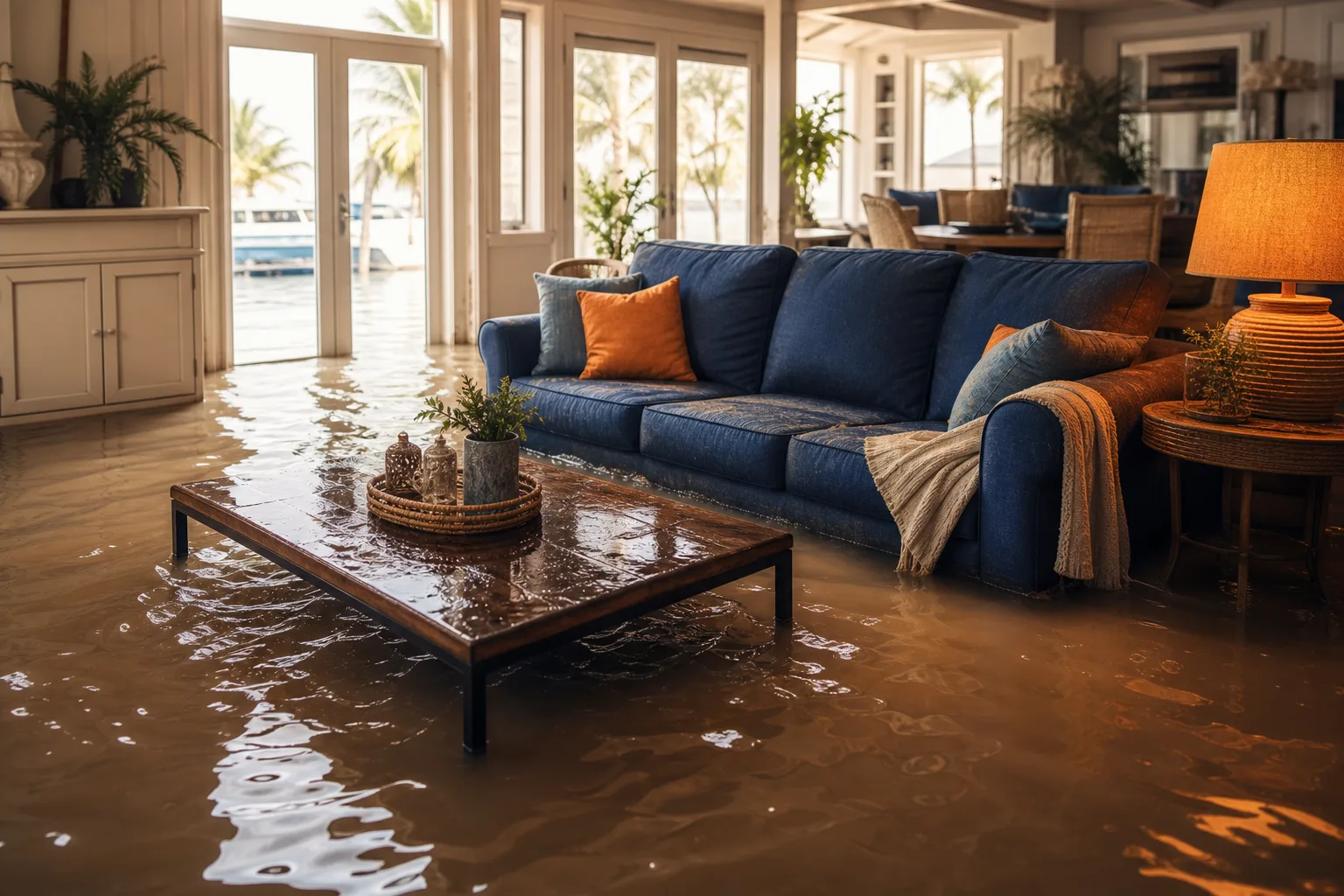
What Contents Coverage Pays For
Contents coverage is always purchased separately and always pays actual cash value, never replacement cost, under a standard NFIP policy. That gap between what your sofa cost new and what a depreciated payout delivers can be significant after a major flood.
Covered personal property includes:
- Clothing, furniture, and electronic equipment
- Curtains and portable window air conditioners
- Washers, dryers, and food freezers (and the food inside freezers)
- Artwork and furs up to $2,500 (combined sub-limit)
- Jewelry up to $2,500
- Original artwork up to $2,500
Contents coverage applies to items in a building at or above the lowest elevated floor. Items stored in a basement or below-grade enclosure are largely excluded, with narrow exceptions such as a washer, dryer, or portable air conditioner.
What Neither Coverage Pays
This is the section most Florida policyholders wish they had read before filing a claim.
Neither building nor contents coverage pays for:
- Vehicles, including cars and boats (auto and boat policies handle those)
- Additional living expenses or temporary housing while your home is unlivable
- Landscaping, decks, patios, fences, and septic systems
- Financial losses caused by business interruption
- Currency, precious metals, and valuable papers
- Damage caused by moisture, mildew, or mold that could have been avoided by the owner
- Property outside the insured building (outdoor furniture, grills)
If your home floods and you need to stay in a hotel for two months, your flood policy will not pay that bill. A homeowners policy may cover additional living expenses after certain perils, but not flooding. That coverage gap is real and worth planning around. Your homeowners insurance policy should be reviewed alongside your flood policy every year.
Your homeowners policy doesn't cover flood. Let's fix that. Get a flood quote
The Basement and Below-Grade Problem
Florida homes rarely have basements in the traditional sense, but many have below-grade enclosures, finished lower levels, or ground-floor units in multi-story buildings. The NFIP applies strict rules here.
For basement or below-grade areas, building coverage is limited to:
- Foundation elements, posts, and pilings
- Central air units, furnaces, and water heaters
- Electrical junction boxes and circuit breakers
- Sump pumps and fuel tanks
- Stairways and elevators
Finished drywall, flooring, cabinetry, and built-in shelving in a below-grade space are generally not covered under a standard NFIP policy. If you have a finished lower level in a coastal Palm Beach County property, a private flood policy may offer broader coverage than the NFIP.
Private Flood Policies and the Excess Market
Private flood insurers have expanded significantly in Florida and may offer options the NFIP does not:
- Higher building limits above the $250,000 NFIP cap
- Contents coverage on a replacement cost basis
- Additional living expense coverage
- Broader basement and below-grade coverage in some cases
- Shorter waiting periods (the NFIP typically imposes a 30-day waiting period before a new policy takes effect, with limited exceptions)
The tradeoff is that private carriers can and do exit the Florida market. The NFIP is a federal program and does not cancel policies based on market conditions. Neither option is universally better. The right answer depends on your home's value, its elevation, its construction type, and what your lender requires.
A Diagnostic Sequence Before Hurricane Season
Use this before June 1 each year:
- Confirm you have both coverages. Pull your NFIP declarations page. It will show building and contents limits separately. If contents shows $0, you have no personal property coverage.
- Check your contents limit against your actual belongings. The $100,000 NFIP cap sounds large, but a fully furnished home in Palm Beach County can exceed it. Document everything with photos or video and store the file off-site or in cloud storage.
- Note that contents pays ACV. Estimate the depreciated value of your belongings, not replacement cost, when setting limits.
- Identify any below-grade finished spaces. Flag those areas and ask whether a private flood policy fills the gap the NFIP leaves.
- Check your waiting period. If a named storm is approaching and you do not have flood coverage, it is almost certainly too late to buy it in time.
- Layer your review with your homeowners policy. Flood and wind are separate events under Florida law. Your HO policy covers wind damage; your flood policy covers rising water. Confirm which deductible applies to each scenario.
Verdict
The structure vs. contents split in a Florida flood policy is not a technicality. It is the architecture of the entire contract, and each side has its own rules, limits, and exclusions. Building coverage is broader and can pay replacement cost for primary homes. Contents coverage always pays actual cash value and must be purchased separately. Neither side covers temporary housing, landscaping, or vehicles.
For homes with high-value contents, finished lower levels, or replacement values above $250,000, the NFIP alone may not be enough. A private flood policy, or an excess flood layer, may close those gaps.
The team at B & B Insurance Agency compares coverage and pricing from multiple carriers for flood insurance in Lantana, West Palm Beach, and throughout Palm Beach County. If you want to review your current flood declarations or explore private flood options alongside your NFIP policy, request a free consultation before the June 1 hurricane season deadline.
Your homeowners policy doesn't cover flood. Let's fix that.
From NFIP to private flood, B & B Insurance finds the right flood protection for your Palm Beach County home.
Frequently asked questions
Can I buy contents-only flood coverage without building coverage in Florida?
Yes. If you rent your home, you can purchase NFIP contents coverage without a building policy, since your landlord is responsible for insuring the structure. Homeowners with a mortgage are typically required by their lender to carry building coverage, but adding contents is a separate election on the same application.
Does a Florida flood policy cover a detached garage or storage shed?
Under the NFIP, a detached garage can be covered under the building policy up to 10% of the building limit, but only if it is used for limited storage or parking rather than as a finished living or business space. Detached sheds not used for parking are generally excluded. Private flood policies vary, so confirm detached structure coverage directly with your carrier.
How does the 30-day waiting period affect me if a hurricane is forecast?
The standard NFIP waiting period is 30 days, meaning a policy purchased today does not take effect for a month. Exceptions exist for loan closings and certain map changes, but a forecast storm does not qualify. This is why reviewing flood coverage well before June 1 each year matters, not in August when a track appears on a weather map.
Is mold damage after a flood covered by either building or contents coverage?
Only if the mold resulted directly from flood damage and the policyholder took reasonable steps to minimize it. The NFIP excludes mold or mildew that the owner could have avoided through normal maintenance or by acting promptly after the flood. Document cleanup efforts with photos and receipts to support any mold-related portion of a flood claim.
This article is general information, not legal or financial advice. Coverage depends on the terms, conditions, and exclusions of your specific policy, so talk with a licensed insurance agent about your situation.
Related Coverage from B & B
Have a question about this topic?
Our experienced agents are happy to help — no pressure, just straight answers.


