TL;DR: An open peril (HO-3) policy covers your dwelling against any cause of loss not specifically excluded, giving you broader protection. A named peril policy only pays if the damage stems from a listed cause. In hurricane-prone South Florida, that difference matters more than almost anywhere else in the country.
At a Glance
| Feature | Named Peril (e.g., HO-2) | Open Peril (e.g., HO-3) |
|---|---|---|
| Burden of proof | Homeowner must show the peril is listed | Insurer must prove an exclusion applies |
| Dwelling coverage | Only listed perils | All causes except exclusions |
| Personal property | Only listed perils | Often still named peril (check your policy) |
| Typical premium | Lower | Higher |
| Best for | Tight budget, low-risk structure | Most Florida homeowners |
What "Named Peril" Actually Means
A named peril policy pays only when damage is caused by a hazard explicitly listed in the policy, such as fire, lightning, windstorm, hail, theft, or vandalism. The standard HO-2 broad form typically lists around 16 common perils, though the exact number varies by carrier and policy form.
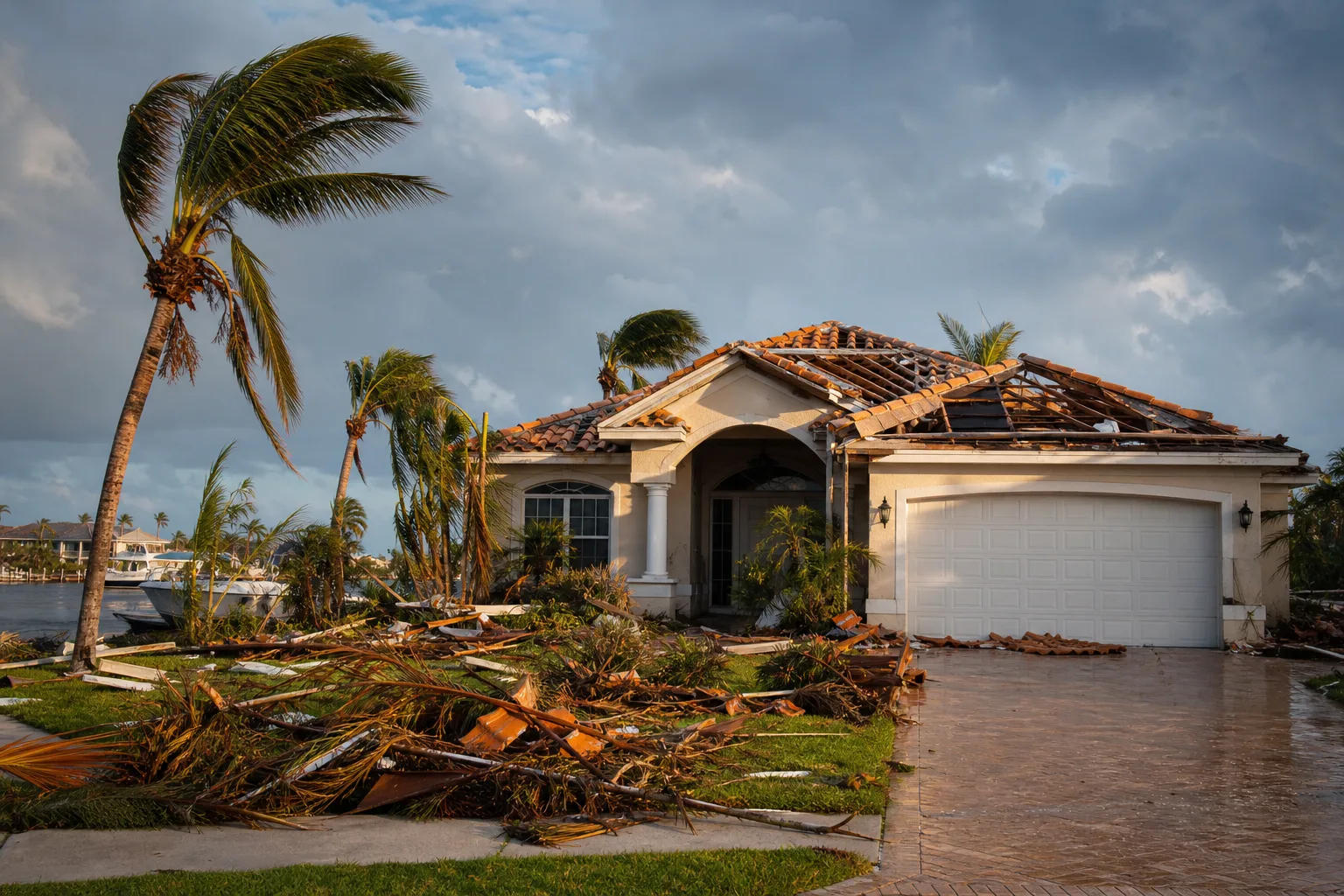
The catch: if a cause of loss is not on the list, the claim is denied. You have to prove the damage fits a named category, which can get complicated when Florida's weather mixes wind, rain, and flooding in the same storm.
The Florida Office of Insurance Regulation notes that claim disputes frequently arise when policyholders cannot isolate a single cause of loss, an issue especially common after hurricanes.
What "Open Peril" Actually Means
An open peril policy (sometimes called "all-risk") flips the burden. It covers any cause of loss to your dwelling unless the policy specifically excludes it. Common exclusions include flood, earthquake, normal wear and tear, and intentional damage.
The HO-3 is the most widely sold homeowners form in the U.S., according to the Insurance Information Institute. Most Florida carriers write the dwelling on an open peril basis and personal property on a named peril basis, so read both sections carefully.
Practical difference: Your roof develops a leak after a storm. Under a named peril policy, you must show the damage matches a listed cause. Under an open peril policy, the insurer must show it falls under an exclusion, such as long-term deterioration. That shift in burden can determine whether your claim succeeds.
Paying too much for Florida homeowners insurance? Get a free home quote
The Florida Wrinkle: Wind, Water, and Sinkholes
Florida's exposure to hurricanes, tropical storms, and sinkholes makes peril categorization unusually high-stakes.
- Windstorm is a named peril on both HO-2 and HO-3 policies, but many Florida insurers now issue wind coverage through a separate endorsement or Citizens Property Insurance.
- Flood is excluded from both policy types. Whether you have a named peril or open peril home policy, rising water requires a separate flood insurance policy.
- Sinkhole coverage in Florida is subject to specific legal requirements that have evolved over the years. Florida law has specific requirements around sinkhole and catastrophic ground cover collapse coverage , ask your agent about current requirements to make sure you understand what is and is not included in your policy.
These layers mean even a robust open peril policy has meaningful gaps. Understanding what is excluded is just as important as knowing what is covered.
Head-to-Head: Tradeoffs Decision Table
Use this to quickly locate where each policy type helps or hurts you.
| Scenario | Named Peril Result | Open Peril Result |
|---|---|---|
| Roof damaged by wind | Covered (listed peril) | Covered (not excluded) |
| Water damage from burst pipe | Covered (listed peril on HO-2) | Covered (not excluded) |
| Mysterious interior damage, cause unknown | Not covered (no listed peril) | Likely covered (no exclusion shown) |
| Flood from storm surge | Not covered (excluded) | Not covered (excluded) |
| Mold following a covered water event | Depends on endorsement | Depends on endorsement |
| Theft of personal property | Covered (if listed) | Covered under named peril section for contents |
How to Decide: A Five-Question Diagnostic
Work through these in order.
- What policy forms are actually available to you? Florida's tightened insurance market means some carriers offer limited forms. Start by knowing your options.
- Can you document your home's condition thoroughly? Open peril claims still require proof of a sudden, accidental loss. Good documentation, photos, and maintenance records help either way.
- What is your deductible situation? Florida policies often carry a separate hurricane deductible (commonly 2-5% of dwelling value). A lower premium on an HO-2 may not offset a claim denial after a complex storm.
- Do you have a mortgage? Most lenders require at minimum an HO-3 equivalent. Named peril policies may not satisfy lender requirements.
- Have you secured separate flood coverage? If not, address that before worrying about the peril structure of your home policy. Visit flood insurance to see options.
Verdict
For most Palm Beach County homeowners, an open peril (HO-3) policy is the better fit. The burden-shift alone, where the insurer must prove an exclusion rather than you proving a listed cause, is worth the premium difference in a state where storms rarely arrive with a clean, single cause of loss.
A named peril policy can work if you own a secondary or lower-value structure where a lower premium genuinely outweighs the coverage gap, and your lender permits it.
Either way, no home policy replaces a standalone flood insurance policy. That is a separate conversation, and a critical one for South Florida.
If you want to compare actual policy language and current carrier options across both forms, the independent agents at B & B Insurance Agency shop multiple carriers and can show you side-by-side what each policy excludes, not just what it covers. You can also reach the team directly at /contact-us.
Paying too much for Florida homeowners insurance?
B & B Insurance shops multiple carriers to find you the right coverage at the right price , and we know Florida wind and flood rules cold.
Frequently asked questions
Does an open peril policy cover hurricane damage in Florida?
Windstorm is typically covered, but the policy's hurricane deductible and any wind exclusions added by the carrier apply. Some Florida insurers exclude wind entirely and require a separate endorsement or Citizens Property Insurance policy. Always read the declarations page to confirm how wind is treated on your specific policy.
Can a named peril policy satisfy a Florida mortgage lender's requirements?
Most lenders require coverage equivalent to an HO-3, which means open peril on the dwelling. A named peril HO-2 often does not meet that standard, so check with your lender before accepting a limited form policy. Your agent can confirm whether a given policy form satisfies the lender's insurance requirements.
Is personal property covered on an open peril basis under an HO-3?
Usually not. Most HO-3 policies cover the dwelling structure on an open peril basis but cover personal belongings only on a named peril basis. That means your furniture, electronics, and clothing are protected only against the listed causes, so review the contents section of your policy separately.
What happens if the cause of a loss cannot be determined after a storm?
Under a named peril policy, an undetermined cause typically results in a denied claim because no listed peril is confirmed. Under an open peril policy, the insurer generally must demonstrate that an exclusion applies, which is a stronger position for the homeowner. Thorough post-storm documentation, photos, and a prompt inspection report can support your claim under either form.
This article is general information, not legal or financial advice. Coverage depends on the terms, conditions, and exclusions of your specific policy, so talk with a licensed insurance agent about your situation.
Have a question about this topic?
Our experienced agents are happy to help — no pressure, just straight answers.