
Related coverage: Auto Insurance
TL;DR: Florida's Personal Injury Protection (PIP) follows the person, not just the vehicle. If you own a car and are hit as a pedestrian, your own PIP pays first. If you don't own a car, the driver's PIP or insurer may step in. You have a strict 14-day window to seek medical care or your PIP claim is denied.
What You Need
- Your current Florida auto insurance policy number and carrier contact
- The at-fault driver's insurance information and plate number
- A police report or incident number
- Medical records from treatment received within 14 days of the accident
- Knowledge of Florida's No-Fault law requirements (see Florida Statute 627.736)
Step 1: Understand How Florida PIP Applies to Pedestrians
Florida operates under a no-fault insurance system. Under Florida Statute 627.736, every registered vehicle owner must carry at least $10,000 in PIP coverage. That coverage extends beyond the car itself.
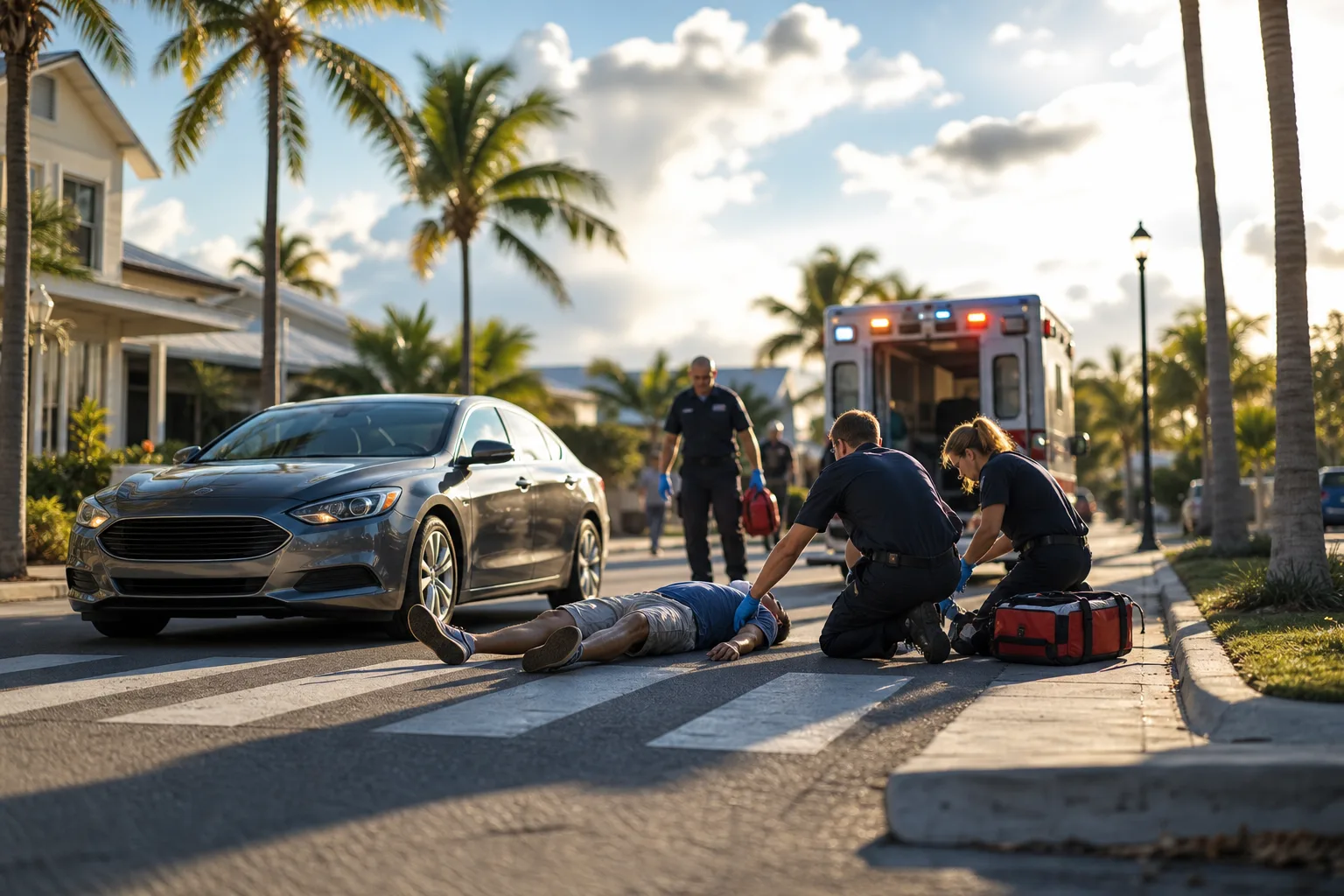
If you own a Florida-registered vehicle, your PIP covers you when you are a pedestrian struck by any motor vehicle. You file with your own insurer first, regardless of who caused the accident.
If you do not own a car and have no PIP of your own, coverage follows this order:
- A resident relative's PIP policy in your household
- The PIP policy of the vehicle that struck you
This "follows the person" structure is one of the less obvious features of Florida's no-fault system.
Step 2: Know Exactly What PIP Pays, and What It Does Not
PIP covers 80% of necessary medical expenses and 60% of lost wages, up to your policy limit (minimum $10,000). It also pays a $5,000 death benefit.
What PIP does NOT cover:
- Pain and suffering (you need a separate bodily injury liability claim for that)
- Medical bills above your policy limit
- Non-economic damages unless your injuries meet Florida's "serious injury" threshold
- Property damage to items you were carrying
The serious injury threshold matters. Under Florida law, you can only sue the at-fault driver for pain and suffering if your injuries involve significant or permanent loss of an important bodily function, permanent injury, significant scarring or disfigurement, or death. Minor soft-tissue injuries typically do not clear that bar.
Step 3: Seek Medical Care Within 14 Days, No Exceptions
This deadline is non-negotiable under Florida Statute 627.736(1)(a). If you do not receive medical treatment within 14 days of the accident, you forfeit your right to PIP benefits entirely.
Your benefit amount also depends on the type of care:
- Emergency medical condition (EMC): PIP pays up to your full $10,000 limit at 80%
- Non-emergency condition: PIP is capped at $2,500
A licensed provider (physician, hospital, or certain clinics) must document the EMC designation. Visiting an urgent care or ER promptly protects both your health and your claim value.
Want a second look at your car insurance? Get a free auto quote
Step 4: File Your PIP Claim With Your Own Insurer First
- Call your auto insurer as soon as possible after the accident.
- Provide your police report number, the date and location of the accident, and the treating provider's information.
- Your insurer sends the medical bills directly to the provider in most cases (called "direct pay").
- Track all treatment dates and keep copies of every bill and explanation of benefits.
Florida insurers must pay or deny a PIP claim within 30 days of receiving reasonable proof of loss. If they dispute the amount, they may request an independent medical examination (IME).
Step 5: Evaluate Whether the Driver's Bodily Injury Liability Applies
PIP only gets you so far. If your injuries are severe or your bills exceed your PIP limit, the at-fault driver's Bodily Injury (BI) liability coverage becomes important.
Note: Florida does not require drivers to carry BI liability coverage, though many do. If the driver carries BI and your injuries meet the serious injury threshold, you may be entitled to compensation for pain and suffering, full medical costs beyond PIP, and future lost earning capacity.
An attorney experienced in Florida auto accidents can advise you on pursuing a BI claim. That step is outside the scope of insurance alone.
Step 6: Check for Uninsured Motorist Coverage on Your Own Policy
If the driver who hit you has no BI coverage, your own Uninsured/Underinsured Motorist (UM/UIM) coverage may fill the gap, but only if you added it to your policy.
UM is optional in Florida but covers exactly these situations. If your current auto insurance policy does not include UM coverage, this is a good reason to revisit it before you need it.
Common Mistakes
Waiting more than 14 days to seek care. The most common reason PIP claims are denied. Even if you feel fine, get evaluated promptly.
Assuming the driver's insurance pays your bills directly. Under Florida no-fault, your own PIP is primary. Going to the at-fault driver's insurer first can slow your care and jeopardize your claim timeline.
Skipping the police report. A documented incident report is important evidence for both your PIP claim and any future BI or UM claim.
Not knowing your own coverage limits. Many Florida drivers carry only the minimum $10,000 in PIP. If your medical bills are higher, knowing your UM and BI limits ahead of time helps you plan.
Treating PIP as full coverage. PIP is a first-payment mechanism, not a full replacement for health insurance or a personal injury settlement.
Bottom Line
Florida PIP is designed to get your medical bills and lost wages covered quickly after an accident, even when you're the one on foot. The system is structured so your own coverage pays first, the 14-day treatment window is absolute, and the serious injury threshold controls whether you can pursue the driver for more.
If you are not sure your current auto policy includes enough PIP, UM, or BI protection for situations like this, the team at B & B Insurance Agency compares coverage and pricing from multiple carriers to help you find a policy that fits your actual life in South Florida. You can also contact us directly to review what you have now.
Coverage details depend on your specific policy language. Florida statutes are subject to change. Consult a licensed insurance professional or an attorney for guidance on your individual situation.
Want a second look at your car insurance?
As an independent agency we compare coverage and pricing from multiple carriers. Free quotes, local service since 1998.
Frequently asked questions
What happens if I'm hit by a car as a pedestrian and I don't own a vehicle in Florida?
If you have no PIP of your own, Florida law looks to a resident relative's policy in your household first. If no household policy exists, the PIP coverage on the vehicle that struck you becomes available. This hierarchy is defined under Florida Statute 627.736.
Can I sue the driver who hit me even though Florida is a no-fault state?
Yes, but only if your injuries meet Florida's serious injury threshold, which includes permanent injury, significant loss of a bodily function, significant scarring, or death. Minor injuries typically do not clear this threshold, which limits your ability to pursue pain and suffering damages from the at-fault driver.
Does Florida PIP cover a pedestrian hit in a parking lot or on private property?
Generally yes. Florida PIP follows the insured person regardless of where the accident occurs, including parking lots and private roads, as long as a motor vehicle is involved. The same 14-day treatment deadline and documentation rules still apply.
Will my health insurance coordinate with PIP after a pedestrian accident?
PIP is primary for accident-related medical expenses in Florida. Your health insurer may cover costs above your PIP limit, but check your health plan for any coordination-of-benefits clauses or exclusions for auto accidents, as some plans require PIP to be exhausted first.
This article is general information, not legal or financial advice. Coverage depends on the terms, conditions, and exclusions of your specific policy, so talk with a licensed insurance agent about your situation.
Related Coverage from B & B
Have a question about this topic?
Our experienced agents are happy to help — no pressure, just straight answers.


