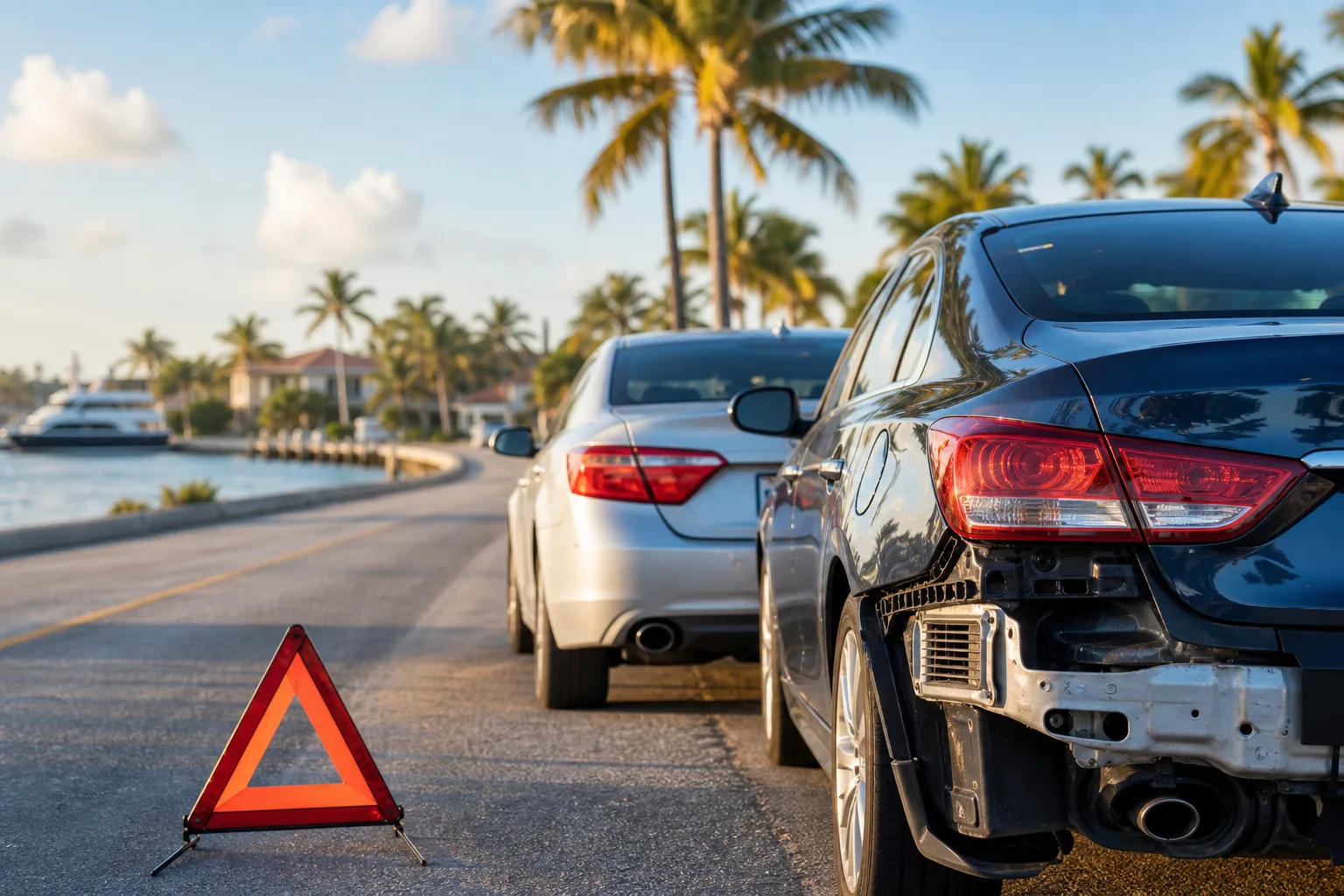

TL;DR: Most Florida personal auto policies extend your existing coverages to rental cars within the United States, Canada, and sometimes Puerto Rico. Coverage for rentals in Mexico, the Caribbean, Europe, or anywhere else abroad is typically excluded. If you are renting overseas, you will need either a travel or standalone rental policy purchased locally, a credit card benefit that actually covers the destination country, or the rental company's own collision damage waiver (CDW).
At a Glance: Domestic vs. International Rental Coverage
| Situation | Your FL Personal Auto Policy | Credit Card Rental Benefit | Rental Counter CDW |
|---|---|---|---|
| U.S. rental (lower 48) | Usually yes, mirrors your coverages | Often secondary coverage | Optional, often redundant |
| Canada rental | Usually yes, same as U.S. | Often yes | Optional |
| Puerto Rico rental | Often yes, check your declarations | Varies by card | Optional |
| Mexico rental | Almost never | Rarely | Required by Mexican law |
| Caribbean/Europe/Asia | Almost never | Varies widely, read the fine print | Required or strongly advised |
How Your Florida Policy Actually Works with Domestic Rentals
When you rent a car inside the United States, your personal auto policy generally treats the rental like a temporary substitute vehicle. That means:
- Liability coverage transfers, up to your policy limits.
- Collision and comprehensive apply if you carry those coverages on at least one of your owned vehicles, subject to your deductible.
- Uninsured/underinsured motorist (UM/UIM) coverage may extend as well, though this varies by carrier.
What does not transfer automatically: your deductible. If someone hits the rental and you file under your own collision coverage, you still pay your deductible out of pocket before the carrier pays anything.
Here's what I'd tell my own family: check your declarations page for the phrase "temporary substitute vehicle" or call your agent before the trip. Do not assume.

Where the Policy Draws the Line Geographically
Florida auto policies are issued under Florida law and are designed for U.S. roads. The standard personal auto policy form used across most carriers explicitly limits the policy territory to the United States, its territories and possessions, Puerto Rico, and Canada. The Insurance Information Institute confirms this territorial limitation is standard across personal auto forms.
Mexico is the most common trip-up. Mexican law requires liability insurance issued by a Mexican-licensed insurer. Your Florida policy is not recognized by Mexican authorities, even if your carrier is large and well-known. Driving in Mexico without a local policy is a serious legal and financial risk.
For Europe, the Caribbean islands (outside Puerto Rico), Central America, or Asia, your policy simply has no reach at all.
Let's see if you're overpaying for car insurance. Get a free auto quote
What Actually Covers You Abroad
Option 1: The Rental Counter's CDW or LDW
The collision damage waiver (CDW) or loss damage waiver (LDW) sold at the rental counter transfers financial responsibility for damage to the rental car back to the rental company. It is not technically insurance, but it functions like collision coverage for the vehicle itself.
Key tradeoffs:
- Usually covers the vehicle; may not cover your liability to third parties.
- Costs vary widely by country, rental company, and vehicle class, so always confirm the price at the counter before deciding.
- Some CDW agreements exclude off-road driving, certain vehicle classes, or high-risk areas.
Option 2: Credit Card Rental Benefit
Many travel rewards credit cards offer rental car protection when you pay for the full rental with that card. Coverage details vary enormously by card and by destination country.
Before relying on this:
- Read the benefit guide for your specific card, not a blog summary.
- Confirm the destination country is covered. Many cards exclude Australia, Ireland, Israel, Italy, Jamaica, and New Zealand, among others.
- Note whether the benefit is primary (pays first) or secondary (pays after your auto policy and then only the remainder).
- Check the vehicle class limit. Luxury SUVs and trucks are sometimes excluded.
Option 3: Travel Insurance with Rental Car Coverage
A standalone travel insurance policy or a non-owner auto policy can fill gaps, especially for longer international stays. This is worth pricing if you rent abroad frequently.
Option 4: Your Credit Card's Separate Travel Insurance Rider
Some premium cards bundle travel insurance separately from the rental benefit. They are different products. Confirm which one you actually have.
The Gap People Most Often Forget
CDW covers the rental vehicle. It generally does not cover bodily injury or property damage you cause to other people or their vehicles. In countries with limited compulsory liability limits, that gap can be enormous.
Always ask the rental counter specifically: "Does this include third-party liability, and what is the limit?" If the answer is vague or the limit is low, consider supplemental liability insurance (SLI), which many rental companies sell separately.
Verdict
If you are renting a car in the U.S. or Canada, your Florida personal auto policy almost certainly has you covered, subject to your existing limits and deductibles. Confirm before you go, but you likely do not need to buy the rental counter's CDW.
For any international rental outside Canada and Puerto Rico, treat your Florida policy as nonexistent for that trip. Piece together coverage from the rental counter's CDW plus SLI, and verify your credit card benefit actually covers that specific country. Mexico requires a locally-issued policy by law, full stop.
If you are not sure what your current policy territory says, that is exactly the kind of question worth a quick conversation with your agent before you board the plane. Get a free review of your current auto coverage at B & B Insurance Agency or learn more about your auto insurance options in Palm Beach County.
Let's see if you're overpaying for car insurance.
As an independent agency we compare rates across carriers so you don't have to. Free quotes, local service since 1998.
Frequently asked questions
Does my Florida policy cover a rental car in Puerto Rico?
Puerto Rico is a U.S. territory, so most personal auto policies do extend there, but coverage is not guaranteed on every policy form. Check your declarations page under 'policy territory' or call your agent before the trip to confirm.
If I decline the CDW at the rental counter abroad, am I covered at all?
Outside the U.S. and Canada, declining the CDW and relying on your Florida policy leaves you with no coverage for the rental vehicle. You would need a credit card benefit that specifically covers your destination country, or you would be personally responsible for any damage to the car.
Does my liability coverage follow me to a rental in another country?
No. Your Florida liability coverage ends at the U.S. and Canada border. In most countries outside North America, you are legally required to carry locally-issued liability insurance, and your U.S. policy does not satisfy that requirement.
What is the difference between CDW and supplemental liability insurance (SLI) at a rental counter?
CDW protects you from charges for damage to the rental vehicle itself. SLI covers bodily injury and property damage you cause to other people or their property. They are two separate products, and many travelers buy CDW without realizing they still have little or no liability protection.
This article is general information, not legal or financial advice. Coverage depends on the terms, conditions, and exclusions of your specific policy, so talk with a licensed insurance agent about your situation.
Have a question about this topic?
Our experienced agents are happy to help — no pressure, just straight answers.