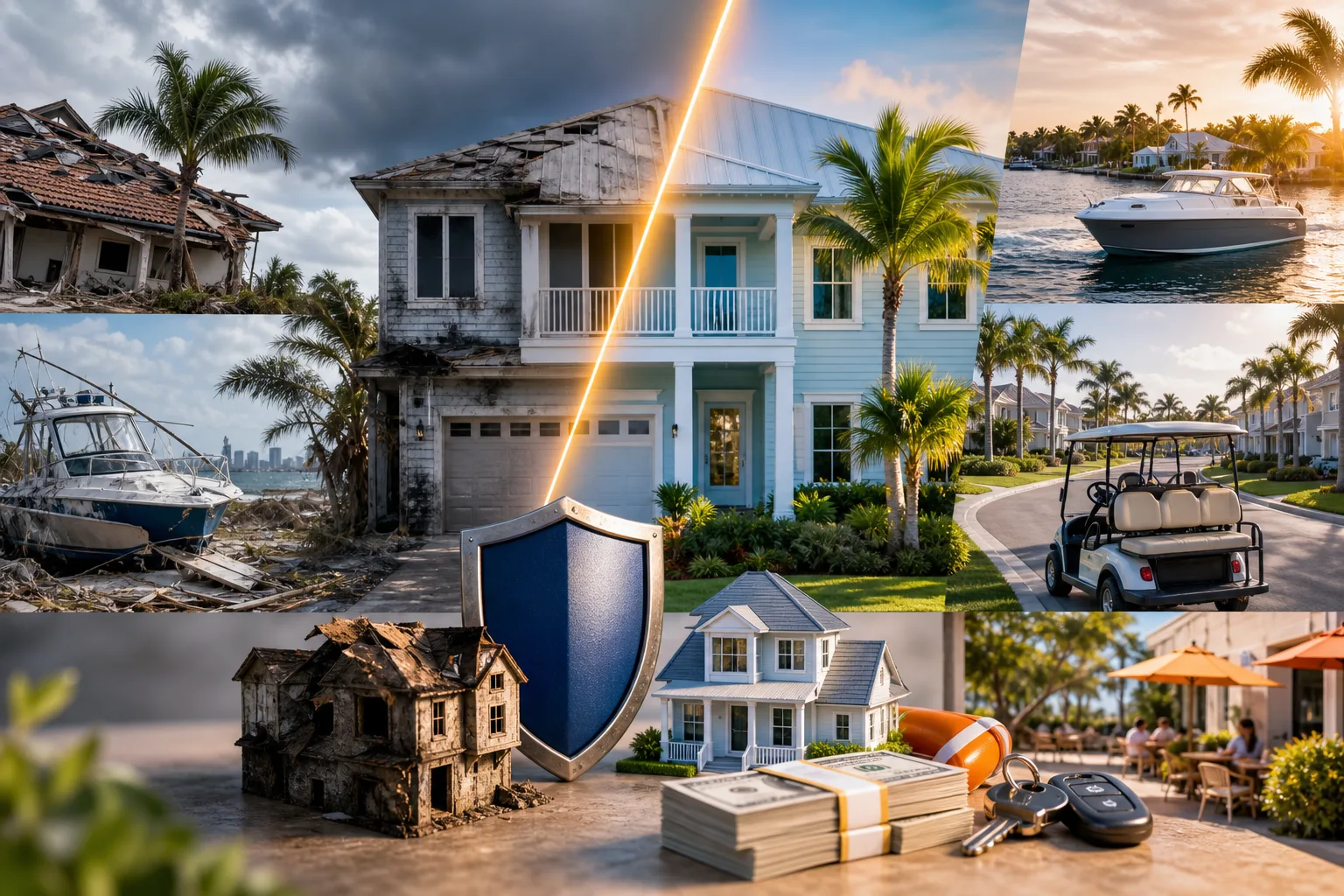
TL;DR: If your policy's dwelling limit was set more than two years ago, you bought during a hot market, you've renovated, or your limit roughly equals your market value rather than rebuild cost, your coverage is likely outdated. A quick review before June 1, the start of hurricane season, can prevent a painful gap after a major storm.
A homeowners policy is only as good as the dwelling limit on page one of the declarations. In Florida, where labor shortages, imported materials, and hurricane-hardening requirements push rebuild costs well above national averages, that number goes stale faster than most people expect. The four signs below give you a concrete way to check your own policy today.
1. Your Dwelling Limit Was Set More Than Two Years Ago and Was Never Adjusted
Florida's residential construction cost index has moved significantly since 2020. The Florida Department of Financial Services and independent data from the Insurance Information Institute both confirm that post-storm demand surges, labor constraints, and supply-chain disruptions have kept rebuild costs elevated across South Florida.
If your carrier does not offer an automatic inflation-guard endorsement, or if you declined one at renewal, your limit is frozen at whatever number was entered when the policy was first written. Two hurricane seasons later, that number can be materially short.
Quick check: Pull your declarations page. Compare the dwelling limit to the year it was set. If it has not moved in 24 months or more and you have no inflation-guard rider, that is a red flag.
2. You Renovated Without Telling Your Insurer
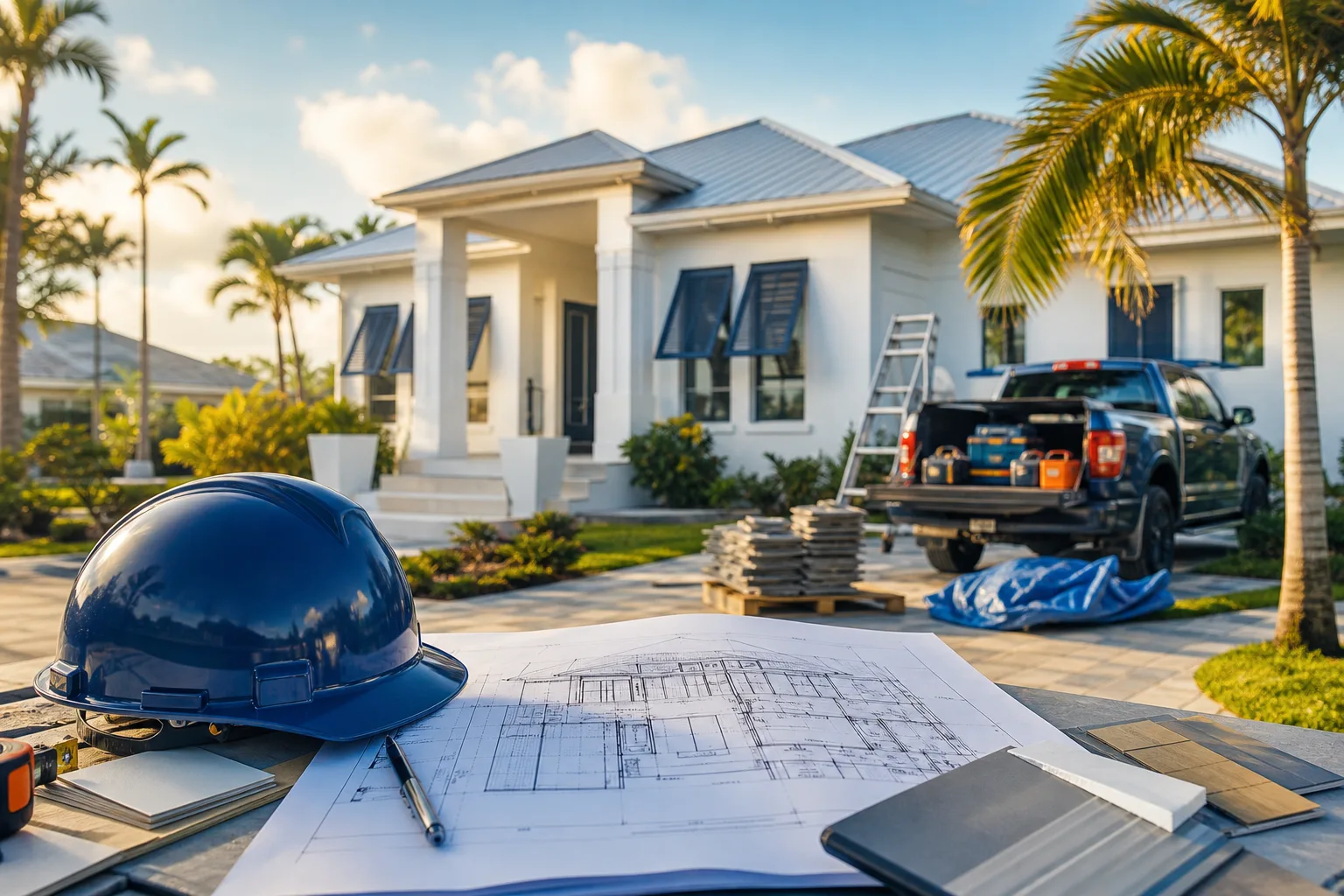
A new kitchen, a bathroom addition, impact-resistant windows, a screened enclosure, or an upgraded roof all increase the cost to rebuild your home. None of those improvements are automatically reflected in your dwelling limit unless you report them.
This matters in Palm Beach County specifically because permitted upgrades often require the rest of the structure to be brought up to current Florida Building Code, which adds cost beyond the square footage of the renovation itself. The Florida Building Code substantial-improvement rule can require code upgrades on portions of the home untouched by your remodel.
Diagnostic sequence:
- List every permitted improvement completed since your policy inception or last major review.
- Estimate the per-square-foot cost of those improvements at today's labor rates.
- Add that total to your current dwelling limit. If the sum exceeds your listed limit, you have a gap.
3. Your Coverage Limit Is Close to Your Home's Market Value
This is one of the most common mismatches in Florida. Market value, the price a buyer would pay, includes the land, the neighborhood, and demand. Rebuild cost, what your insurer owes after a total loss, covers only the structure itself, and in South Florida, land is never destroyed in a storm.
If your dwelling limit and your Zillow estimate are roughly the same number, your limit is almost certainly set to market value rather than replacement cost. In high-demand areas like Lantana, West Palm Beach, and coastal Palm Beach County, land can represent 30 to 50 percent or more of market value, meaning your structural rebuild cost should be considerably lower than market value but your dwelling limit should reflect actual material and labor costs, which can be high on their own.
The practical problem: some agents historically used market value as a shortcut to set limits. It often underestimates rebuild cost in lower-land-value areas and can overinsure in high-land-value areas. Neither outcome is ideal. What you need is a replacement-cost estimate tied to local construction data.
Paying too much for Florida homeowners insurance? Get a free home quote
4. You Have Not Run a Replacement-Cost Estimator Since Closing
Most carriers use a software tool such as CoreLogic RCE or Marshall & Swift to calculate a suggested dwelling limit. That calculation is typically run once, at policy inception, using data entered by the agent or pulled from county property records. If the data was wrong at the start, the limit has been wrong ever since.
Common data errors that quietly underinsure Florida homes:
- Square footage pulled from tax records that excludes a garage conversion or addition
- Incorrect construction type (frame vs. concrete block vs. CBS)
- Missing or wrong roof type and year
- Exterior features like a pool cage or covered lanai not captured
What to do: Ask your agent to rerun the replacement-cost estimator using your current permitted square footage and correct construction details. This is a standard service, not a fee-based appraisal, though a formal appraisal is an option for high-value or unique properties.
A Note on What Your HO Policy Covers vs. Flood Coverage
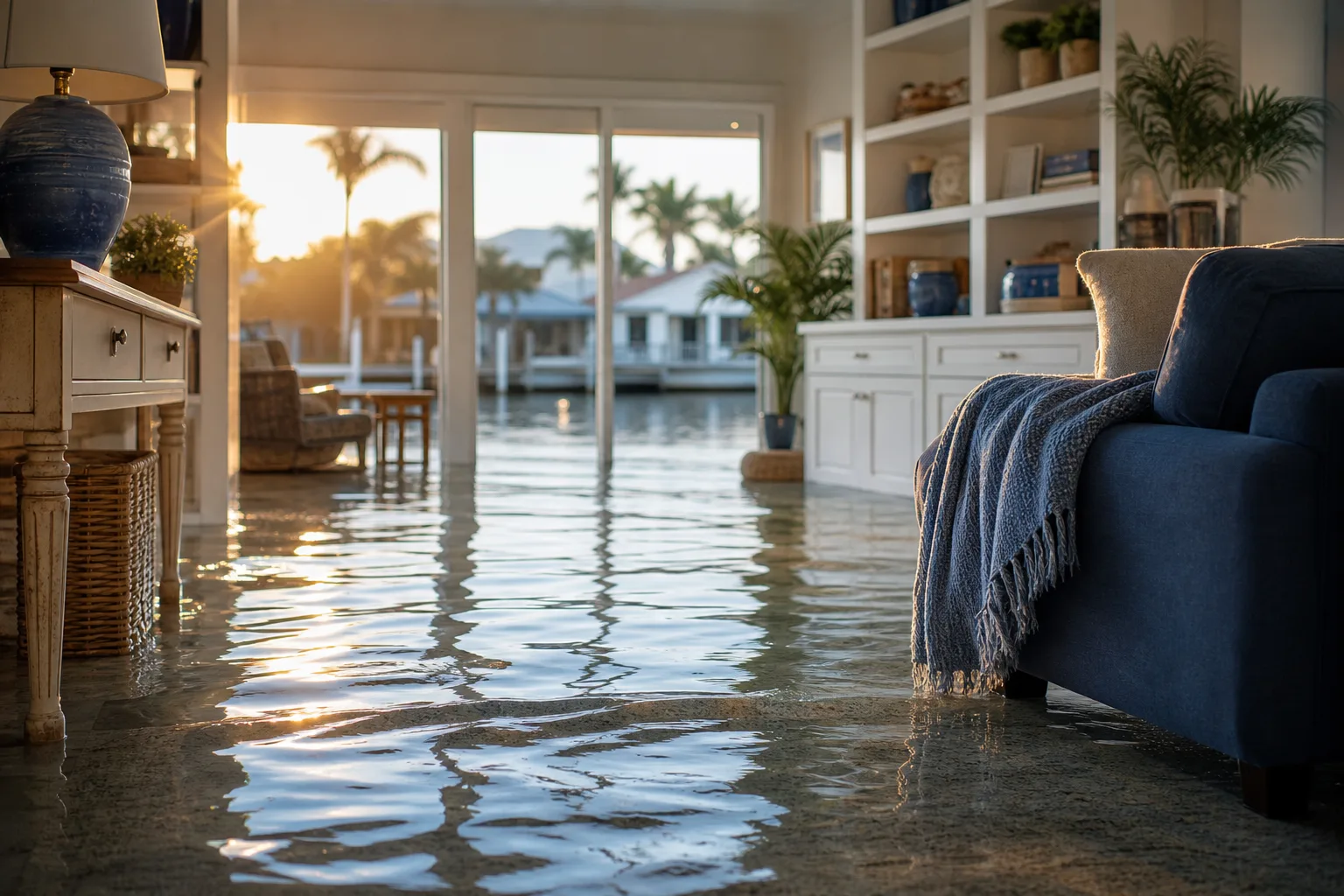
Even a correctly set dwelling limit will not protect you from flood damage. In South Florida, storm surge and heavy rainfall routinely cause losses that a standard homeowners policy explicitly excludes. Flood damage, including surge from a hurricane, falls under a separate policy, typically through the National Flood Insurance Program or a private flood carrier.
If you are reviewing your homeowners dwelling limit, it is a good moment to also confirm you have a separate flood insurance policy in place before June 1.
Bottom Line
An outdated dwelling limit is a silent problem. Your policy renews, premiums are paid, and everything looks fine until a claim reveals the gap. Run through the four signs above using your current declarations page. If any of them apply, a coverage review before hurricane season starts is the right move.
B & B Insurance Agency is an independent agency in Lantana, meaning we can compare limits and options across multiple carriers rather than being locked into one company's tools. If you want a second set of eyes on your dwelling limit, request a free quote or review or learn more about homeowners insurance options we shop for Palm Beach County residents.
Paying too much for Florida homeowners insurance?
B & B Insurance shops multiple carriers to find you the right coverage at the right price — and we know Florida wind and flood rules cold.
Frequently asked questions
What is an inflation-guard endorsement and do I need one in Florida?
An inflation-guard endorsement automatically increases your dwelling limit at each renewal by a set percentage to track rising construction costs. Given Florida's elevated and volatile rebuild costs, it is a useful safeguard, though it does not replace a full replacement-cost review every few years. Ask your agent whether your current policy includes one and at what percentage.
Does my homeowners policy cover the full cost to rebuild if my home is a total loss?
Only if your dwelling limit is set at or above the actual replacement cost of the structure. If your limit is lower, you absorb the difference out of pocket. Some policies include an extended replacement-cost provision that pays a percentage above the stated limit, but you should confirm exactly how that provision reads in your declarations.
How often should Florida homeowners review their dwelling limit?
A review every one to two years is a reasonable target in Florida, and always after a major renovation, a significant local construction cost shift, or a change in the structure such as a roof replacement or addition. The start of hurricane season in June is a natural annual checkpoint.
Can I be penalized for being over-insured on my dwelling limit?
Insurers will not pay more than the actual cost to repair or rebuild, so carrying a limit well above true replacement cost does not result in a windfall. However, you will pay premiums on the excess coverage, which wastes money. The goal is a limit that accurately reflects current rebuild cost, not market value and not an arbitrary round number.
Have a question about this topic?
Our experienced agents are happy to help — no pressure, just straight answers.