

Related coverage: Renters Insurance, Homeowners Insurance
TL;DR: If a pipe bursts and ruins your furniture, electronics, or clothes, your renters policy's personal property coverage pays to repair or replace them, and loss-of-use coverage can pay for a hotel if you can't stay in your unit. The building, the pipes, and the walls themselves are the landlord's problem, not yours. Here's what I'd tell my own family to do first, and where the coverage gaps usually show up.
What you need
Before anything happens, here's what actually matters when water hits your apartment:
- Your renters policy declarations page, so you know your personal property limit and deductible
- Photos or a simple home inventory of your belongings (phone photos are fine)
- Your landlord's contact info and, if you can get it, their insurance contact
- A copy of your lease, so you know who's responsible for what
- Patience, because water claims often involve two different insurance companies sorting out two different responsibilities
Step 1: Know what your renters policy actually insures
A renters policy doesn't cover the building. That's the landlord's job, usually through a commercial property or habitational policy. What your renters policy covers is you: your personal belongings, your liability, and your additional living expenses if you're displaced.
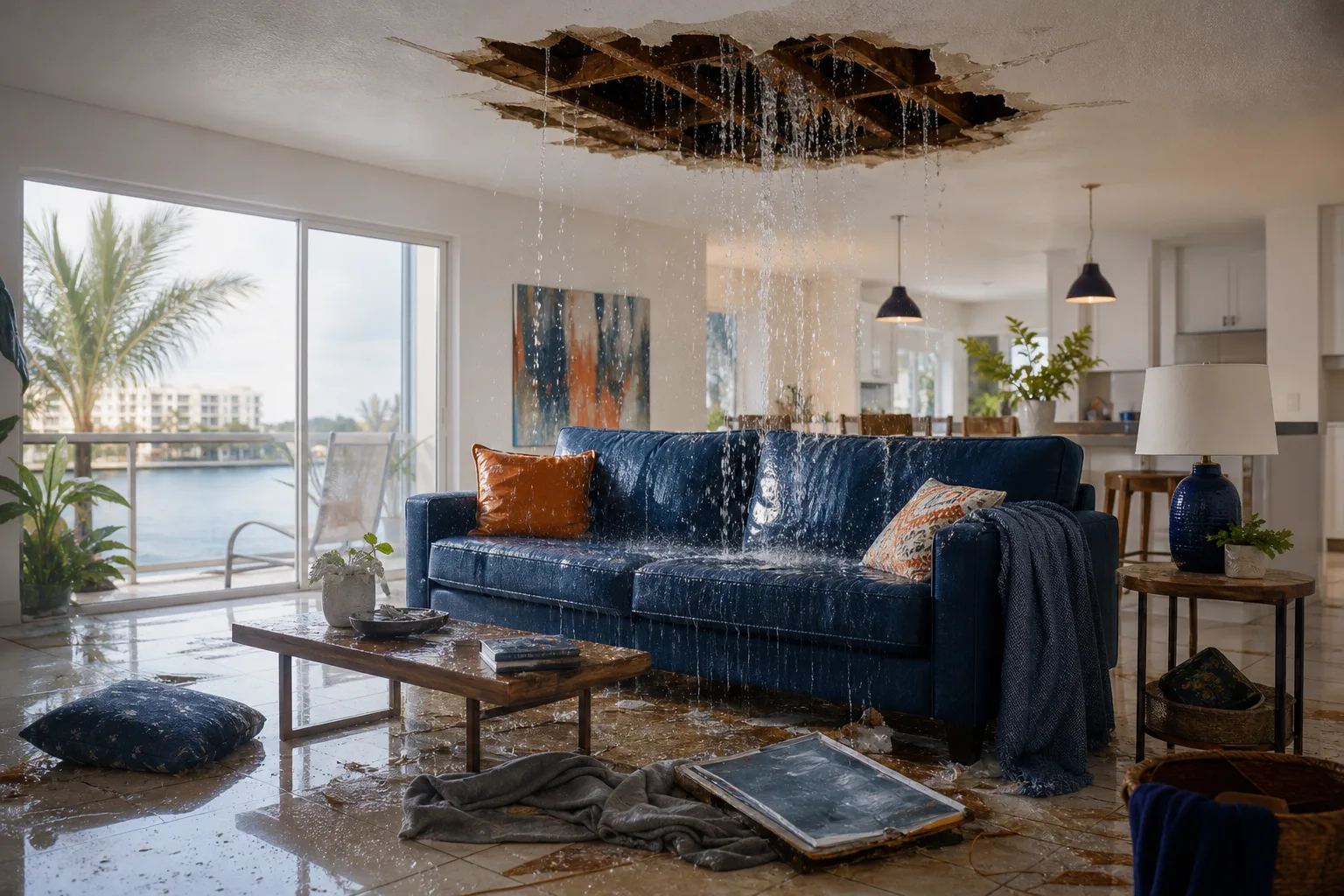
So when a pipe bursts in the unit above you and water comes through your ceiling, here's the split:
- Your landlord's policy typically pays to fix the building, the drywall, the flooring, the plumbing itself.
- Your renters policy pays to replace your couch, your laptop, your clothes, and anything else of yours that got soaked or stained.
This is the single most common point of confusion I hear across the desk. People assume because the damage wasn't their fault, someone else's insurance automatically covers their stuff. It doesn't work that way unless your landlord was proven negligent and their insurer agrees to reimburse you, which can take a long time to sort out. Your own renters policy is almost always the faster, more reliable path to getting your belongings replaced.
Step 2: Check what type of water damage is actually covered
Most renters policies cover sudden and accidental water damage, like a pipe that bursts without warning. That's different from:
- Gradual leaks from a slow drip you ignored for months (often excluded)
- Flooding from outside water, like a storm surge or rising groundwater (never covered under a standard renters policy; that requires separate flood insurance)
- Sewer or drain backup, which usually needs an endorsement added to your policy
A burst pipe, a washing machine hose that fails, or an overflowing unit upstairs is the classic scenario renters insurance is built for. According to the Insurance Information Institute, standard renters policies typically cover personal property losses from fire, theft, and water damage from plumbing, among other named perils, but they draw a hard line at flood water from outside the home.
Here's what I'd actually check: call your agent and ask specifically whether sewer backup is included or needs to be added. In older Florida buildings, that's a gap people forget until it's too late.
Want a second look at your Florida homeowners coverage? Get a free home quote
Step 3: File the claim and document everything
- Report the leak to your landlord or property manager immediately, in writing if possible.
- Take photos and video of the damage before you move or discard anything.
- Make a list of damaged items with approximate purchase dates and values.
- Contact your renters insurance company to open a claim.
- Ask whether you qualify for loss-of-use coverage if you can't safely stay in the unit.
- Keep receipts for any temporary hotel stays, meals, or laundry costs tied to the displacement.
Loss-of-use coverage (sometimes called Additional Living Expenses) is one of the most overlooked parts of a renters policy. If your apartment is unlivable while repairs happen, this is what pays for a hotel room or short-term rental, up to your policy's limit.
Step 4: Understand your deductible and limits before you need them
Renters policies come with a personal property limit (how much total the company will pay out) and a deductible (what you pay first). Review these numbers now, not after a pipe bursts.
| Coverage piece | What it typically pays for | What it does NOT pay for |
|---|---|---|
| Personal property | Your furniture, electronics, clothing, damaged by the burst pipe | The building, walls, or landlord's plumbing |
| Loss of use | Hotel stay, temporary living costs while unit is repaired | Permanent relocation costs |
| Liability | If your negligence caused damage to someone else's property | Damage the landlord's negligence caused to your stuff |
| Flood endorsement (separate) | Storm surge or rising outside water | Standard renters policy water damage |
If your personal property limit feels low for what you actually own, that's worth revisiting with your agent, especially if you've added electronics, furniture, or anything of higher value since you first bought the policy.
Common mistakes
- Assuming the landlord's insurance covers your stuff. It almost never does. Your belongings are your responsibility to insure.
- Not reporting the leak the same day it happens. Mold and secondary damage can complicate a claim, and most policies expect prompt notice.
- Skipping the home inventory. Without photos or a list, proving what you owned and its value takes much longer.
- Confusing water damage with flood damage. A burst pipe is water damage. Storm surge is flood. They're covered by completely different policies.
- Ignoring loss-of-use coverage. People forget to ask about it and end up paying out of pocket for a hotel they didn't need to.
Bottom line
A burst pipe in your building is scary, but if you have renters insurance, the path forward is usually straightforward: document the damage, file your claim, and let the two policies, yours and the landlord's, sort out their respective pieces. Here's what I'd tell my own family: don't wait until you're standing in an inch of water to find out what your policy actually covers. If you're not sure what your current renters policy includes, or you don't have one yet, it's worth a quick conversation. We compare coverage and pricing from multiple carriers so you're not guessing what you're protected against. Reach out through our contact page or look at renters insurance options built for South Florida living.
Want a second look at your Florida homeowners coverage?
B & B Insurance compares coverage and pricing from multiple carriers, and we know Florida wind and flood rules cold.
Frequently asked questions
Does renters insurance cover damage caused by a neighbor's unit flooding into mine?
Yes, typically. If water from a burst pipe in a neighboring unit damages your personal belongings, your own renters policy's personal property coverage usually responds regardless of whose unit the leak originated in. The structural repairs stay with the landlord's insurance.
Can I get reimbursed by my landlord's insurance instead of filing my own claim?
You can try, but it usually requires proving landlord negligence, and that process can take much longer than filing under your own renters policy. Most agents recommend filing your own claim first since it's faster and more predictable.
Is mold from a burst pipe covered under a Florida renters policy?
Coverage for mold varies by carrier and policy, and many renters policies cap mold-related claims or exclude gradual mold growth entirely. It's worth confirming your specific policy's mold limits with your agent before you assume it's covered.
What if I don't have renters insurance and a pipe bursts in my building?
Without a renters policy, you'd generally need to pay out of pocket to replace your damaged belongings and cover any temporary housing, since the landlord's policy typically doesn't extend to your personal property.
This article is general information, not legal or financial advice. Coverage depends on the terms, conditions, and exclusions of your specific policy, so talk with a licensed insurance agent about your situation.
Related Coverage from B & B
Have a question about this topic?
Our experienced agents are happy to help — no pressure, just straight answers.


