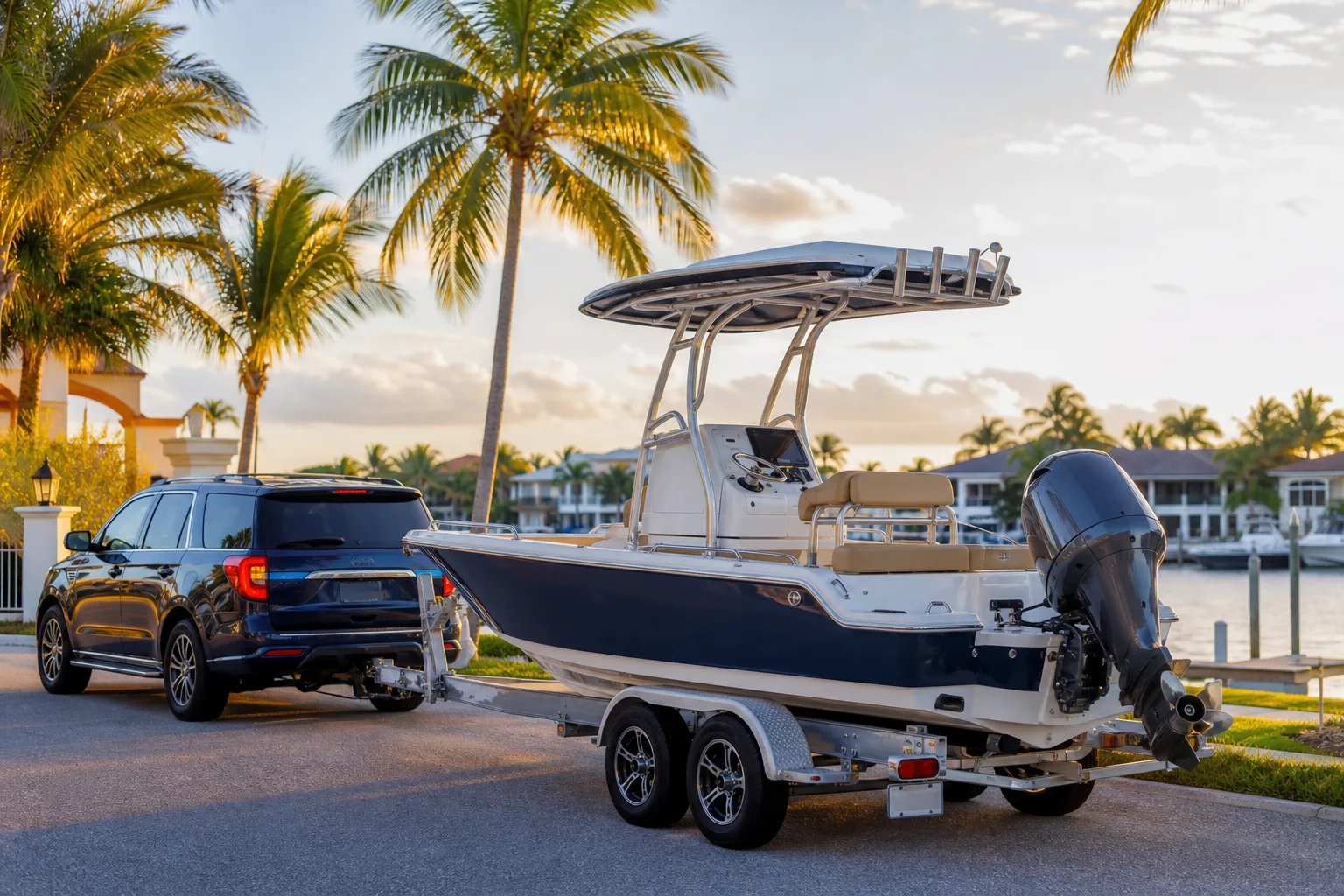
TL;DR: A boat kept on a trailer still needs its own boat policy, not just homeowners coverage, because homeowners policies generally exclude watercraft liability and give limited (if any) protection for the hull itself. You'll also want separate trailer coverage and to check how storage location affects your rate. Here's how to set it up correctly.
What you need
Before you call around for quotes, gather this info. It speeds things up and helps you avoid gaps.
- Boat make, model, year, length, and horsepower
- Hull ID number (HIN), usually stamped on the transom
- Trailer year, make, and VIN or serial number
- Current or estimated value of the boat (agreed value vs. actual cash value matters here)
- Where the rig lives most of the year: driveway, storage yard, or marina lot
- How often and how far you tow it (weekend runs to the Intracoastal vs. long hauls to the Keys)
- Any modifications, electronics, or towers added since purchase
Step 1: Understand why homeowners coverage falls short
This is the myth I bust the most, and I say it with love: your homeowners policy is not secretly covering your boat. Most homeowners policies exclude liability for watercraft over a certain size or horsepower, and even when there's a small allowance, it's usually tiny compared to what a boating accident can cost. The Insurance Information Institute explains that boat insurance is typically a separate policy precisely because homeowners and renters policies weren't built to handle marine risks like collision with another vessel, fuel spills, or towing liability.
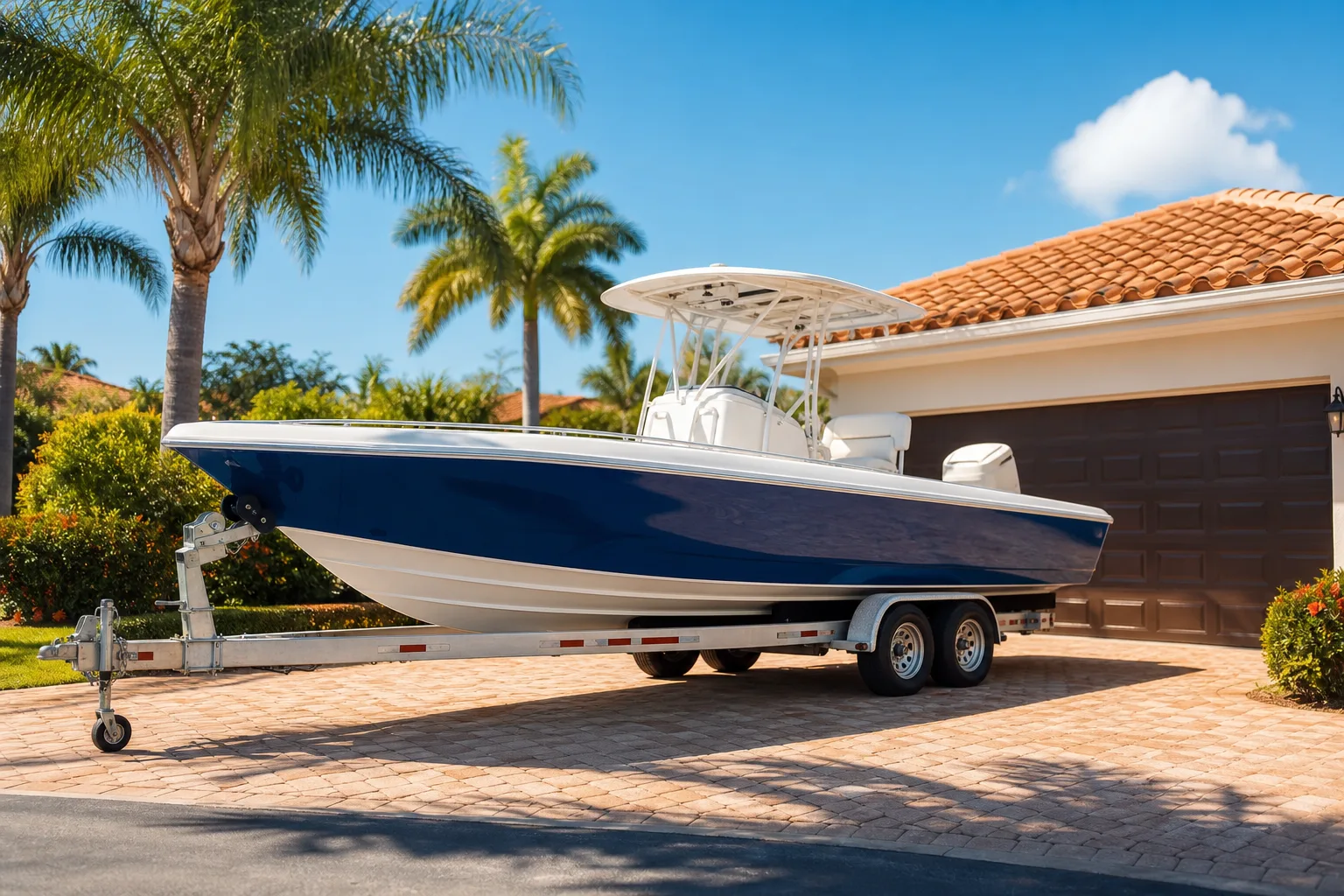
Even if your boat is sitting on a trailer in the driveway and never touches water for months, liability exposure doesn't disappear. A trailer that comes loose in traffic, a dock mishap during the rare outing, or storm damage in a lot all fall outside typical homeowners protection.
Step 2: Decide between agreed value and actual cash value
This choice affects your payout more than almost anything else on the policy.
| Feature | Agreed Value | Actual Cash Value (ACV) |
|---|---|---|
| Payout basis | Fixed amount set when policy is written | Depreciated value at time of loss |
| Premium | Usually higher | Usually lower |
| Best for | Newer boats, boats you plan to keep long term | Older boats, budget-conscious owners |
| Depreciation risk | None, you get the agreed number | You absorb the depreciation hit |
For most Palm Beach County boat owners with a newer center console or bowrider, agreed value tends to make more sense because total losses from storms or theft aren't hypothetical here, they're a real seasonal risk.
Cover your boat, yacht, or jet ski the right way. Get a boat quote
Step 3: Insure the trailer separately (don't assume it's bundled)
Here's a detail people miss constantly: some boat policies include trailer coverage automatically, others treat it as an add-on, and some barely cover it at all. Confirm exactly what your trailer coverage includes for:
- Collision damage while towing
- Theft of the trailer itself
- Liability if the trailer detaches or causes an accident
If your tow vehicle is also underinsured for liability, that's worth a look too. Check your auto insurance liability limits, especially if you're regularly hauling a boat on I-95 or down to the ramp at peak weekend traffic.
Step 4: Factor in storage location and hurricane exposure
Where the boat sits when it's not in use matters more in South Florida than almost anywhere else in the country. A boat stored in an open driveway faces different wind and flood exposure than one in a gated storage yard or an elevated rack facility. Ask your agent how storage location affects premium and whether the policy requires specific hurricane haul-out or securing procedures, since some policies have conditions tied to named storm preparation.
If you also own or rent a home nearby, it's worth reviewing your homeowners insurance or renters insurance at the same time, since flood risk for the boat storage area often overlaps with your home's flood zone. Speaking of which, if you're not sure whether your area needs separate flood insurance, that's a conversation worth having before storm season, not during it.
Step 5: Review liability limits for on-water and towing scenarios
Boat liability should cover bodily injury and property damage you cause to others, whether you're underway, docked, or (less excitingly but still relevant) being towed down US-1. Ask specifically:
- What's the liability limit for on-water incidents?
- Does it extend to towing accidents involving the trailer?
- Is there coverage for pollution or fuel spill cleanup, which some marinas and lakes require proof of?
If you also run a personal watercraft alongside the boat, that typically needs its own line item too. Check out personal watercraft insurance if that applies to your setup.
Step 6: Get a quote that reflects your actual usage pattern
A boat that goes out twice a month for sunset cruises around the Lantana bridge is a different risk than one that's towed to Bimini crossings or fishing tournaments every weekend. Be upfront about usage, storage, and towing distance. It's the fastest way to avoid a claim dispute later over
Cover your boat, yacht, or jet ski the right way.
Florida marine coverage from an independent agency that lives on the water too. Tell us what you ride.
Frequently asked questions
Does my auto policy cover the boat trailer while towing?
Usually not fully. Your auto policy may cover liability while towing in some cases, but physical damage to the trailer and boat itself typically needs to come from your boat policy's trailer coverage. It's worth confirming both policies line up rather than assuming one covers the gap.
Do I need boat insurance if it never leaves the trailer?
Yes, in most cases. Even a boat that stays parked still has liability exposure, theft risk, and storm damage exposure, and homeowners policies generally exclude or limit watercraft coverage regardless of whether it's in the water.
How does hurricane season affect trailered boat coverage?
Some policies have specific requirements for securing or hauling out boats ahead of a named storm, and storage location can affect your premium. Review your policy's storm conditions each season so you're not caught off guard by a claim condition you didn't know existed.
Can I insure the boat and my home with the same agency?
Yes, many South Florida boat owners bundle their boat, home, and auto coverage through one independent agency to simplify renewals and make sure nothing falls through the cracks between policies.
Have a question about this topic?
Our experienced agents are happy to help — no pressure, just straight answers.