

Related coverage: Homeowners Insurance
TL;DR: Your condo association carries a master policy for the building shell, but your HO-6 policy fills the gaps, including interior walls, fixtures, and your belongings. Before filing a wind claim, confirm which policy covers what, document everything, and check your wind deductible. Missing those steps can delay or shrink your payout.
What You Need
- Your HO-6 declarations page (shows your coverage limits and deductibles)
- A copy of the condo association's master policy or the association bylaws describing coverage
- A smartphone or camera for photo and video documentation
- Your association's contact information and claim-reporting procedures
- A notebook or app to log every call, date, and conversation about the claim
1. Understand How Two Policies Divide the Building
Most Florida condo associations carry a master policy that covers the building structure, roof, and common areas. Your HO-6 covers what is inside your unit. The exact dividing line, known as the "bare walls-in," "single entity," or "all-in" standard, is spelled out in the association's governing documents.
- Bare walls-in: The association covers the studs and original drywall. Your HO-6 picks up flooring, cabinets, fixtures, and improvements.
- Single entity (original specs): The association covers everything as originally built. Your HO-6 covers upgrades you added.
- All-in: The association covers nearly everything including fixtures and original finishes. Your HO-6 mainly covers personal property and liability.
Florida law requires condo associations to maintain property insurance, but the coverage standard varies. Read the bylaws carefully. The Florida Division of Consumer Services provides guidance on condo insurance rights you can reference at no cost.
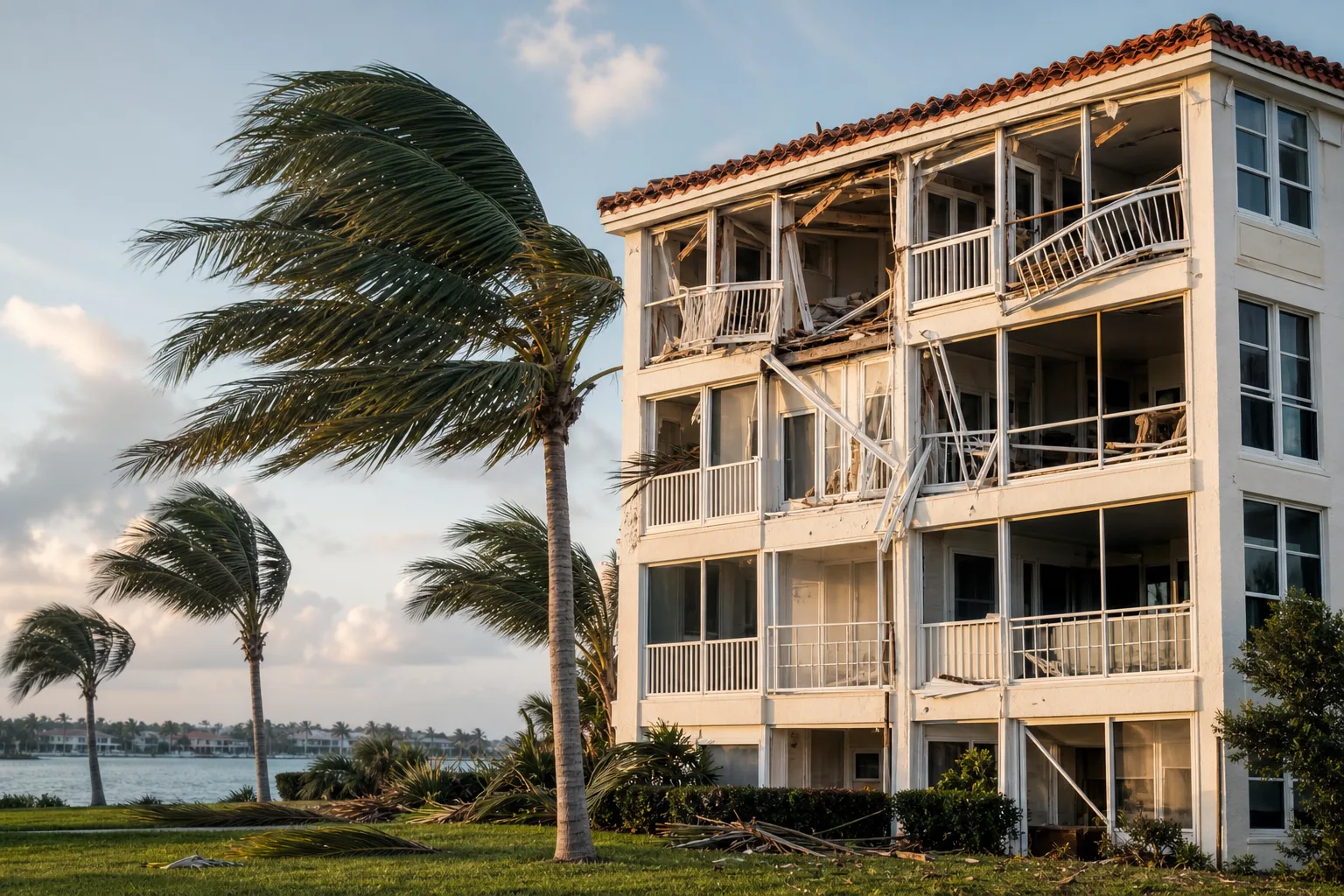
2. Check Your Wind Deductible Before Anything Else
Florida HO-6 policies commonly carry a separate hurricane or wind deductible expressed as a percentage of your Coverage A limit, often 2% to 5%. On a $150,000 dwelling limit, that is $3,000 to $7,500 out of pocket before your insurer pays a cent.
The association's master policy also has its own deductible. Some associations assess unit owners for a share of the master policy deductible after a storm, which can be a significant additional cost. Check your bylaws for a "loss assessment" provision, and confirm whether your HO-6 includes loss assessment coverage, which helps pay your share of the association's deductible or uninsured loss.
3. Document Damage Thoroughly Before Any Repairs
Do not let the association, a contractor, or anyone else make permanent repairs to your unit before you have documented every inch of damage.
- Photograph and video each damaged area from multiple angles.
- Note the date, time, and weather conditions.
- Save screenshots of storm track and wind speed data from National Hurricane Center records to establish the event.
- Keep all damaged materials if safely possible. Insurers may want to inspect them.
- Make only emergency temporary repairs to prevent further damage, and save every receipt.
Throwing out damaged items or allowing immediate full restoration can complicate a claim or give an insurer grounds to dispute the extent of loss.
Want a second look at your Florida homeowners coverage? Get a free home quote
4. Report to Both the Association and Your HO-6 Insurer
Notify your condo association's property manager as soon as it is safe to do so. Associations often have tight internal reporting windows for damage claims, especially after a named storm.
Then contact your own HO-6 insurer separately. Do not assume the association's insurer will handle your interior automatically. These are two separate claims processes.
Keep a written log: who you spoke with, when, their direct number, and what they said. Florida Statute 627.70132 governs wind damage claim deadlines, but that statute has been amended in recent years, as of the 2023 legislative session, the deadline was reduced to two years from the date of loss for most claims (and one year for reopened or supplemental claims). Because Florida insurance law can change, always verify the current applicable deadline at The Florida Legislature's official site or by consulting a licensed insurance professional. File as soon as possible after the loss regardless, since earlier documentation is always easier.
5. Know When to Request a Public Adjuster or Appraisal
If you believe the insurer's estimate is too low, you have options before litigation.
- Public adjuster: A licensed professional who works for you, not the insurer, to document and negotiate your claim. Florida law licenses and regulates public adjusters through the Florida Department of Financial Services.
- Appraisal clause: Most Florida HO-6 policies include an appraisal provision. Each side hires an independent appraiser and they agree on an umpire to settle disputes over the amount of loss.
Neither option is always necessary. For small, clear-cut claims, the standard process usually works fine. For large or contested claims after a major storm, knowing these rights can matter a lot.
Common Mistakes
- Assuming the master policy covers your interior. Even an "all-in" policy has limits. Verify coverage in writing before the next storm, not after.
- Skipping loss assessment coverage. This optional addition to your HO-6 is often inexpensive and can protect you from a surprise bill after a major storm depletes the association's reserves.
- Missing the reporting deadline. Florida's claim filing window sounds generous, but waiting makes documentation harder and may conflict with internal association deadlines that are much shorter. Verify the current statutory deadline at The Florida Legislature's official site.
- Making permanent repairs too fast. Temporary tarping or boarding is fine. Replacing flooring before an adjuster inspects the unit can cost you.
- Not reading the condo docs. The master policy standard, deductible assessment rules, and unit owner responsibilities are all in the bylaws. Most owners have never read them.
Bottom Line
Filing a wind damage claim as a Florida condo owner means managing two insurance relationships at once: yours and your association's. Knowing where one policy ends and the other begins, checking your wind deductible, and documenting before repairs are the three moves that keep claims from going sideways.
If your HO-6 is due for a review, or you are not sure whether you have loss assessment coverage, the team at B & B Insurance Agency compares coverage and pricing from multiple carriers to help you close any gaps. You can also reach out directly with questions specific to your building or situation.
Want a second look at your Florida homeowners coverage?
B & B Insurance compares coverage and pricing from multiple carriers, and we know Florida wind and flood rules cold.
Frequently asked questions
Does my HO-6 policy cover hurricane damage to my condo's roof?
Probably not on its own. The roof is almost always part of the building structure covered under the association's master policy. Your HO-6 picks up interior damage caused by a roof breach, such as water intrusion that ruins your flooring or ceiling. Confirm the boundary in your association's governing documents.
What is loss assessment coverage and do I really need it in Florida?
Loss assessment coverage pays your share of a cost the condo association passes to unit owners after a loss that exceeds the master policy or hits a large deductible. In Florida, where hurricane deductibles on master policies can run into six figures, this coverage can protect you from a significant unexpected bill. It is typically an affordable add-on to an HO-6 policy worth asking about.
Can my condo association make me pay part of its insurance deductible after a storm?
Yes. Many Florida condo association bylaws include a provision allowing the association to assess unit owners for their proportional share of the master policy deductible. The assessment amount varies by building and storm severity. Carrying loss assessment coverage on your own HO-6 helps offset that cost.
How long do I have to file a wind damage claim on my Florida condo?
Florida Statute 627.70132 sets the deadline for filing wind and hurricane claims, and that law has been amended in recent years. As of the 2023 legislative session, the filing window was reduced to two years from the date of loss for most claims, and one year for reopened or supplemental claims. However, your condo association may have much shorter internal reporting windows, sometimes as little as 30 to 60 days. Because Florida insurance law can change, verify the current applicable deadline at The Florida Legislature's official site or consult a licensed insurance professional. It is always safest to report damage to both the association and your HO-6 insurer as quickly as possible after a storm.
This article is general information, not legal or financial advice. Coverage depends on the terms, conditions, and exclusions of your specific policy, so talk with a licensed insurance agent about your situation.
Related Coverage from B & B
Have a question about this topic?
Our experienced agents are happy to help — no pressure, just straight answers.


