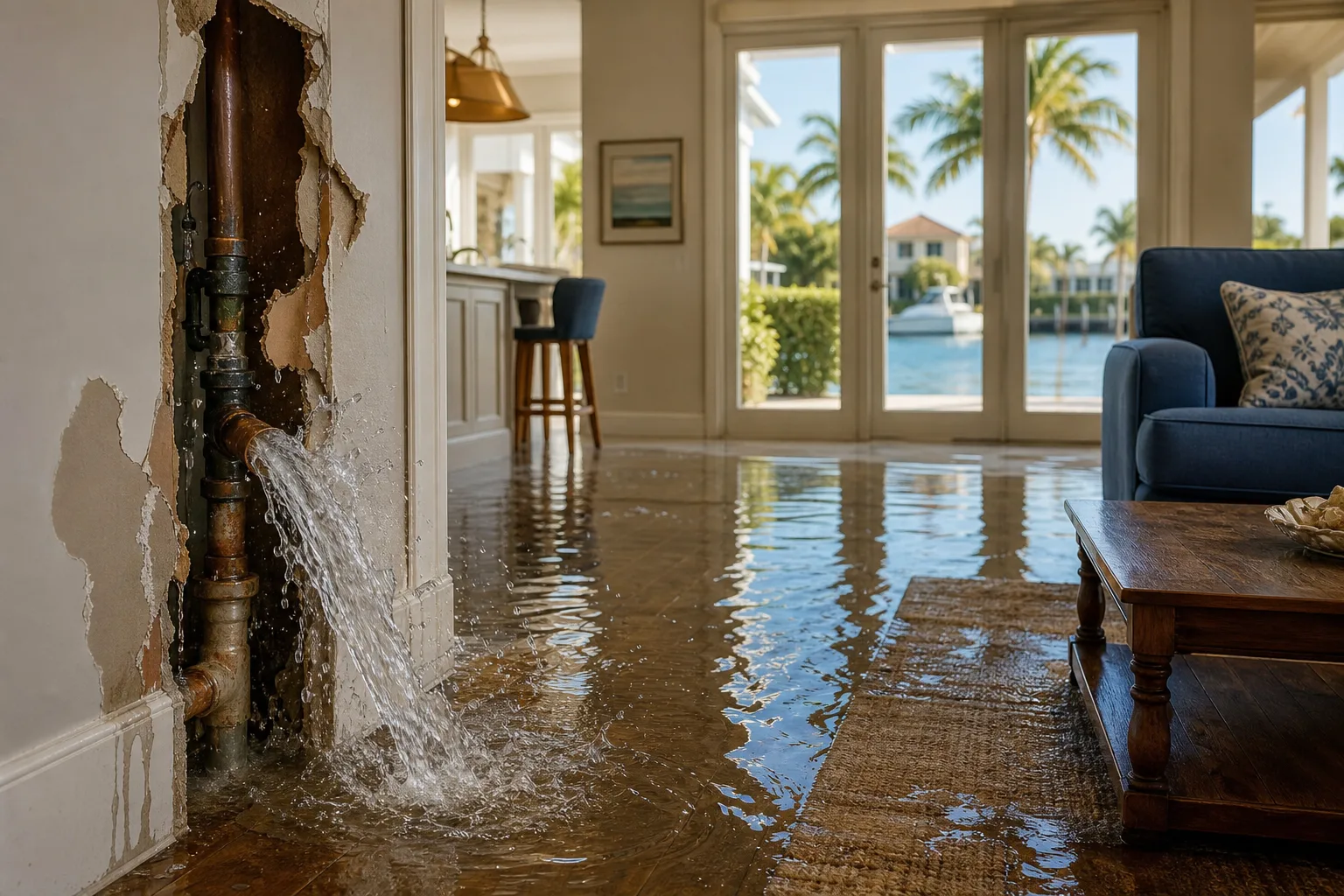
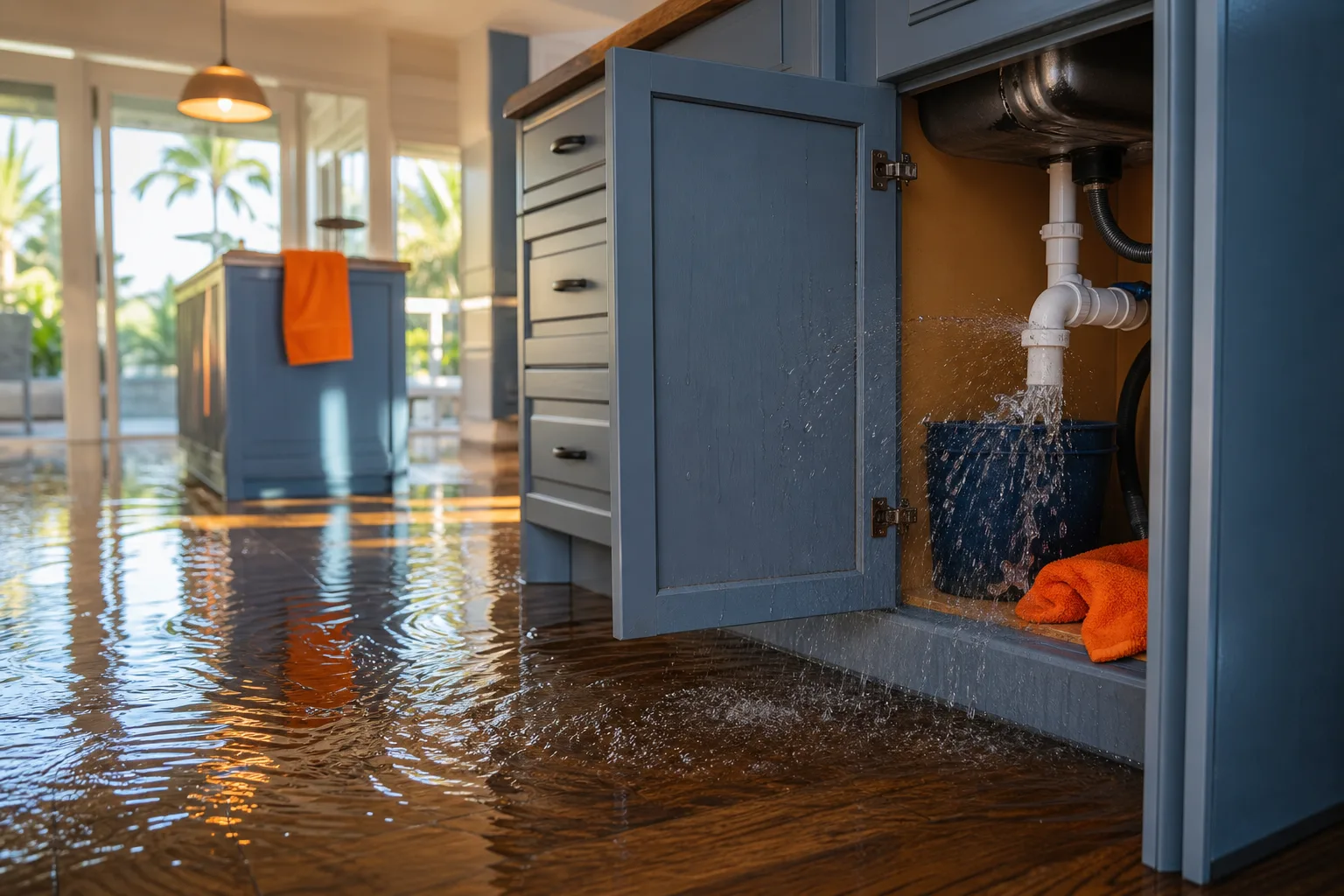
TL;DR: A burst pipe inside your house is typically a homeowners insurance claim, not a flood insurance claim, because federal flood policies only pay for water that enters from outside the structure. If that same burst pipe leads to mold, rot, or a slab leak that goes unnoticed, your homeowners policy may still limit or exclude the damage depending on how long the leak ran. Knowing the difference before hurricane season starts can save you a denied claim and a hard conversation with your adjuster.\n\n## At a Glance: Burst Pipe vs. Flood vs. Windstorm\n\n| Scenario | Covered By | Typical Result |\n|---|---|---|\n| Pipe bursts under kitchen sink, water floods floor | Homeowners (water damage peril) | Usually covered, sudden and accidental |\n| Pipe has been leaking slowly for months behind a wall | Homeowners | Often excluded or limited, treated as maintenance failure |\n| Storm surge or heavy rain floods your home from outside | NFIP or private flood policy | Covered under flood insurance only |\n| Wind-driven rain enters through a hole in the roof | Homeowners (wind peril) | Covered, but adjuster separates wind damage from rain damage |\n| Sewer backs up into your home during a storm | Neither, unless you added sewer/drain backup endorsement | Often requires separate endorsement |\n\nThe short version: flood insurance covers water coming in from the ground up. Homeowners insurance covers water damage that originates inside your home's own plumbing, appliances, or roof. Windstorm coverage, which is usually part of your homeowners or a separate wind policy in Florida, covers damage caused directly by wind.\n\n## What Counts as "Flood" Under a Florida Flood Policy\n\nThe National Flood Insurance Program defines a flood very specifically. It has to be a general and temporary condition of partial or complete inundation of two or more acres of normally dry land, or of two or more properties, from overflow of inland or tidal waters, unusual and rapid accumulation of surface water or runoff, mudflow, or collapse of land along a shoreline as a result of erosion FEMA. That definition matters because it excludes water that originates inside your own house.\n\nSo if storm surge from a hurricane pushes water under your doors in Lantana or a canal overflows in Wellington after days of rain, that is a flood claim. If your washing machine supply line splits at 2 a.m. and floods the laundry room, that is not a flood claim, no matter how much water ends up on your floor. Same water, same mess, completely different policy.\n\nThis is one of the most common points of confusion we clear up for homeowners insurance and flood insurance clients across Palm Beach County every year, especially after a big rain event when everyone assumes their flood policy will respond.\n\n## What a Homeowners Policy Actually Covers for a Burst Pipe\n\nMost Florida homeowners policies cover water damage that is sudden and accidental, meaning it happens quickly and without warning. A pipe that bursts because of a hard freeze snap, a water heater that fails overnight, or a supply line that blows out under pressure generally qualifies. The policy typically pays to repair the plumbing failure itself in some cases, and more reliably pays for the resulting damage, drywall, flooring, cabinets, and personal property ruined by the water.\n\nWhere it gets tricky is anything that looks like a maintenance issue rather than a sudden event. If an adjuster determines the pipe had been seeping for weeks or months before you noticed, many policies limit or deny that claim outright, treating it as a failure to maintain the property rather than a covered peril. Mold that grows from an undiscovered leak is often subject to a low sublimit, sometimes just a few thousand dollars, even when the underlying water damage itself is fully covered.\n\nThis is exactly why documenting your home's condition and catching small leaks early matters so much in South Florida, where humidity already stresses plumbing and slab foundations year round.\n\n## Where Flood and Homeowners Coverage Can Both Get Involved\n\nThere are situations where the line blurs and you genuinely need both policies working together. A hurricane knocks out power for days, your sump pump stops running, groundwater rises and floods your lower level while, separately, wind-driven rain finds its way through a damaged roof vent and soaks your attic insulation. That is potentially two claims on two different policies from one storm.\n\nAnother common overlap: a slab leak during a tropical storm causes water to pool under your home, and rising floodwaters from the same storm event also reach your foundation. Adjusters from each side will often want to separate what portion of the damage came from the internal plumbing failure versus what portion came from external floodwater. This is one of the messier claims scenarios in Florida, and it's a big reason we encourage carrying both a flood policy and solid homeowners coverage rather than assuming one will stretch to cover the other.\n\n## Sewer and Drain Backup: The Coverage Gap Nobody Expects\n\nHeavy rain and storm surge can push municipal sewer systems past capacity, sending wastewater back up through your drains and toilets. Neither a standard homeowners policy nor a standard flood policy automatically covers this. It typically requires a specific sewer and drain backup endorsement added to your homeowners policy. Given how flat South Florida's drainage is and how often we see street flooding in Lake Worth Beach, Greenacres, and low-lying parts of West Palm Beach during heavy summer storms, this endorsement is worth asking about even if you already carry flood insurance.\n\n## Deadlines and Timing: Why This Matters Before June 1\n\nFlorida's hurricane season runs June 1 through November 30, and both flood and homeowners underwriting tighten up as storms approach. Most flood insurance policies, whether through the NFIP or a private carrier, have a standard waiting period before coverage takes effect, often 30 days for NFIP policies with some exceptions for loan closings FEMA. Carriers routinely issue moratoriums on new homeowners and flood business once a storm is named and tracking toward Florida, meaning you cannot buy or increase coverage once a system is in the forecast.\n\nThe practical takeaway: get your policies reviewed in the spring, not the week before a storm. If you are unsure whether your current homeowners policy has adequate water damage limits, or whether you need to add flood coverage because your home sits in a higher-risk flood zone, April and May are the months to sort it out, not August.\n\n## Verdict\n\nFor the specific question of a burst pipe, the answer is straightforward. Homeowners insurance is the policy that responds, assuming the failure was sudden and not the result of long-term neglect. Flood insurance simply does not apply to water that originates inside your walls or under your slab, no matter how much damage it causes.\n\nThe bigger lesson is that Florida homes are exposed on three separate fronts, internal plumbing and appliance failures, external flooding from surge or rain, and sewer backup, and each one lives under a different coverage or endorsement. Carrying only one of these and assuming it covers all three is one of the most expensive assumptions a South Florida homeowner can make.\n\nIf you want someone to actually read through your current homeowners and flood policies and tell you plainly where the gaps are, that's what we do every day at B & B Insurance Agency. Reach out for a free quote and policy review before this year's storm season gets moving, and let's make sure a burst pipe or a rising canal doesn't turn into a fight with your insurer.\n
Your homeowners policy doesn't cover flood. Let's fix that.
From NFIP to private flood, B & B Insurance finds the right flood protection for your Palm Beach County home.
Frequently asked questions
Does flood insurance cover a burst pipe in my house?
No. Flood insurance only covers water that enters your home from outside, like storm surge, tidal flooding, or overflowing canals. A burst pipe is an internal plumbing failure and falls under your homeowners policy instead.
Will my homeowners policy pay for a burst pipe and the resulting mold?
Most homeowners policies cover sudden pipe bursts and the resulting water damage, but mold remediation is often subject to a separate, lower sublimit even when the underlying claim is approved. If the leak was slow and long-term, the claim may be reduced or denied as a maintenance issue.
What's the difference between windstorm coverage and flood coverage in Florida?
Windstorm coverage, usually part of your homeowners policy or a separate wind policy, pays for damage directly caused by wind, like a torn-off roof. Flood insurance pays for damage from rising water outside the home, such as storm surge. Rain that follows wind damage through a hole in your roof is typically still a homeowners claim, not a flood claim.
Is there a waiting period before flood insurance takes effect in Florida?
Yes, NFIP flood policies typically have a standard waiting period, often around 30 days, before coverage becomes effective, with some exceptions tied to mortgage closings. Carriers also frequently pause new flood and homeowners business once a storm is actively being tracked toward Florida.
Do I need sewer and drain backup coverage if I already have flood insurance?
Yes, they cover different things. Flood insurance addresses external floodwater entering your home, while a sewer and drain backup endorsement, added to your homeowners policy, covers wastewater pushed back through your drains during heavy rain or storm events.
When is the best time to review my flood and homeowners coverage in Florida?
Spring, ideally before June 1 when hurricane season officially begins. Insurers commonly issue binding restrictions once a named storm is approaching, so waiting until a storm is in the forecast can leave you unable to add or adjust coverage.
Have a question about this topic?
Our experienced agents are happy to help — no pressure, just straight answers.