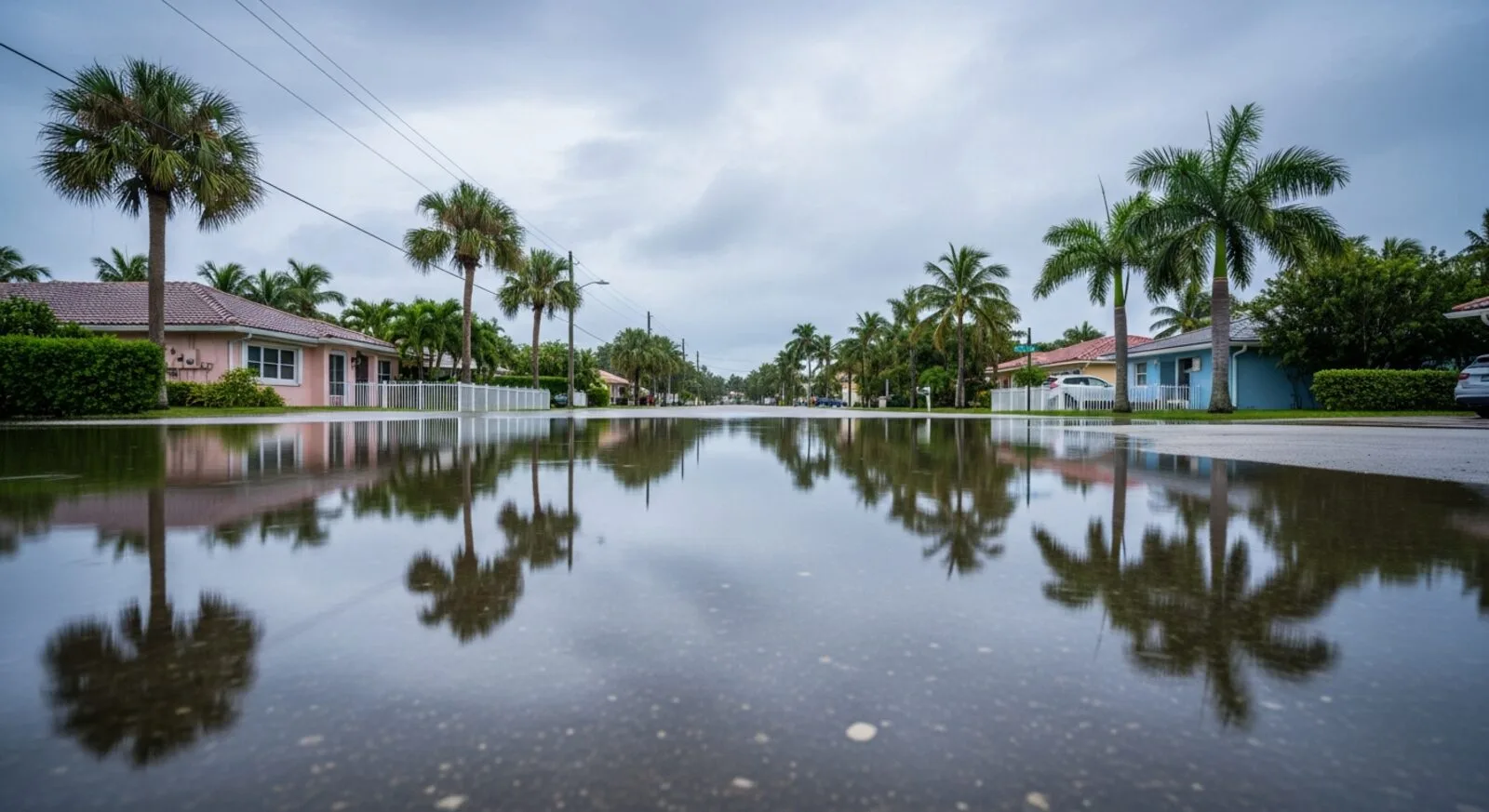

TL;DR
- FEMA’s Risk Rating 2.0 continues in 2026, with most National Flood Insurance Program (NFIP) policies still moving toward their “full-risk” price under annual increases that are generally capped for many policyholders.
- Expect uneven premium shifts across Palm Beach County: inland X-zone homes may still see a few dollars a month of change, while older coastal or lagoon-side properties can move by hundreds per year until they reach their target rate.
- Typical 2026 premium ranges we’re seeing in Palm Beach County (NFIP and private combined) run roughly:
- West Palm Beach 33405/33401: about $600–$2,800+ a year depending on elevation and distance to water.
- Boca Raton 33432/33486: about $700–$3,200+, higher near the Intracoastal and the beach.
- Delray Beach 33483/33444: about $650–$3,000+, with big swings east of US-1.
- Boynton Beach 33435/33437: about $500–$2,400+; east of Federal can run higher.
- Lake Worth Beach 33460/33461: about $600–$2,900+; older cottages near the lagoon skew high.
- Wellington 33414 and Loxahatchee 33470: about $450–$1,600+, generally tamer but very site-specific.
- Jupiter 33458/33477: about $600–$2,700+, with coastal pockets much higher. Your mileage will vary.
- Private flood carriers remain competitive for many Palm Beach homes in 2026, especially outside the highest-risk coastal pockets — but underwriting is selective and can change fast.
- If your map or risk score looks off, you can challenge it. Start with a recent elevation certificate, then consider a Letter of Map Amendment (LOMA) if you’re clearly above base flood elevation.
- Immediate steps you can take today: get your elevation data in hand, compare NFIP vs multiple private flood quotes with an independent agent, and review your deductible and contents limits.
I see this every week in our Lantana office.
What happened
Here’s the plain-English version of what’s moving in 2026.
- FEMA is continuing the Risk Rating 2.0 pricing approach, which prices NFIP flood policies using more property-specific factors like distance to water, elevation, first-floor height, and claims history, rather than relying mainly on legacy flood zones.
- Many NFIP policies that are below their calculated “full-risk” price continue to move upward in annual steps, while the relatively small share that are above that level may trend down or flatten. In most cases, year-over-year increases for the base premium remain subject to established caps, with surcharges and fees applied separately. That glidepath continues in 2026.
- FEMA and local communities update maps over time. When a new study adjusts base flood elevations or coastal wave action limits along areas like the Lake Worth Lagoon or the barrier island, some parcels move into, out of, or between zones. That can change lender requirements and insurance pricing.
- Private flood insurance remains a real option in Florida in 2026. A number of admitted and surplus-lines carriers write standalone flood. Appetite varies by distance to the coast, first-floor elevation, and overall risk, and carriers can enter or pause areas based on their reinsurance costs. It’s dynamic.
- On the mortgage side, federally backed lenders still require flood insurance for buildings in Special Flood Hazard Areas (typically A and V zones). Outside those zones, coverage is usually optional with the lender — but the water doesn’t stop at the line on a map. One storm can wake you up to that fact.
Look — here’s the thing.
Risk Rating 2.0 did not make flood risk go away in Palm Beach County. It just changed how we pay for it, spreading more granular signals across the map. Some folks are catching a break. Some folks are catching up.
As of writing, industry chatter around 2026 is mostly about continued glidepath adjustments, routine NFIP program bulletins, and the usual spring-and-fall effective dates for changes. There’s also the ongoing policy debate about long-term affordability and mitigation incentives, but nothing that rewrites the entire playbook has been finalized for this year.
Why it matters
If you own a home in Palm Beach County, what you pay in 2026 depends less on a single lettered zone and more on your specific parcel and structure. Two houses on the same street can be hundreds of dollars apart.
Here’s what that looks like on the ground.
What Palm Beach County homes are paying now (typical ranges we see in 2026)
These are ballpark ranges we’re seeing across both NFIP and private flood in our quoting this year. They’re not offers. They vary by carrier, elevation, distance to water, age of construction, first-floor height, and many other inputs.
- West Palm Beach 33405/33401 (El Cid, SoSo, Flamingo Park): roughly $600–$2,800+ per year. Older wood-frame homes near the lagoon tend higher unless they’re elevated or have favorable first-floor heights.
- Boca Raton 33432/33486 (east of I-95 pockets): roughly $700–$3,200+, with Intracoastal and ocean-adjacent parcels among the pricier profiles. Inland Boca west of the Turnpike often prices lower.
- Delray Beach 33483/33444: roughly $650–$3,000+, especially east of Federal Highway and around canals. Elevated new builds can still quote lower than 1970s slabs nearby.
- Boynton Beach 33435/33437: roughly $500–$2,400+. East Boynton and Hypoluxo-area homes see a wider spread depending on elevation certificates.
- Lake Worth Beach 33460/33461: roughly $600–$2,900+. Small lot cottages near the lagoon can swing widely once first-floor height is verified.
- Jupiter 33458/33477: roughly $600–$2,700+, from inland Abacoa to coastal stretches near the inlet and ocean.
- Wellington 33414 and Loxahatchee 33470: roughly $450–$1,600+, with site drainage and floor height driving much of the difference.
On a $400,000 home in Boynton Beach, that swing can be $800 a year.
Again, these are broad current-year snapshots. Your mileage will vary.
What changed in the rating inputs (and why your price moved)
Under Risk Rating 2.0, FEMA and private carriers look at:
- How far your structure sits from the nearest water source (ocean, lagoon, canal, lake, river, even drainage features).
- Your building’s first-floor height relative to the anticipated flood surface for various return periods.
- The cost to rebuild your home, not just the market value of the land and structure together.
- The presence of basements or enclosures, and how utilities are located and protected.
- Prior claims on the property.
Two homes in Delray with the same zone letter can be priced very differently because one has a first-floor height 3 feet higher and its mechanicals are out of harm’s way. It’s no longer just about the letter on a paper map.
Private flood vs NFIP in 2026
Private flood carriers compete well for many Palm Beach County homes this year, especially in X zones and moderate-risk A zones where there’s good elevation data and a strong first-floor height. In those situations we often see private premiums in the mid-to-low range of the bullets above, sometimes paired with broader coverage options or higher building limits. On the other hand, certain oceanfront or lagoon-exposed properties can still pencil more affordably with NFIP during the glidepath, particularly if community discounts and elevation data line up in your favor.
The private market is also nimble. A carrier that’s attractive in Lake Worth Beach today might pause new business east of US-1 by August if their reinsurance costs jump. That’s why working with an independent agent who can shop multiple carriers matters. One door closing shouldn’t end your search.
How Palm Beach County’s CRS discounts play in
Many municipalities in Palm Beach County participate in FEMA’s Community Rating System (CRS), which can provide premium discounts on eligible NFIP policies in that community. The exact discount varies by the community’s class and is subject to change. As of writing, several local cities maintain meaningful credits due to drainage improvements, building codes, and public outreach. Your independent agent can confirm your city’s current CRS class and whether your policy qualifies for the discount.
Even a 5–15% credit is real money at renewal.
What you can do right now to control your 2026 premium
- Get an elevation certificate (EC) if you don’t have one, or it’s older than a couple of code cycles. A current EC verifies your first-floor height and foundation details, which can move you out of a guesswork bucket and, in many cases, lower your quote. A licensed Florida surveyor can produce one.
- Ask us to quote both NFIP and multiple private flood carriers side by side. We’re independent, so we can pivot across markets without starting over. Apples-to-apples wins here.
- Revisit your deductible. Higher flood deductibles can shave the premium meaningfully, but make sure the out-of-pocket number is one you’re comfortable paying after a storm.
- Check your contents limit and how it’s valued. In some policies, contents default low or to actual cash value. If you can live with a leaner contents number, there can be savings. If not, price the right protection now instead of being short later.
- Consider mitigation that insurers reward. Elevating utilities, adding proper flood vents to enclosures, and protecting openings can affect how a property is viewed. Not overnight, but it adds up.
- Bundle your home and auto first. If your homeowners and auto aren’t already with a strong market, we often save enough there to offset a flood increase, and in some setups private flood pricing improves when it’s part of a package. It’s the first lever I pull.
How to challenge your flood zone or risk score (Palm Beach County guide)
If your map designation or risk-based price doesn’t square with the way your property sits on the land, you can push back. It’s a process, but it’s doable.
Step 1: Pull your current map and property details
- Look up your address on the FEMA Flood Map Service Center to see your panel, zone, and any recent Letters of Map Change affecting your area.
- Grab your parcel number and legal description from the Palm Beach County Property Appraiser website or your closing documents. You’ll need precise information for forms.
Step 2: Get a current elevation certificate (EC)
- Hire a Florida-licensed surveyor to produce an EC that captures your building’s first-floor elevation, the foundation type, and any enclosures.
- Ask for both the digital and signed copies. You’ll use the numbers for quoting and attach the certificate to any FEMA map change request.
One sheet of paper can move a premium by hundreds of dollars.
Step 3: Determine if you qualify for a Letter of Map Amendment (LOMA)
- If the EC shows your building’s lowest adjacent grade and/or the lowest finished floor are above the published Base Flood Elevation, you may be eligible for a LOMA.
- A LOMA is FEMA’s way of amending the map for a specific structure based on better elevation data, potentially removing the mandatory purchase requirement and/or improving how lenders and insurers rate the risk.
- Use FEMA’s MT-EZ process for single-structure amendments when eligible. Be prepared to submit your EC, deed, and any other requested documentation.
Step 4: Submit and monitor
- File the LOMA request through FEMA’s channels and note the submission ID. Processing times vary.
- Keep your lender and insurance agent in the loop. If the LOMA is approved, the lender may change the requirement, and your agent can re-run rates accordingly.
Step 5: If a new map is coming, know the appeal window
- When FEMA issues a Preliminary Flood Insurance Rate Map (FIRM) for your area, a formal appeal period opens. During that time, communities and property owners can provide technical data to challenge proposed changes.
- Appeals require engineering and survey support. Your city or the county floodplain manager can tell you where they are in the cycle and the timeline.
If you’re not sure where to start, call an independent agent who lives on these forms. We’ll help you triage whether a LOMA makes sense before you spend money.
What we don’t know
A few open questions hang over 2026 for Florida flood buyers, and it’s best to be clear-eyed.
- The exact shape of any midyear NFIP program bulletin or fee adjustments. FEMA typically issues routine changes on a set calendar, but line-item fees and guidance can still shift. Until a bulletin is published, treat rumors as just that.
- The trajectory of private flood appetite through the peak of hurricane season. If reinsurance renewals run hot after a busy storm stretch, some carriers tighten or pause. That’s not personal — it’s capital.
- How new or revised coastal studies along the Lake Worth Lagoon, barrier island dune systems, or the canals will affect specific neighborhoods. Many of those studies are multi-year efforts. When they land, base flood elevations can bump up or down.
- The fate of proposed affordability measures debated in Washington. There’s long-running discussion about assistance frameworks and mitigation credits. As of today, there’s no sweeping, finalized 2026 redesign you can bank on for your household budget.
- Claim-season effects. One high-profile event in Palm Beach County or nearby counties can ripple through pricing and underwriting later in the year, both for NFIP and private markets.
One more thing. Don’t gamble your planning on a maybe.
Bottom line
In 2026, flood insurance in Palm Beach County is personal to your parcel. Risk Rating 2.0 put more weight on your exact elevation, your distance to water, and your home’s build. That means neighbors can pay different amounts — and it also means you have levers to pull.
If you’re inland in 33414 or 33470 with solid elevation and good drainage, your quotes may sit in the lower part of the ranges we outlined. If you’re on a slab within sight of the lagoon in 33460 or 33405, you may still be climbing the glidepath for another few renewals. Neither is good or bad. They just are.
Your best moves this year are simple:
- Get your elevation certificate so you’re being rated on facts, not assumptions.
- Have an independent agent shop NFIP and multiple private flood carriers side by side.
- Adjust your deductible and contents coverage to what you truly need.
- Bundle your home and auto first to free up dollars and, in some cases, to unlock better private flood positioning.
- If your map looks wrong, consider a LOMA. It’s worth the ask.
We’ve been doing this for neighbors from Boca to Jupiter since 1998. If you want a straight, kitchen-table talk about your options, call us in Lantana at (561) 967-3742 or start with our flood page. No drama. Just clarity.
Frequently Asked Questions
Are FEMA flood insurance rates going up in 2026?
Many NFIP policies are still moving toward their calculated full-risk price under Risk Rating 2.0, so increases continue for those policies, generally within established annual caps. Some policies flatten or decrease, depending on the property.
How much is flood insurance in Palm Beach County right now?
In 2026, we’re typically seeing ranges from the mid-hundreds to a few thousand dollars a year depending on city, elevation, and distance to water. Coastal or lagoon-adjacent homes run higher; inland homes with good first-floor heights run lower.
Is private flood cheaper than NFIP in Florida this year?
Sometimes. Private carriers can be very competitive for well-elevated X- and A-zone homes, while NFIP can price better for certain coastal risks, especially during the glidepath. It depends on your exact parcel and the market that week.
Do I still need an elevation certificate under Risk Rating 2.0?
Not every policy requires an EC, but having one often helps. It can verify a higher first-floor height and improve how your risk is rated with NFIP and private markets. It’s one of the first things I recommend.
Can I appeal my FEMA flood zone in Palm Beach County?
Yes. If your elevation proves the building sits above the base flood elevation, you may qualify for a Letter of Map Amendment (LOMA). Start with a current elevation certificate and talk with an independent agent about next steps.
Will a flood claim affect my homeowners insurance?
Flood is a separate policy, so the claim goes there. That said, some homeowners carriers consider overall loss history at renewal, so it’s smart to loop your agent in before and after any claim.
Talk to a Lantana independent agent
Don't gamble with flood. Whether you need NFIP or a private flood policy, we'll walk you through both. Our Lantana office quotes flood every day for Palm Beach County homeowners. If you’re ready, let’s get started — you can get a flood quote right now.
Learn more about flood coverage and options
If you want a deeper primer on how flood works in our market, we also wrote up a plain-English guide: South Florida flood basics you can actually use.
Have a question about this topic?
Our experienced agents are happy to help — no pressure, just straight answers.