TL;DR: Boat liability coverage pays for injuries and property damage you cause to others on the water. Florida does not require it by law, but marinas and lenders often do. Choosing the wrong limit, or assuming your homeowners policy has you covered, can leave you personally responsible for costs that run well into six figures.
What You Need to Understand Before We Start
Let's clear something up right away. A lot of boaters in Palm Beach County, Lantana, and along the Intracoastal assume that their homeowners policy extends to their boat. It might, a little, but almost never in the way people expect.
Most standard homeowners policies include minimal liability for small, low-horsepower watercraft stored on your property. Once you take that boat out on open water, or once it exceeds the size or horsepower threshold in your policy (often 25 horsepower or less), that coverage typically drops off entirely. The Insurance Information Institute notes that homeowners policies generally exclude watercraft over a certain size or motor capacity.
A standalone boat insurance policy is where real liability protection lives. And the liability portion of that policy is arguably the most important part.
Step 1: Learn What Boat Liability Actually Covers
Boat liability coverage kicks in when you are legally responsible for an accident on the water. It breaks into two main components.
Bodily injury liability pays for medical expenses, lost wages, and legal defense costs if someone on another vessel, a swimmer, or a water-skier is injured because of your actions. In serious cases, this can include long-term care or wrongful death claims.
Property damage liability covers damage to another person's boat, dock, kayak, or other watercraft or structure that you collide with or damage.
Both limits work together. If your policy reads $100,000/$300,000, that means $100,000 per person injured and $300,000 per occurrence. A single accident with multiple injured parties could consume that per-occurrence limit very quickly.
One thing that surprises boaters: liability does not cover your own boat or your own injuries. That is what hull coverage and medical payments coverage handle. Liability is purely about what you owe to others.
Step 2: Understand Florida's Unique Boating Environment
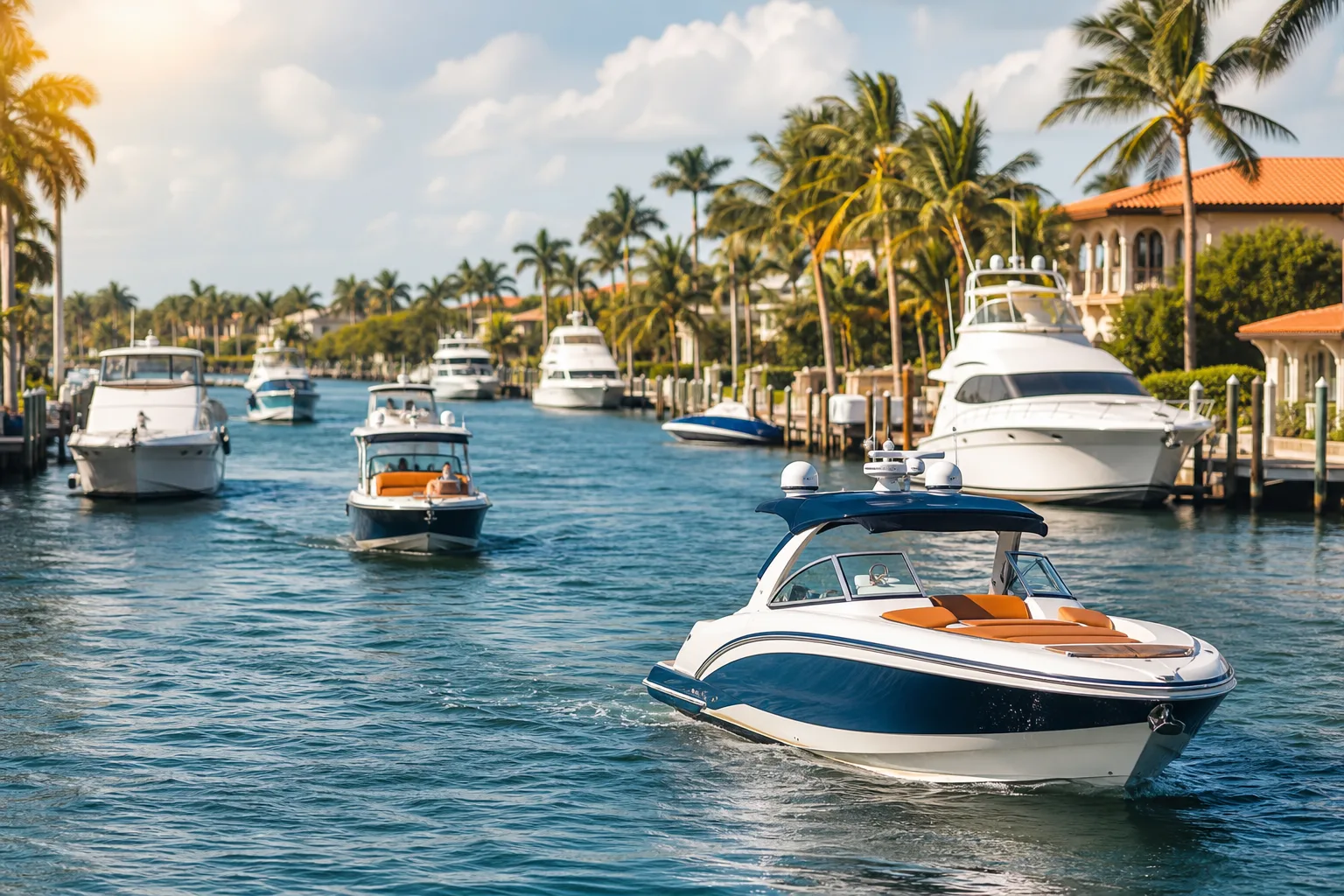
Florida has more registered recreational vessels than any other state, according to the Florida Fish and Wildlife Conservation Commission. That density of traffic, combined with year-round boating weather, means the probability of an on-water incident in South Florida is genuinely higher than in most parts of the country.
The Intracoastal Waterway through Palm Beach County, Lake Worth Lagoon, the waters off Boynton Beach, and the busy channels around Riviera Beach all see heavy recreational and commercial boat traffic. Crowded waterways raise your exposure.
Florida also does not require boaters to carry liability insurance the way drivers must carry auto insurance. That means if you are hit by an uninsured boater, you may have no easy path to recovery unless you carry uninsured watercraft coverage on your own policy. This is a gap worth discussing with your agent.
Federal law does not mandate boat insurance either. But that legal gap does not reduce your financial exposure one bit if you cause an accident.
Step 3: Know What Limits Marinas and Lenders Require
Even though the state does not require boat insurance, practical requirements exist elsewhere.
Marina requirements. Many marinas in Palm Beach County require proof of liability coverage, often a minimum of $300,000, before they will allow you to dock. Some require more, especially for larger or faster vessels.
Lender requirements. If you financed your boat, your lender almost certainly requires you to carry physical damage coverage. Many also require minimum liability limits. Check your loan agreement.
Yacht club and racing requirements. If you participate in organized events, the organizing body often sets its own minimum liability requirements.
Understanding these external requirements before you buy helps you avoid buying a policy that satisfies no one, including yourself.
Cover your boat, yacht, or jet ski the right way. Get a boat quote
Step 4: Choose the Right Liability Limit for Your Situation
This is where most boaters go wrong. They pick the lowest limit to keep the premium down without thinking through the real-world cost of a serious accident.
Here is a practical framework.
Consider your net worth. Liability limits exist to protect your assets. If a court judgment exceeds your coverage limit, the injured party can potentially come after your savings, home equity, or other assets. Your liability limit should at minimum reflect what you could lose. Your homeowners insurance agent can often help you think through your overall liability picture.
Consider your boat's speed and size. A center console running at 50 mph on the Intracoastal carries much more accident potential than a small pontoon at idle speed. Higher performance means higher risk, which means higher limits make more sense.
Consider how often and where you boat. Weekend boaters who stay in calm, familiar waters have a different risk profile than someone who runs offshore regularly or navigates crowded channels daily.
Common liability limit options you may see are $100,000, $300,000, $500,000, and $1,000,000. The jump in premium from $300,000 to $500,000 is often smaller than people expect. Ask for a quote at multiple levels before deciding.
Step 5: Look at Umbrella Coverage as a Layer Above
A personal umbrella policy sits on top of your underlying liability limits and provides an additional layer of coverage, often in $1 million increments. If you exhaust your boat liability limit in a serious accident, your umbrella may cover the rest up to its own limit.
Umbrella policies typically require you to maintain minimum underlying limits on your boat, auto insurance, and other policies before the umbrella activates. It's worth asking your B & B Insurance Agency agent whether a personal umbrella makes sense given your overall lifestyle and asset picture.
This is especially relevant if you own other assets like a home, investment accounts, or a business. A lawsuit arising from a boating accident is not limited to just your boat policy.
Step 6: Review Your Policy for These Specific Exclusions
Even a solid liability limit can be undermined by exclusions buried in the policy language. Watch for these.
Navigational territory limits. Many boat policies define a geographic area where coverage applies. Sail or motor outside that zone, including into the Bahamas or up the East Coast, and your coverage may not apply. If you travel offshore or to international waters, confirm your policy covers where you actually go.
Racing exclusions. Participating in a race or speed trial often voids liability coverage during that event unless you have a specific endorsement.
Operator exclusions. If someone who is not listed on your policy operates your boat and causes an accident, coverage could be denied. Know who your policy covers.
Fuel spill liability. Environmental cleanup for fuel or oil spills is sometimes excluded or capped separately. Given federal and state environmental laws, this can be a significant exposure.
Rental and charter use. Using your personal boat for any kind of paid charter or rental typically voids a personal policy entirely.
Common Mistakes Florida Boaters Make with Liability Coverage
Relying on homeowners coverage. As mentioned, this is the most common mistake. If your boat exceeds the watercraft provisions in your home policy, you may have zero liability protection on the water. A quick review with your agent takes five minutes and could save you everything.
Buying the minimum to satisfy the marina. Meeting the marina's minimum requirement is not the same as being adequately covered. The marina's requirement protects their interest, not yours.
Forgetting to update limits after upgrading the boat. If you traded up to a bigger or faster boat and just transferred your old policy, your limits and your rated vessel may no longer match your actual risk.
Skipping uninsured watercraft coverage. Florida waters have many uninsured boaters. If one of them hits you and injures you or a passenger, uninsured watercraft coverage on your own policy is often the only path to compensation.
Not reading the navigational warranty. This clause defines where your coverage is valid. Many Palm Beach County boaters run to the Bahamas for a long weekend. If your policy caps coverage at a certain distance from shore, you could be uninsured on that trip.
For golf cart owners who also spend time on the water, you might find our golf cart insurance guide useful for thinking about liability on land the same way you think about it on the water.
Bottom Line
Liability coverage is the financial backbone of your boat policy. It is what stands between an on-water accident and a lawsuit that could threaten everything you have built. In a state with as much boat traffic as Florida, treating liability limits as an afterthought is a real risk.
The good news is that getting this right is not complicated. Review what your homeowners insurance actually covers for watercraft. Think through your assets, your boat's speed, and where you actually boat. Ask for quotes at multiple liability levels. And check whether a personal umbrella adds a worthwhile extra layer.
At B & B Insurance Agency, we shop multiple carriers to find the combination of coverage and price that fits how you actually use your boat in South Florida waters. Whether you keep your vessel in Lantana, dock at a Palm Beach marina, or run offshore out of Riviera Beach, we can walk through the options with you. Get a free quote today and let's make sure your liability limits actually match your life on the water.
Cover your boat, yacht, or jet ski the right way.
Florida marine coverage from an independent agency that lives on the water too. Tell us what you ride.
Frequently asked questions
Does Florida require boat owners to carry liability insurance?
No, Florida does not require recreational boat owners to carry liability insurance by law. However, many marinas and lenders in Palm Beach County require it as a condition of docking or financing. The absence of a legal mandate does not reduce your financial exposure if you cause an accident.
Will my homeowners insurance cover me if I cause a boating accident?
Only in very limited circumstances. Most homeowners policies include minimal watercraft liability for small, low-horsepower boats, often 25 horsepower or less, while on your property. Once you take the boat out on open water or exceed the policy's size threshold, that coverage typically does not apply. A standalone boat insurance policy is the right place for real liability protection.
What liability limit should I carry on my Florida boat policy?
The right limit depends on your net worth, your boat's speed and size, and how and where you boat. Common options range from $100,000 to $1,000,000. In South Florida's busy waterways, many agents recommend at least $300,000 to $500,000 in liability coverage, with a personal umbrella policy for additional protection above that.
What is uninsured watercraft coverage and do I need it in Florida?
Uninsured watercraft coverage protects you if an uninsured boater injures you or your passengers in an accident. Because Florida does not require boat insurance, there are many uninsured vessels on the water. Without this coverage, you may have no way to recover medical costs or lost wages if the at-fault boater carries no insurance.
What are navigational territory limits and why do they matter?
A navigational territory limit is a clause in your boat policy that defines the geographic area where your coverage applies. If you boat outside that zone, such as running to the Bahamas from Palm Beach County, your liability and hull coverage may not apply. Always confirm your policy covers the waters you actually use before you depart.
Can someone else operate my boat and still be covered under my policy?
It depends on your specific policy language. Some policies extend coverage to any licensed operator you give permission to use your boat, while others only cover listed operators. If an unlisted or excluded operator causes an accident, your liability coverage could be denied. Review your policy's operator provisions with your agent before lending your boat to anyone.
Have a question about this topic?
Our experienced agents are happy to help — no pressure, just straight answers.